Green House Exteriors That Feel Fresh, Inviting, and Timeless

The other day, I was walking through my neighborhood and stopped dead in front of a sage-green house with white trim and a wide, welcoming porch. You know that kind of house that makes you slow down, maybe even pretend to tie your shoe just to sneak another look? That was me.
There’s something about a green house exterior that always hits different. It feels fresh, grounded, and somehow both modern and classic at the same time. Maybe it’s because green is nature’s backdrop — trees, grass, moss — so when you paint your house green, it’s like it automatically belongs to the landscape.
If you’ve been flirting with the idea of going green (literally) on your home’s exterior, let me walk you through some ideas. From soft sage to deep forest, from crisp modern builds to old cottages with ivy crawling up the siding, these are the shades and styles that will make your home feel like it’s been there forever… in the best way.
Why Green Works So Well for Exteriors
© 2025 AI Illustrator — Inspiration Only
IMAGE BY PINTEREST
Before diving into the color swatches, let’s pause on why green works so beautifully outdoors.
It blends with nature. Instead of competing with your landscaping, it harmonizes with it.
It feels timeless. Unlike trend-driven colors (looking at you, millennial gray), green never really goes out of style.
It offers range. From pale, almost-neutral sage to bold emerald or nearly-black forest green, you can match it to almost any architectural style.
Green isn’t just a color choice. It’s a mood. Calm, welcoming, a little mysterious at times — like your house has its own personality.
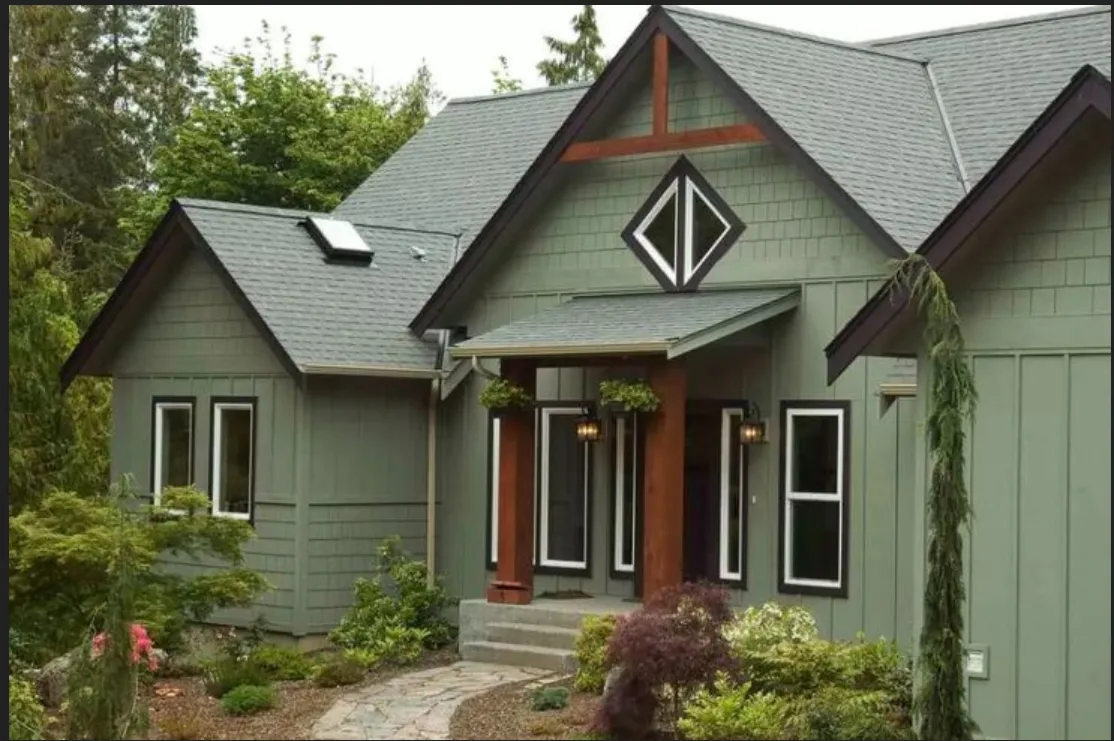
The Sage Green Classic
Sage is like the avocado toast of exterior paint colors: trendy, but also timeless enough to stick around.
Picture this: a small Craftsman bungalow painted in soft sage, with white trim around the windows and a warm wood front door. Add a few terracotta pots with lavender and rosemary, and suddenly the whole place looks like it belongs in a cozy lifestyle magazine.
Sage green works especially well for:
Bungalows and cottages
Farmhouses with wraparound porches
Homes in wooded neighborhoods
It’s subtle, approachable, and never screams for attention.
Deep Forest Green Drama
© 2025 AI Illustrator — Inspiration Only
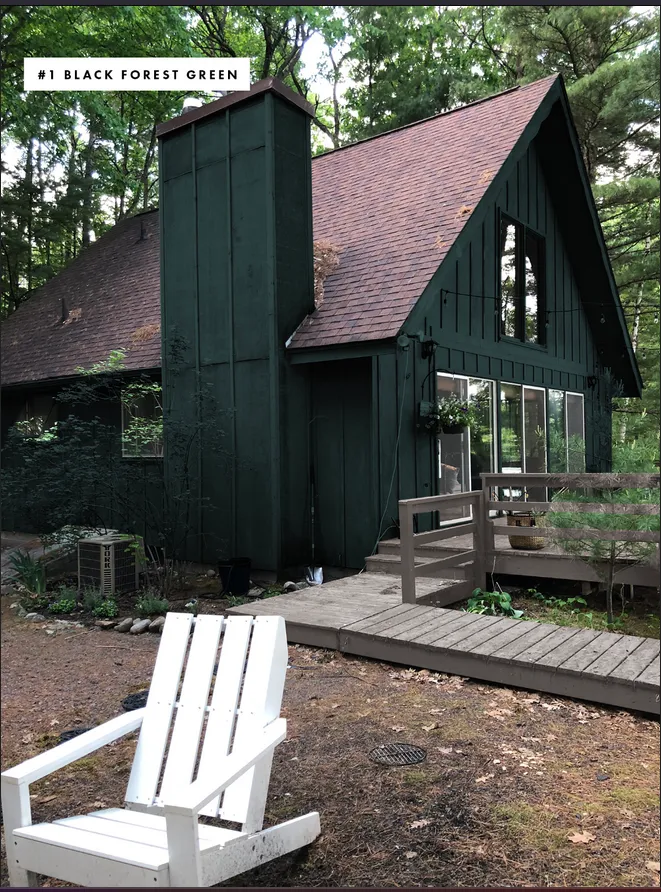
On the other end of the spectrum, there’s forest green. Dark, moody, and ridiculously elegant.
Think of a stately Victorian or a modern A-frame cabin in the woods, painted deep green with black trim. It almost disappears into the trees, like it was meant to be there.
Forest green exteriors say: “I’m confident, a little dramatic, but still grounded.”
Pair it with:
Brass or copper hardware (door handles, lanterns, house numbers)
Natural wood garage doors
Stone accents for extra texture
This shade works best if you’re not afraid of boldness — but trust me, it pays off.
Olive Green with Rustic Vibes
© 2025 AI Illustrator — Inspiration Only
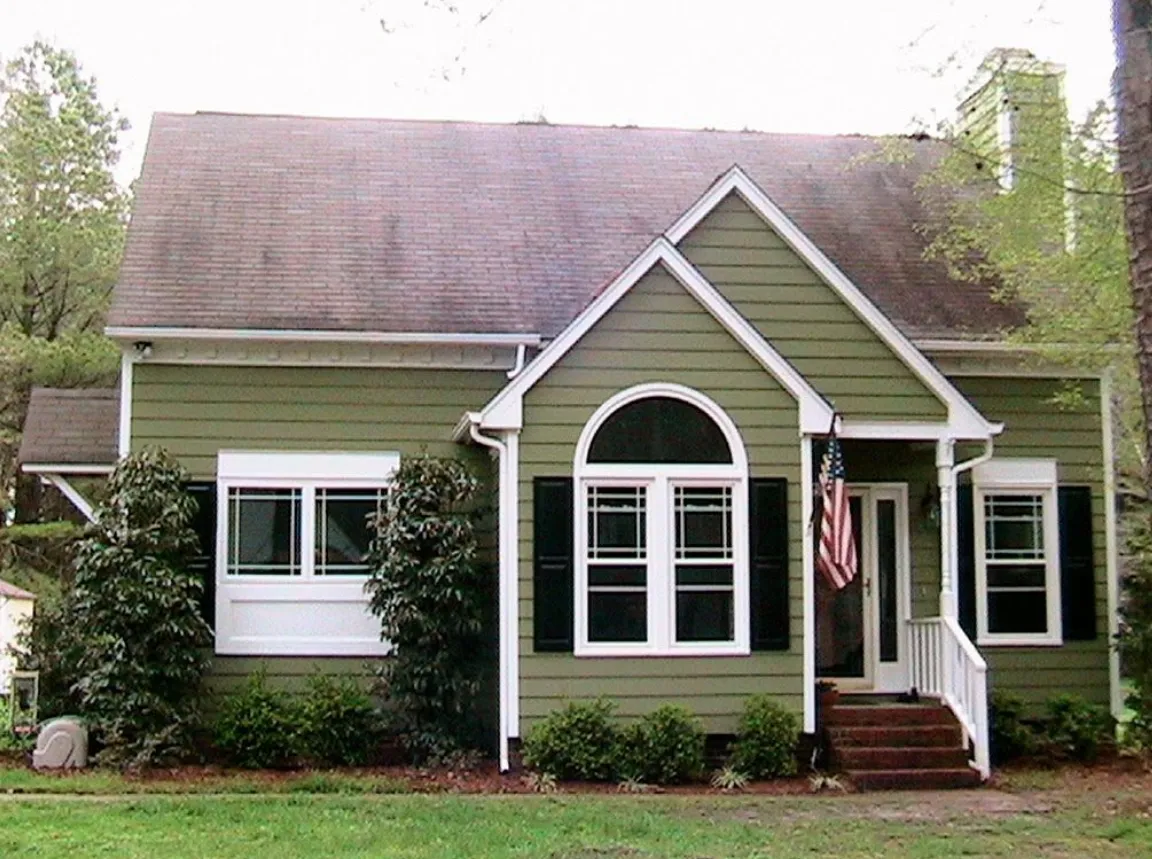
IMAGE BY PINTEREST
Olive has that earthy, sun-warmed tone that feels cozy and European. I once stayed in an Airbnb in Tuscany (okay, fine, it was just outside of Napa, but close enough) that had olive green shutters against creamy stucco walls. Every morning, it looked like a postcard.
For full-on olive exteriors, it pairs beautifully with:
Clay tile roofs
Rustic stone walls or pathways
Black or dark bronze trim
It gives that “aged gracefully” vibe, even if your house was built last year.
Mint Green for Coastal Charm
If you live by the beach (or just want to feel like you do), mint green is your friend.
Imagine a cheerful coastal cottage with mint siding, white shutters, and a pale blue front door. Add a couple of Adirondack chairs on the porch, and you’ve basically built a vacation.
Mint is playful, lighthearted, and perfect for:
Coastal cottages
Victorians with gingerbread trim
Smaller homes that benefit from a cheerful, airy color
Pro tip: pair mint with crisp white trim to keep it looking fresh, not dated.
Two-Tone Green Exteriors
Why settle for one shade when you can layer two?
Forest green siding + sage trim = subtle contrast
Olive main walls + mint shutters = European charm
Dark green base + lighter green gables = depth and dimension
This trick works especially well on homes with interesting architecture — Victorian, Craftsman, or Colonial — where different sections of the house naturally lend themselves to multiple colors.
© 2025 AI Illustrator — Inspiration Only
© 2025 AI Illustrator — Inspiration Only
IMAGE BY PINTEREST
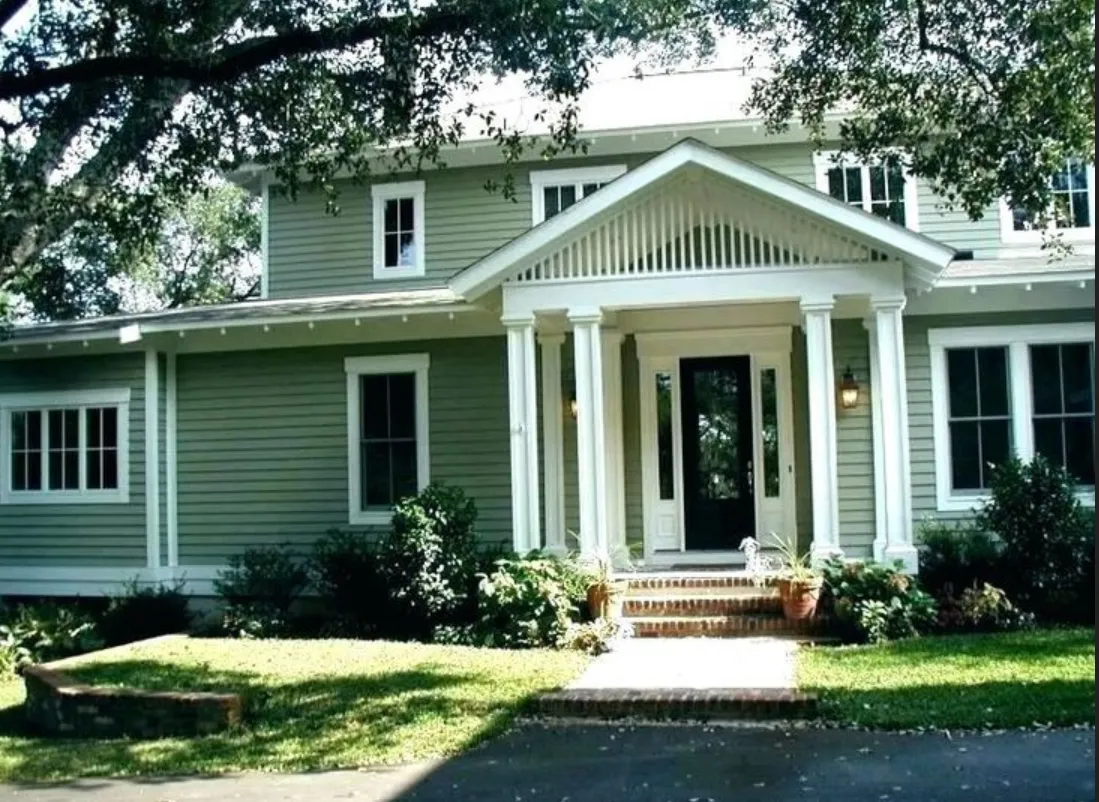
This is probably the most foolproof combo out there. Any shade of green, paired with crisp white trim, feels fresh and timeless.
It works because:
White keeps things light and balanced.
It highlights architectural details (those window frames, those porch posts).
It never clashes with landscaping or surrounding houses.
Bonus: add a pop of color on the door — navy, red, or even mustard yellow. Suddenly, you’ve got personality in spades.
Green with Black Accents (Modern & Sleek)
For a more contemporary vibe, green with black trim is a game-changer.
Picture a modern farmhouse painted deep green, with matte black window frames and a black metal roof. Sleek, bold, and a little edgy.
This combo works best for:
New builds or renovations
Minimalist designs
People who want their house to stand out (in a tasteful way)
Black accents sharpen up green’s softness and make it look intentional instead of “oops, I picked the wrong paint color.”
The Role of Landscaping (Your Free Accessory)
One of the best things about a green house? Your yard becomes part of the palette.
A sage house looks even prettier with lavender or white roses in front.
A deep forest green exterior pairs beautifully with golden grasses or pale hydrangeas.
Olive green homes practically beg for terracotta pots and climbing ivy.
If painting your house feels intimidating, start with plants. They’re the easiest way to “test-drive” how green works with your space.
Choosing the Right Shade (A Few Favorites)
If you’re standing in front of the paint swatches feeling overwhelmed (been there), here are some tried-and-true greens designers swear by:
Benjamin Moore “October Mist” → soft, versatile sage
Sherwin-Williams “Evergreen Fog” → moody but approachable
Farrow & Ball “Calke Green” → classic olive
Benjamin Moore “Black Forest Green” → dramatic and bold
Behr “Frosted Jade” → light, minty freshness
Pro tip: always sample in real light. A green that looks earthy in the store might turn neon on your siding at noon.
My Own Green House Crush
Confession: my house isn’t green (yet). But last summer, I nearly convinced myself to repaint after binge-watching way too many farmhouse renovation reels. I even bought a handful of swatches — a sage, a forest, and a mint — and taped them up like I was auditioning new personalities.
My neighbors probably thought I was losing it. But honestly? Standing there in the sun, squinting at three nearly-identical shades of green, I realized how much of a difference the right tone makes. One looked soothing, one looked dramatic, and one… looked like toothpaste. So yeah, testing is everything.
Final Thought
Painting your house green isn’t just about picking a color. It’s about creating a feeling. Whether you go soft sage, bold forest, or playful mint, a green exterior instantly makes your home feel more connected to the world around it. Fresh, inviting, timeless — all the things you want when you pull into your driveway at the end of the day.
So if you’ve been staring at your beige siding and thinking “meh,” maybe it’s time to go green. Trust me, your house will thank you — and so will the random neighbors who “tie their shoes” just to admire it.