Why Your Living Room Still Feels Cluttered (even When It’s Clean) — and How to Fix It

Your living room is spotless. The floors are vacuumed, counters wiped, every cushion karate-chopped to perfection—so why does it still feel like chaos? Good news: it’s not you, it’s the design. A “clean” room can still read as visually busy when a few sneaky styling mistakes pile up. Let’s fix that, fast.
1. Too Many Small Things, Not Enough Big Moments
© 2025 AI Illustrator — Inspiration Only
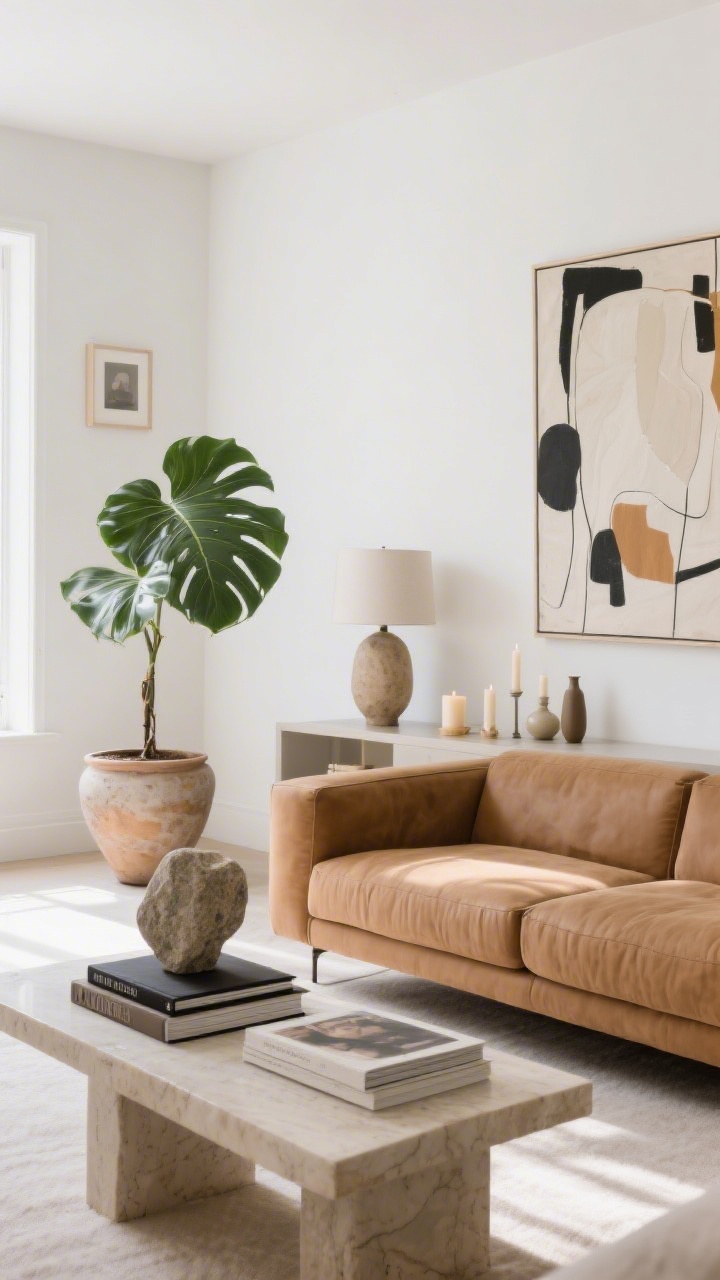
Here’s the silent clutter culprit: tiny decor overload. Teeny frames, petite vases, small plants, and a dozen little candles might each look cute, but together they scream “mess.” Your eye has to work overtime hopping from piece to piece.
What you need are fewer, larger anchors. Big art. A chunky lamp. A generous plant. These pieces calm the visual noise and give everything else room to breathe.
Try This:
- Swap a gallery wall of tiny frames for one or two oversized artworks.
- Trade three small decor bits on the console for one large vase + one sculptural bowl.
- Pick a coffee table book stack that’s hefty, then add just one accent object on top.
2. Busy Patterns Fighting For Attention
© 2025 AI Illustrator — Inspiration Only
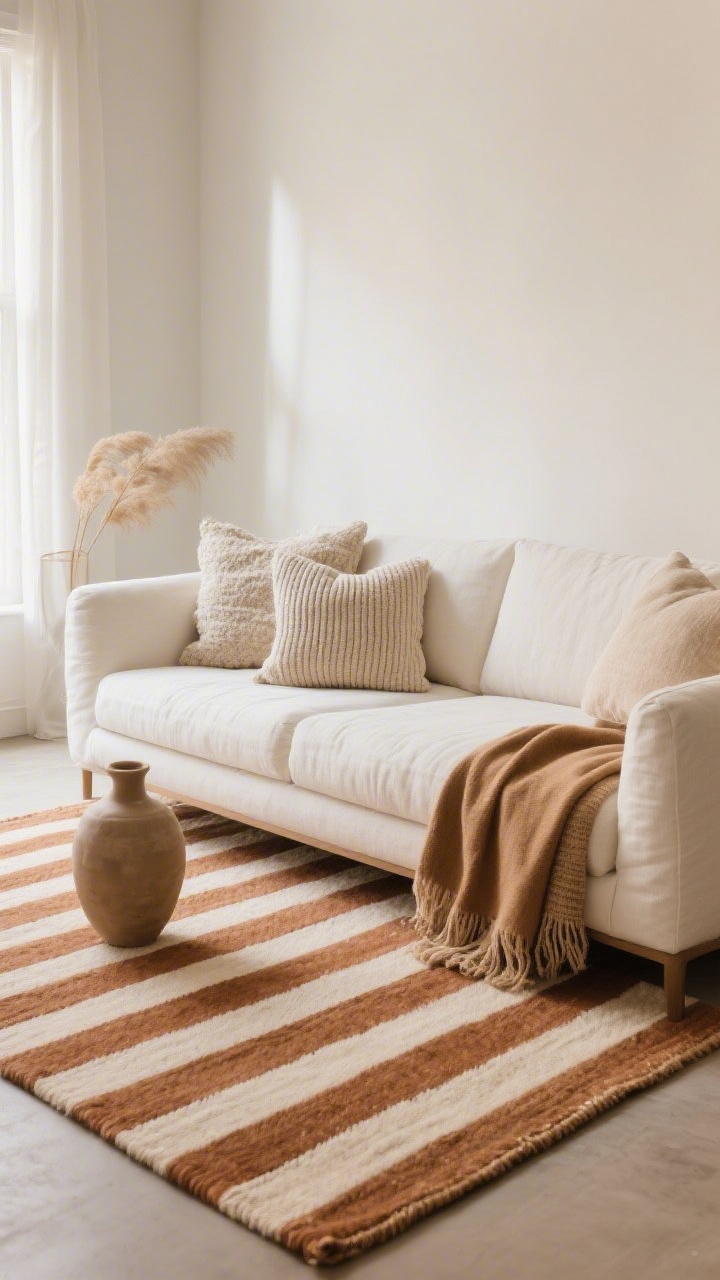
Patterns are fun—until they start arguing with each other. Stripes on the rug, florals on the sofa, geometric pillows, and a loud throw? That’s a visual brawl. Your brain can’t find a resting point, so the room reads cluttered even when nothing’s out of place.
We’re not ditching pattern; we’re curating it. Pick one hero pattern, then support it with solids and subtle textures.
Try This:
- Choose a single statement pattern (like the rug) and keep pillows mostly solid with textured weaves.
- Stick to a cohesive color palette (2-3 main colors + 1 accent) to calm contrasts.
- Layer texture over pattern—think boucle, linen, jute—to add interest without the chaos.
3. Furniture That’s Great Alone, Awkward Together
© 2025 AI Illustrator — Inspiration Only
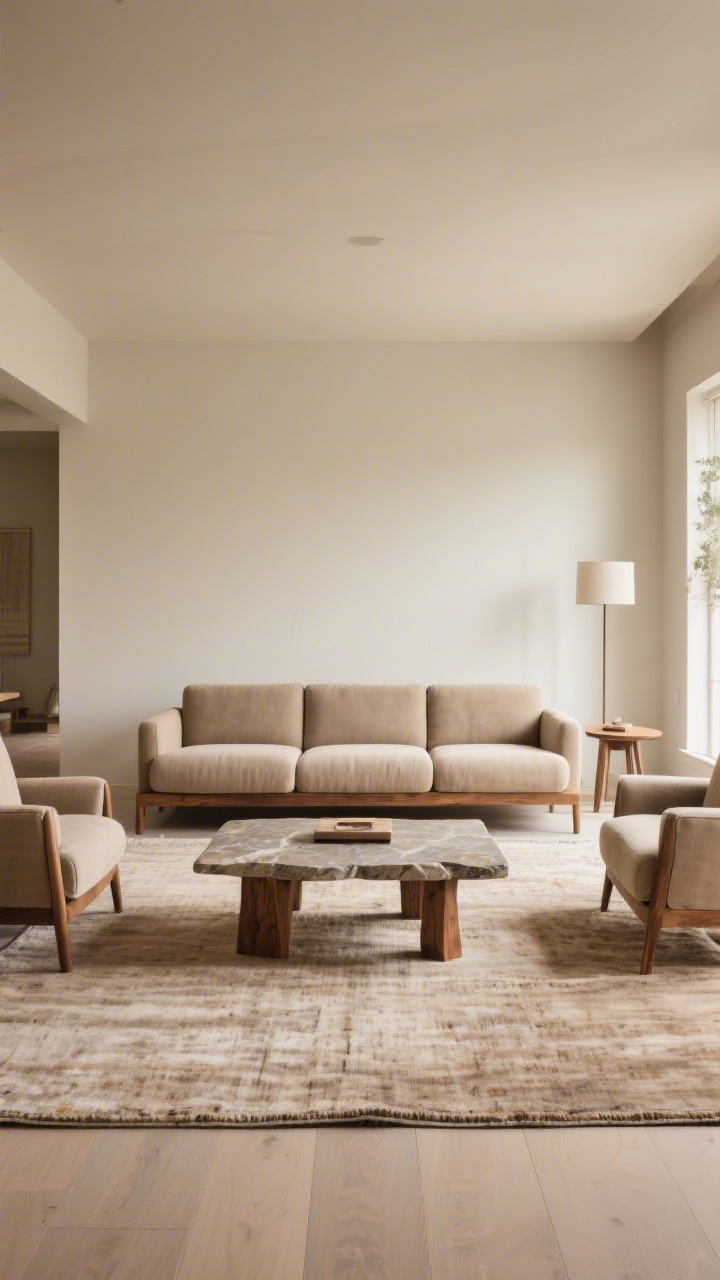
That armchair you loved? The coffee table you inherited? Your sofa from three apartments ago? They’re all fine—just not fine together. Mismatched scale and proportion creates visual clutter, even when the surfaces are spotless.
A dainty side table next to a massive sofa looks off. A small rug under large furniture looks messy. Balance is everything.
Try This:
- Make sure your rug fits: front legs of major furniture should sit on it. Tiny rugs = instant clutter vibes.
- Match the heft of pieces: a low, chunky sofa pairs best with a weightier coffee table.
- Leave negative space: 18″ between sofa and coffee table; 30–36″ for walkways. FYI, breathing room reads as tidy.
4. Open Storage That’s Not Actually “Styled”
© 2025 AI Illustrator — Inspiration Only
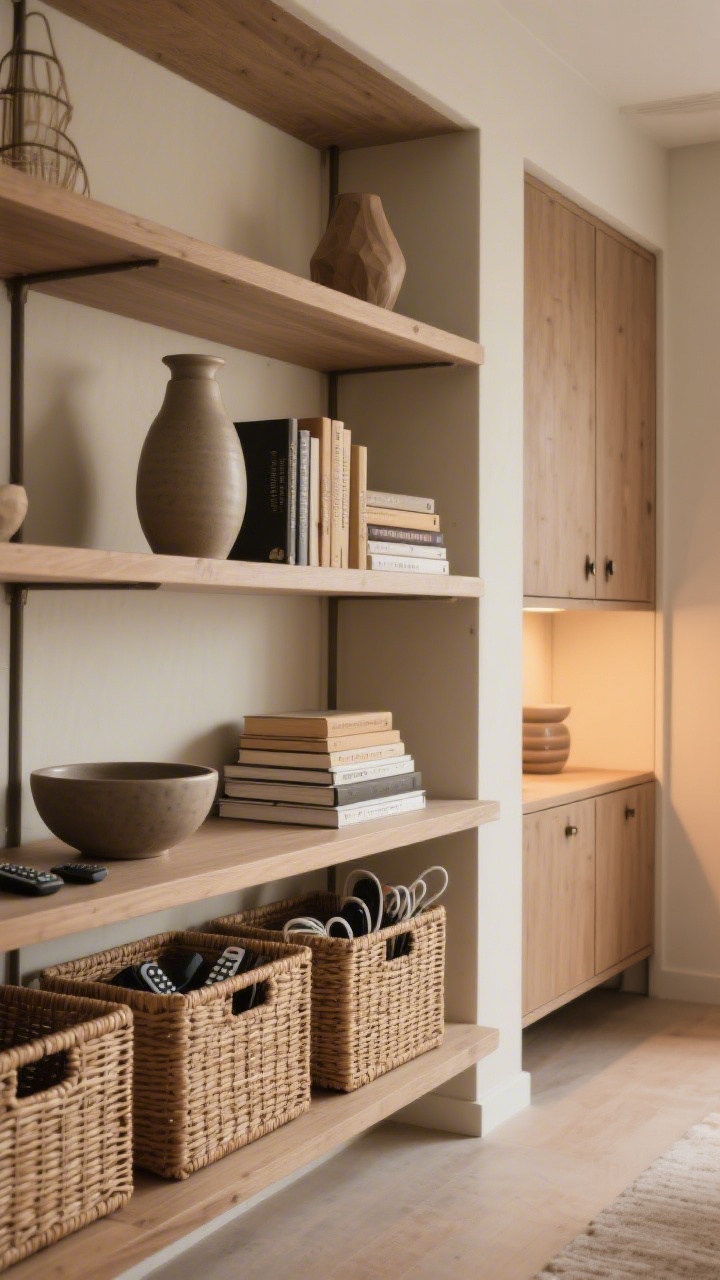
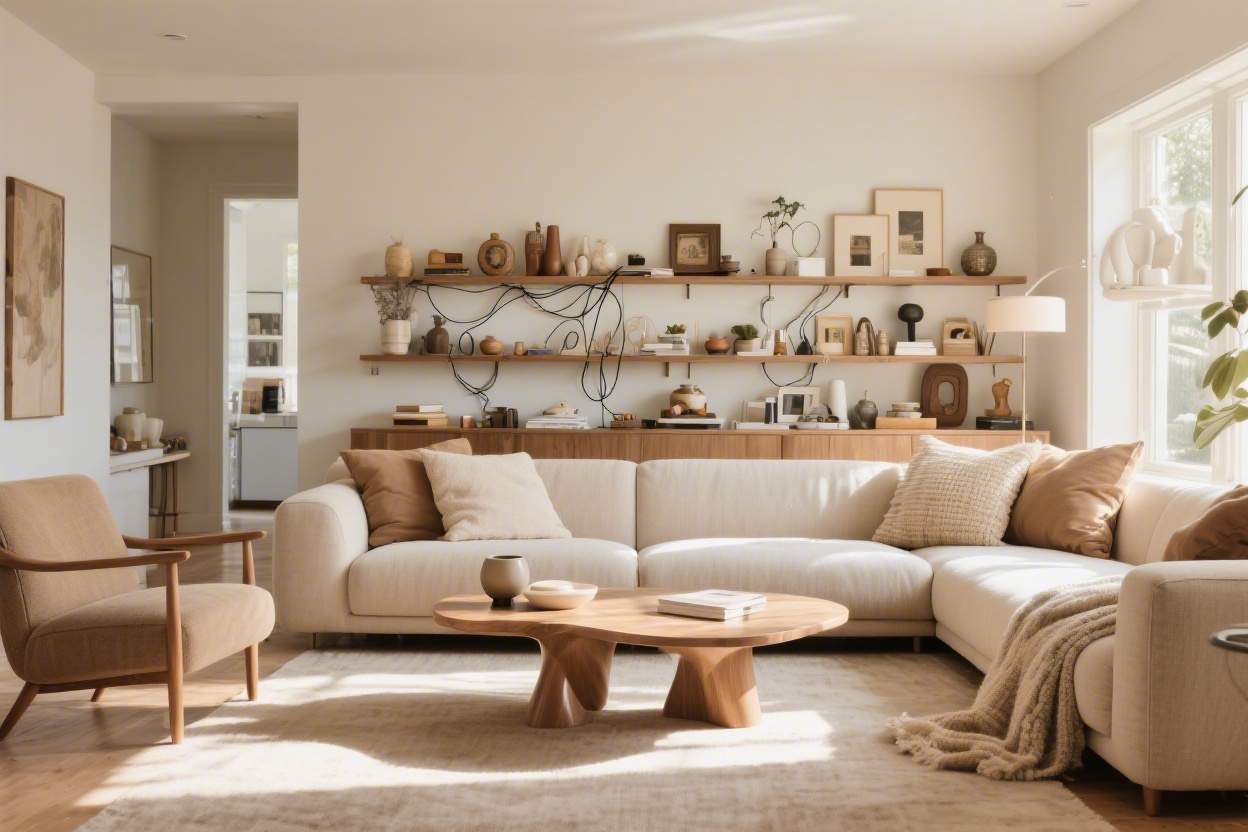
Open shelves, ladder bookcases, and those cute cube units can turn into clutter billboards. If everything’s visible, everything demands attention. Even neatly lined-up stuff can feel noisy without intentional styling.
The secret: combine closed storage with curated displays. Hide the randoms, feature the pretty.
Try This:
- Use baskets, bins, and doors for remotes, cords, chargers, game controllers—aka visual chaos.
- Style shelves in visual thirds: vertical (tall vase), horizontal (book stack), sculptural (bowl/object).
- Group books by color or spine tone for instant calm. Or turn spines inward if you’re brave (IMO, controversial but chic).
5. Lighting That Flattens Everything
© 2025 AI Illustrator — Inspiration Only
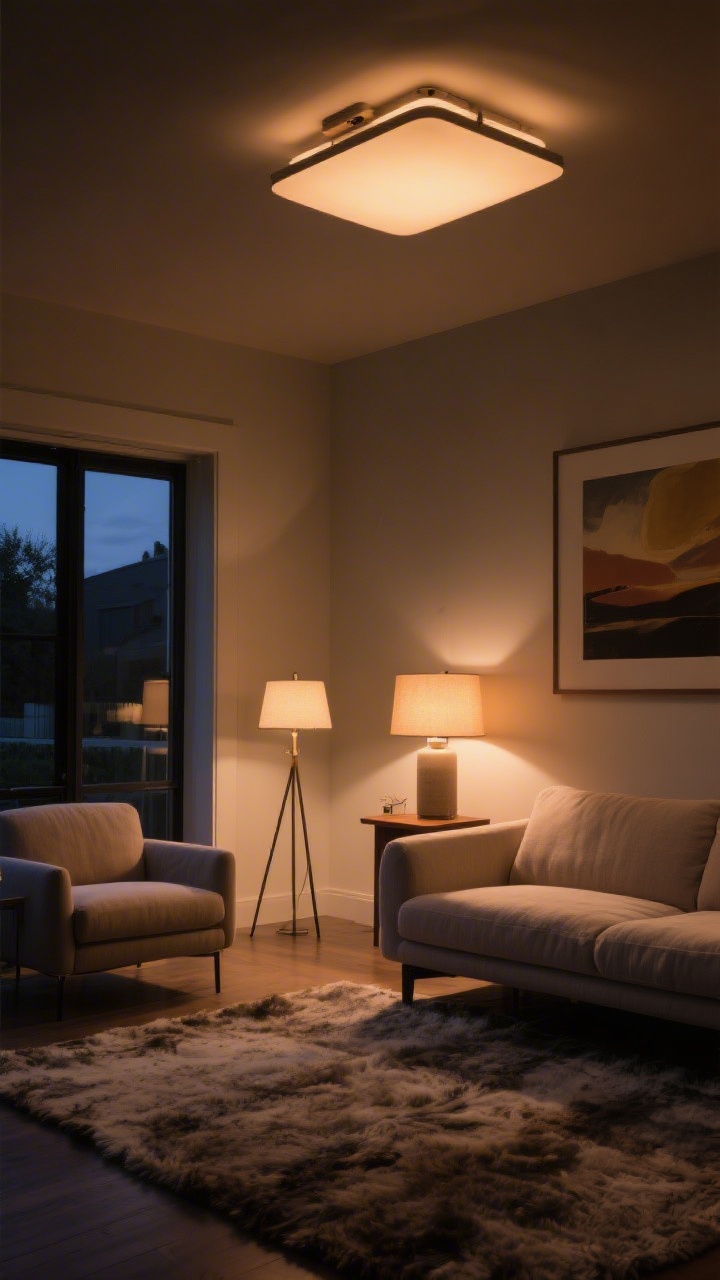
A single overhead light can make even a clean room feel stark, flat, and yes—cluttered. Harsh lighting exaggerates every object and shadow, so the space reads busy and cold.
Layered lighting softens edges, creates depth, and helps your eye rest. Think of it like photo editing, but with lamps.
Try This:
- Add three light sources minimum: a floor lamp, a table lamp, and warm accent lighting (sconces or a picture light).
- Use warm bulbs (2700–3000K). Cool light = hospital. Warm light = cozy, polished.
- Put overheads on a dimmer and let lamps do the heavy lifting at night.
6. Surfaces That Are “Styled” But Still Crowded
© 2025 AI Illustrator — Inspiration Only
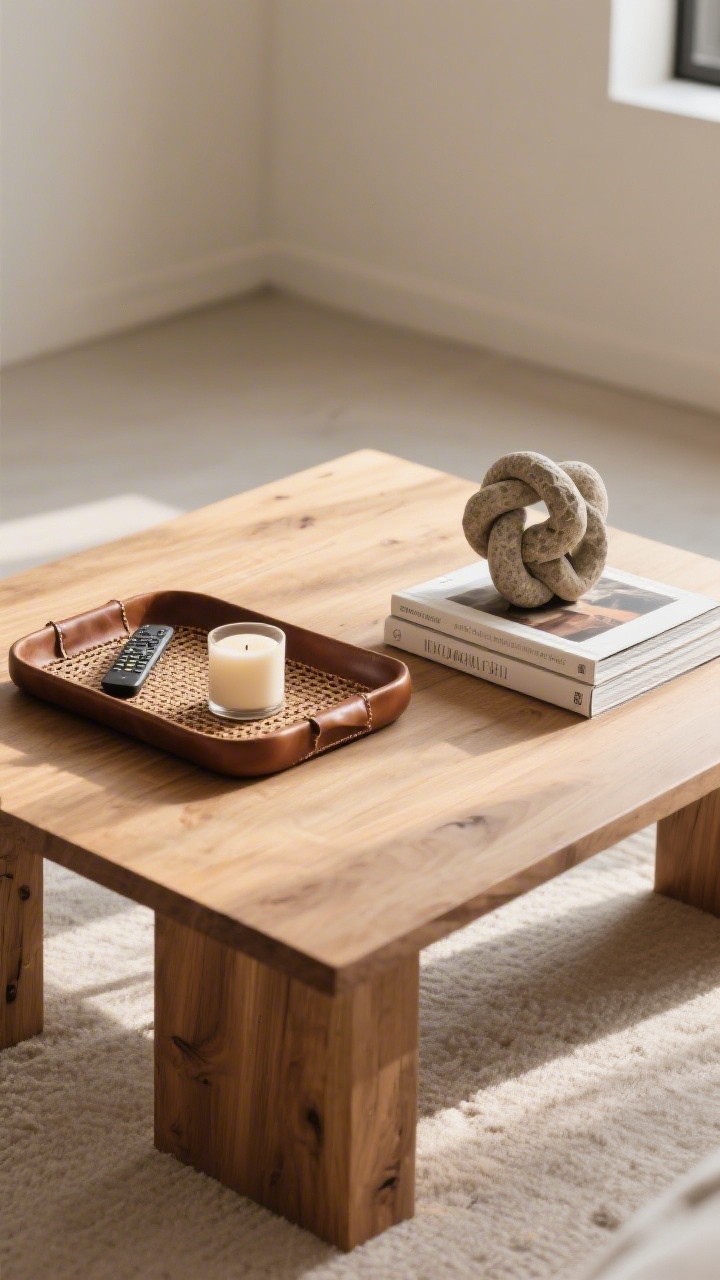
The coffee table looks like a boutique exploded. The media console is a shrine to 27 souvenirs. The mantel has layers on layers. Even if everything is “placed,” over-styling reads as clutter.
A good rule: style in odd-numbered clusters with breathing room between them. And don’t be afraid of empty space—it’s the most underrated decor tool.
Try This:
- Limit the coffee table to one tray + one stack + one sculptural object. That’s it.
- On consoles, use asymmetry: a lamp on one side, a substantial vase or stack on the other.
- Corral small items with a tray so they read as a single “thing,” not a sprinkle of chaos.
7. No Visual Rhythm: Everything On One Plane
© 2025 AI Illustrator — Inspiration Only
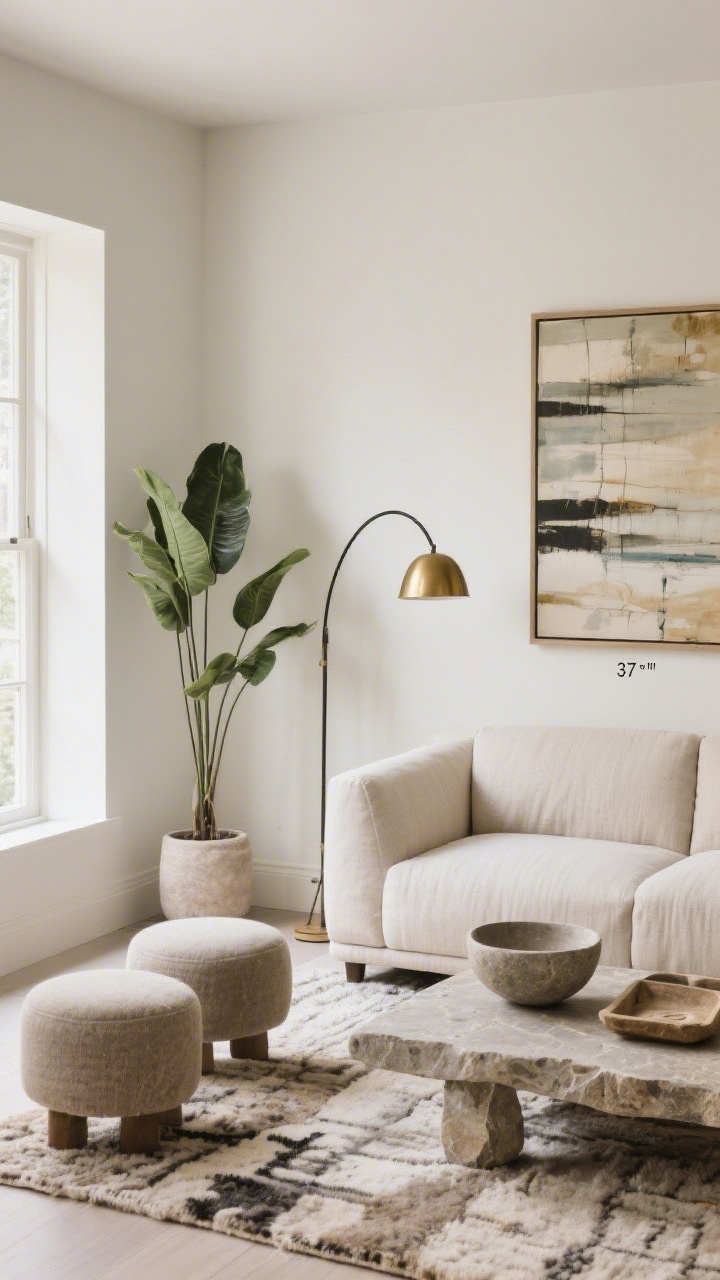
If everything’s the same height—art hung low, plants mid-height, lamps level—you lose visual rhythm. The room feels static and, oddly, cluttered because the eye can’t travel naturally.
You want highs and lows, big and small, soft and hard. That mix creates movement and balance without the mess.
Try This:
- Hang art so the center is ~57″ from the floor (gallery standard). Then vary heights on adjacent walls.
- Mix tall elements (floor plant, arc lamp) with low elements (ottomans, low bowl).
- Layer soft with sleek: a linen sofa, brass lamp, stone tray, wool rug. Texture = interest without clutter.
8. Color Palette Creep (Bonus Because It’s A Biggie)
© 2025 AI Illustrator — Inspiration Only
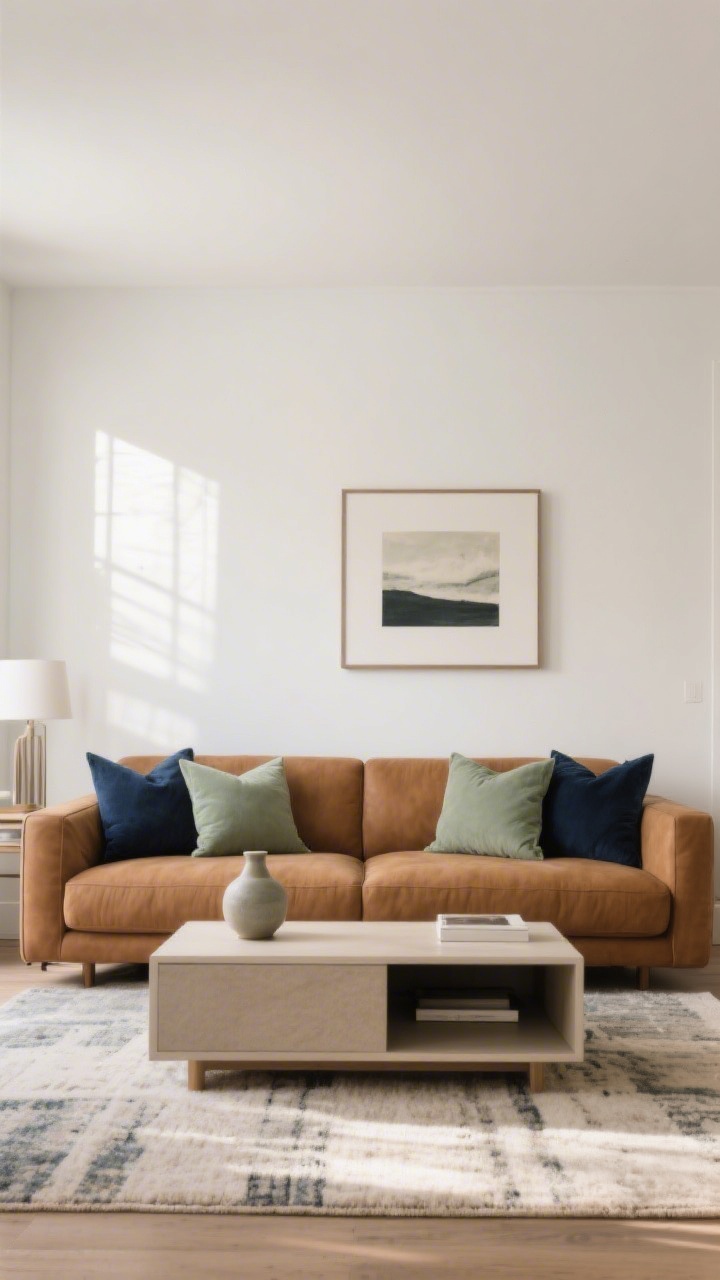
Oops, you have twelve colors now. It happens—pillows were on sale, the throw was a gift, the art was irresistible. But too many unrelated hues = instant busyness. Your brain can’t file it neatly.
Dial it back to a tight palette so everything feels intentional, not accidental. Promise, you won’t miss the chaos rainbow.
Try This:
- Pick 2 main neutrals (e.g., warm white + camel) and 2 accent colors max.
- Repeat those accents at least three times around the room (pillow, art, vase) for cohesion.
- If you love color, keep your largest pieces neutral and swap accents seasonally.
9. The “Everything Lives Here” Problem
© 2025 AI Illustrator — Inspiration Only
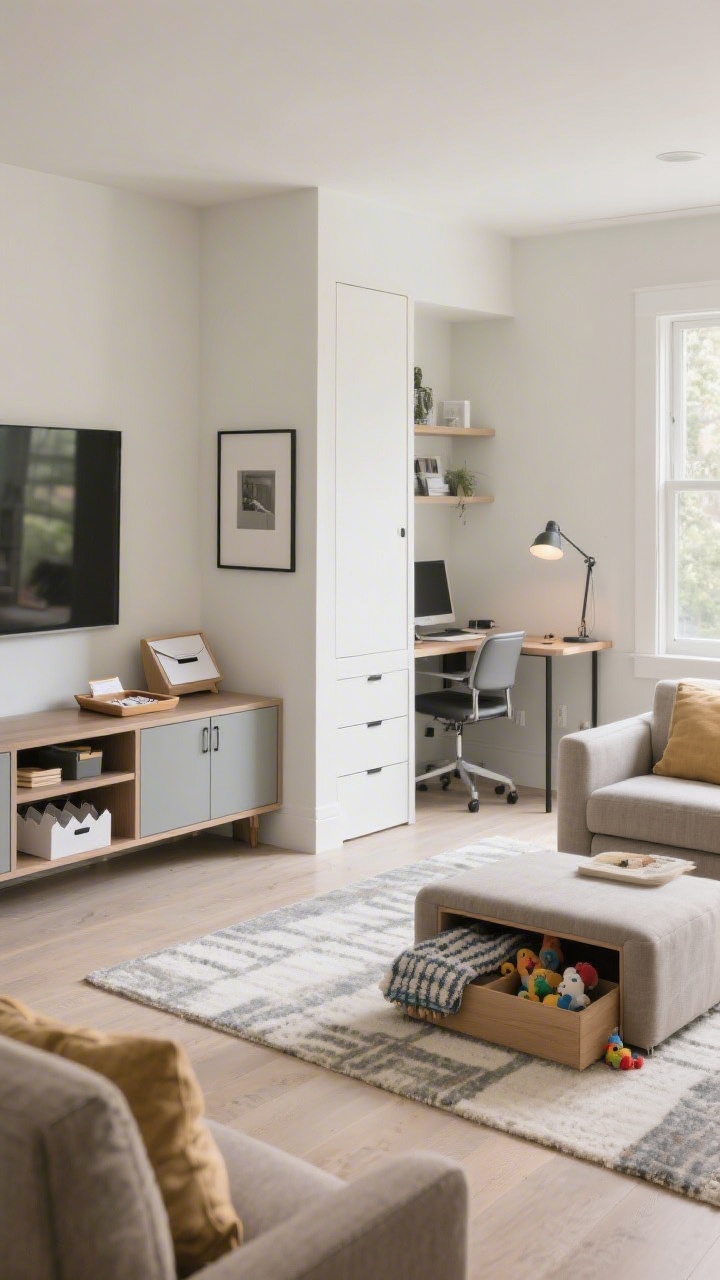
If your living room doubles as a mailroom, toy zone, home office, gym, and pet HQ, it will look cluttered—even when sorted. The fix isn’t harsh minimalism; it’s zoning.
Create micro-areas with purpose so items have a home and don’t wander. Boundaries = visual calm.
Try This:
- Use a tray or letter sorter for mail, then migrate it weekly. No permanent piles.
- Add a closed cabinet or storage ottoman for toys/blankets that can vanish in 30 seconds.
- Define an office nook with a slim desk and task lamp, or go folding/hidden if space is tight.
10. The Final Edit You Keep Avoiding
© 2025 AI Illustrator — Inspiration Only
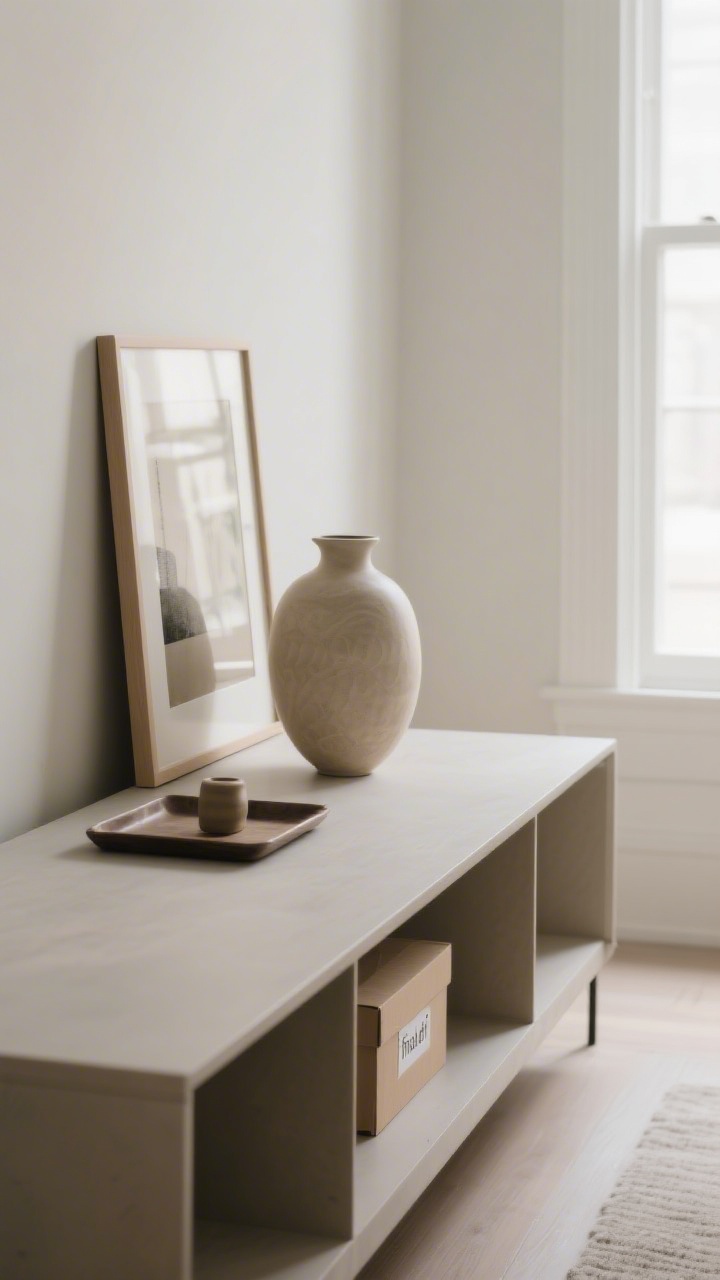
Sometimes the room feels cluttered because… it is. Not messy—just overstuffed. Editing is a design skill, not a personality flaw.
Remove 20% of your decor and see what happens. Spoiler: you’ll breathe deeper.
Try This:
- Do a tray test: clear everything from surfaces, then put back only what you love.
- Rotate decor seasonally so your favorites get spotlight time without crowding.
- Give yourself a prop box for extras. Out of sight, ready to swap when you crave change.
Quick Mini-Checklist
- One hero pattern, tight color palette.
- Scale and proportion balanced; rug sized right.
- Three-layer lighting, warm bulbs, dimmers.
- Closed storage for the randoms; open shelves curated.
- Styled clusters in odds; embrace negative space.
Here’s the bottom line: a clean room can still feel cluttered if the visuals are loud. Edit the extras, scale up a few key pieces, soften the lighting, and give your eyes a place to land. Your living room will go from “why is this chaotic?” to “oh wow, this is chic” in a weekend—no magic wand required, just smart styling. FYI, your future self (and your sanity) will thank you.