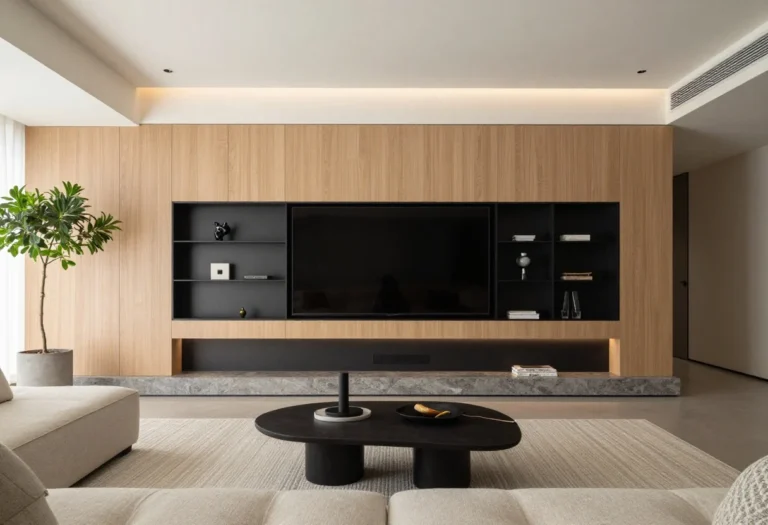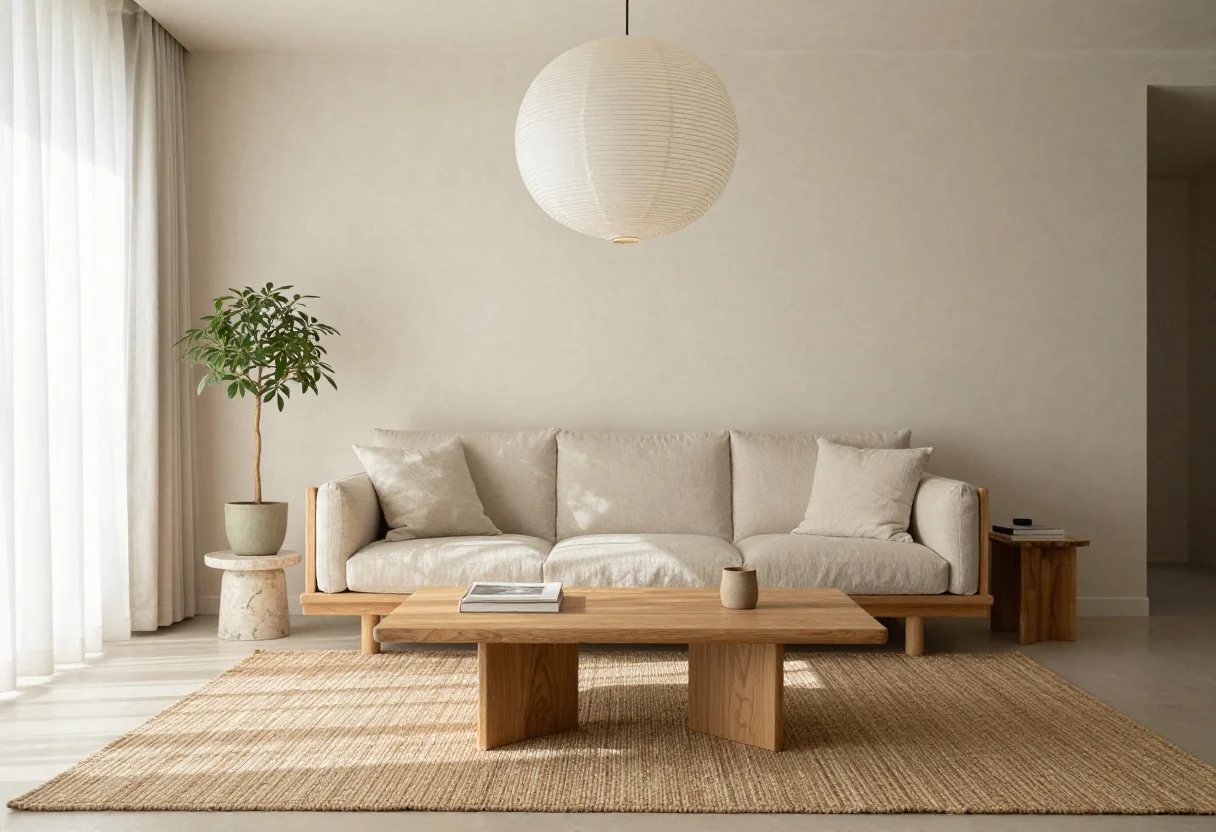
12 Japandi Living Room Ideas for a Calm Minimal Home You’ll Actually Use

You know that feeling when you walk into a room and instantly exhale? That’s Japandi. It’s the quietly confident love child of Japanese minimalism and Scandinavian warmth—calm, clean, and deeply livable. If your living room currently looks like a cable factory crashed into a pillow fort, don’t stress. I’ve got 12 doable ideas to bring serene, design-magazine vibes to your space without losing the cozy.
1. Pick a Grounding Neutral Base (Then Edit Ruthlessly)
© 2025 AI Illustrator — Inspiration Only
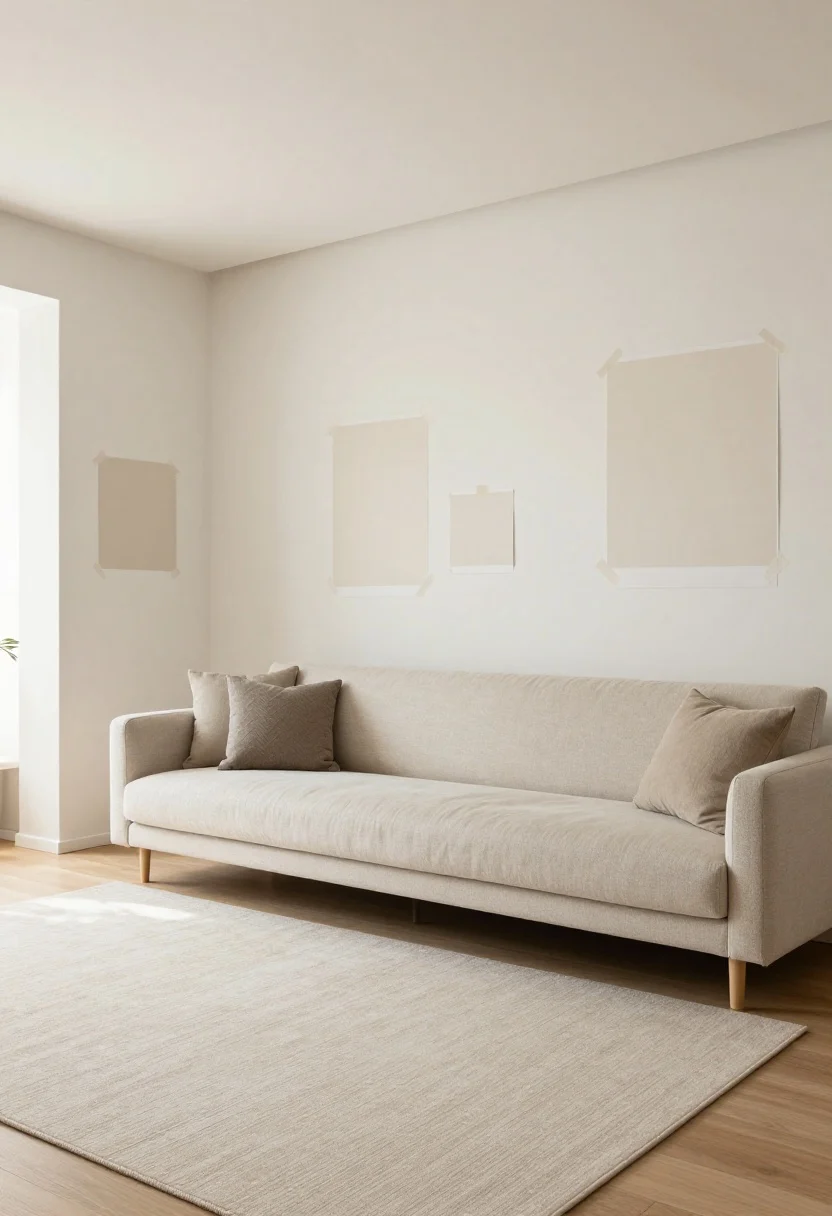
Start with a simple, soothing palette: soft whites, warm beiges, mushroom taupes, gentle grays. These neutrals keep your space light and open, and they make every texture and material feel intentional.
Here’s the trick: less is more, but not boring. Aim for three main colors max, and let wood tones count as one.
- Tip: Paint walls a warm off-white and match your rug to a similar tone for a seamless foundation.
- Pro move: Sample large paint swatches on multiple walls to see undertones throughout the day.
What to shop for: Neutral area rugs, off-white paint, textured throw pillows in beige/greige.
2. Choose Low, Linear Furniture With Soft Edges
© 2025 AI Illustrator — Inspiration Only
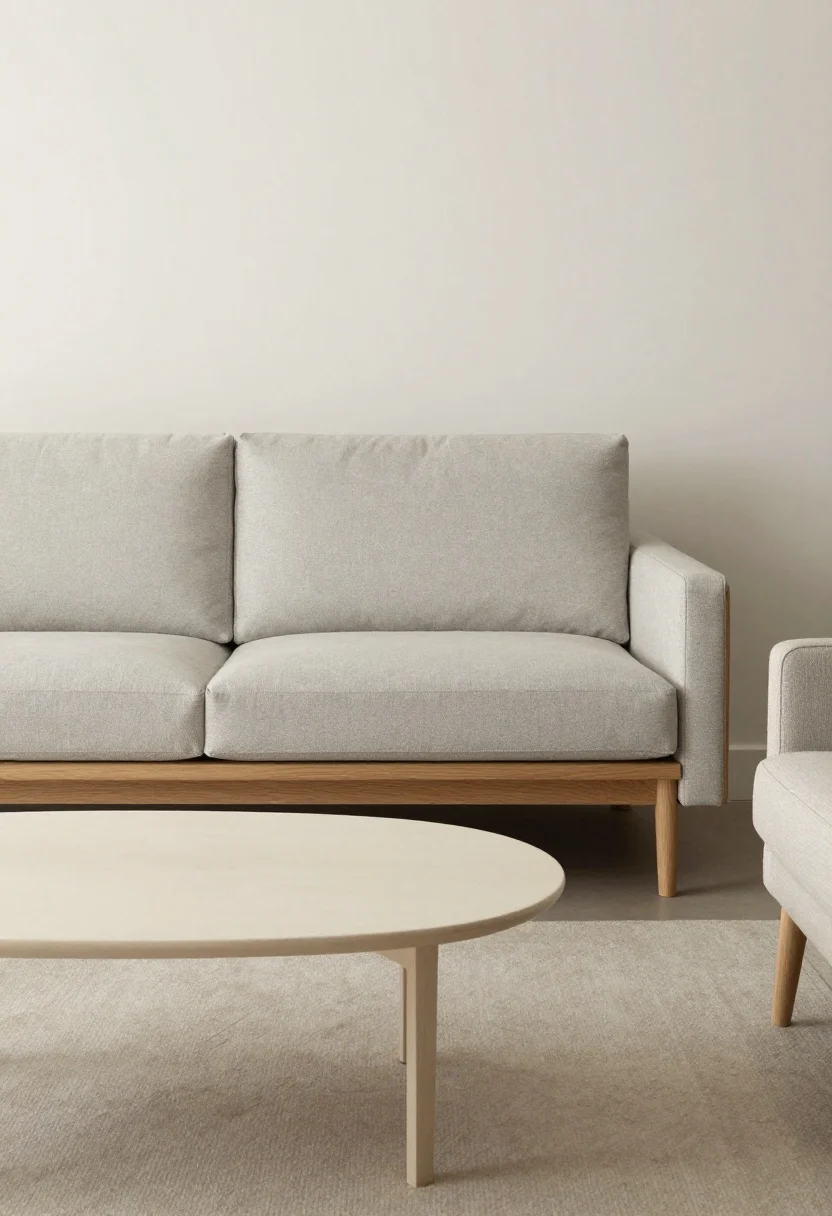
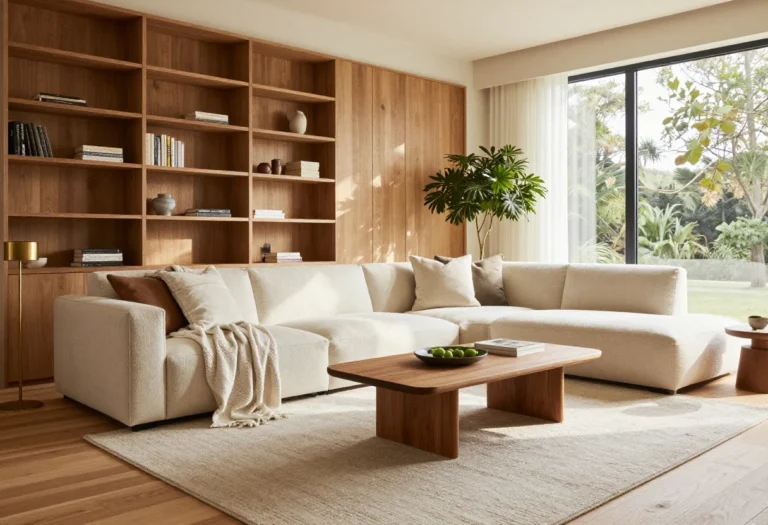
Japandi favors furniture that sits low and feels grounded. Think clean lines, rounded corners, and silhouettes that don’t shout for attention. Skip the bulky recliner; go for a sleek sofa with a bench cushion and a slim wood base.
Balance is everything: pair one substantial piece (your sofa) with lighter companions like a narrow console or an airy armchair on slender legs.
- Tip: Aim for a coffee table a few inches lower than your sofa seat height for that effortless, lounge-y vibe.
- FYI: Soft edges = fewer bruised shins and more visual calm.
What to shop for: Low-profile sofas, wood-framed lounge chairs, oval or rounded coffee tables.
3. Layer Natural Materials (But Keep It Curated)
© 2025 AI Illustrator — Inspiration Only
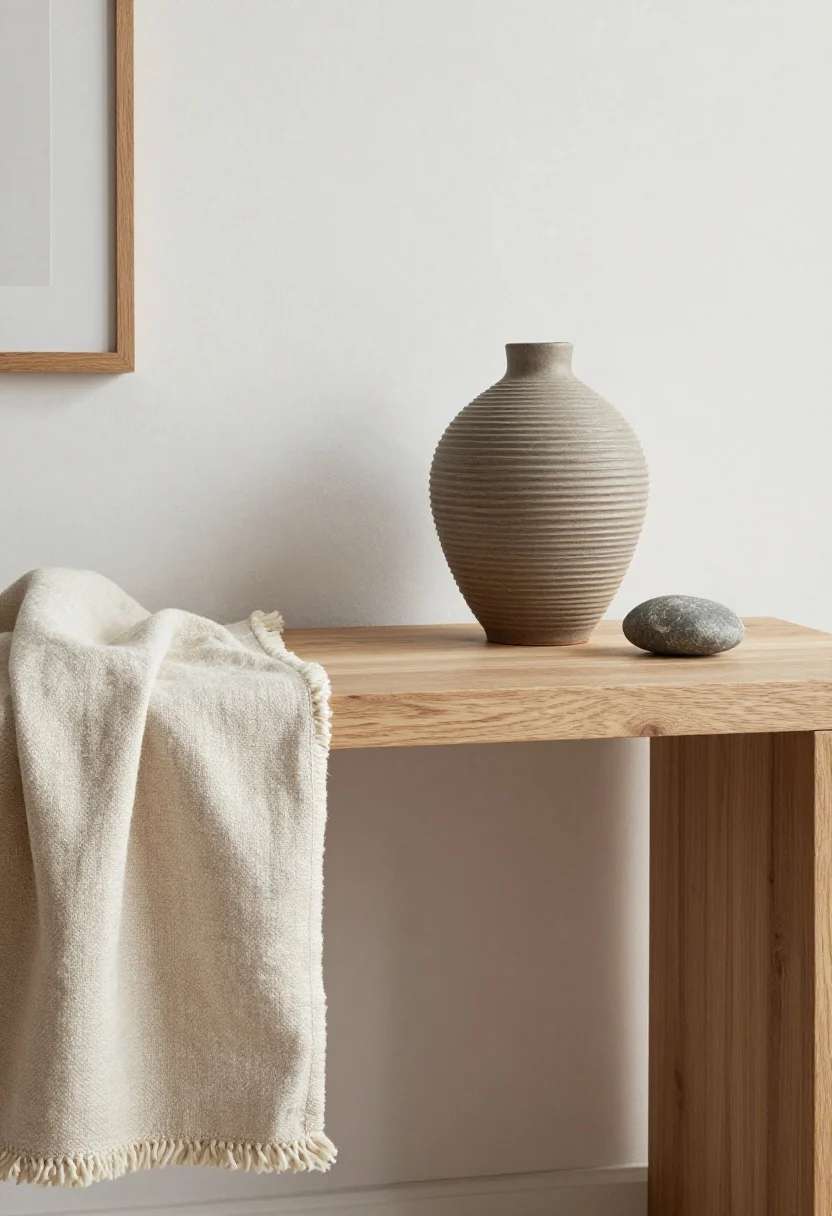
Texture is where Japandi really shines. Mix light woods, linen, wool, rattan, paper, and clay. It’s not about having a lot—it’s about having the right few.
Use contrast wisely: a smooth oak console next to a chunky wool rug, a linen slipcover near a ribbed ceramic vase. Your eyes will thank you.
- Tip: Start with three textures you love and repeat them in small ways across the room.
- Example combo: Oak + bouclé + stone. Easy, rich, timeless.
What to shop for: Linen curtains, wool rugs, rattan baskets, ceramic planters.
4. Embrace Negative Space Like an Art Director
© 2025 AI Illustrator — Inspiration Only
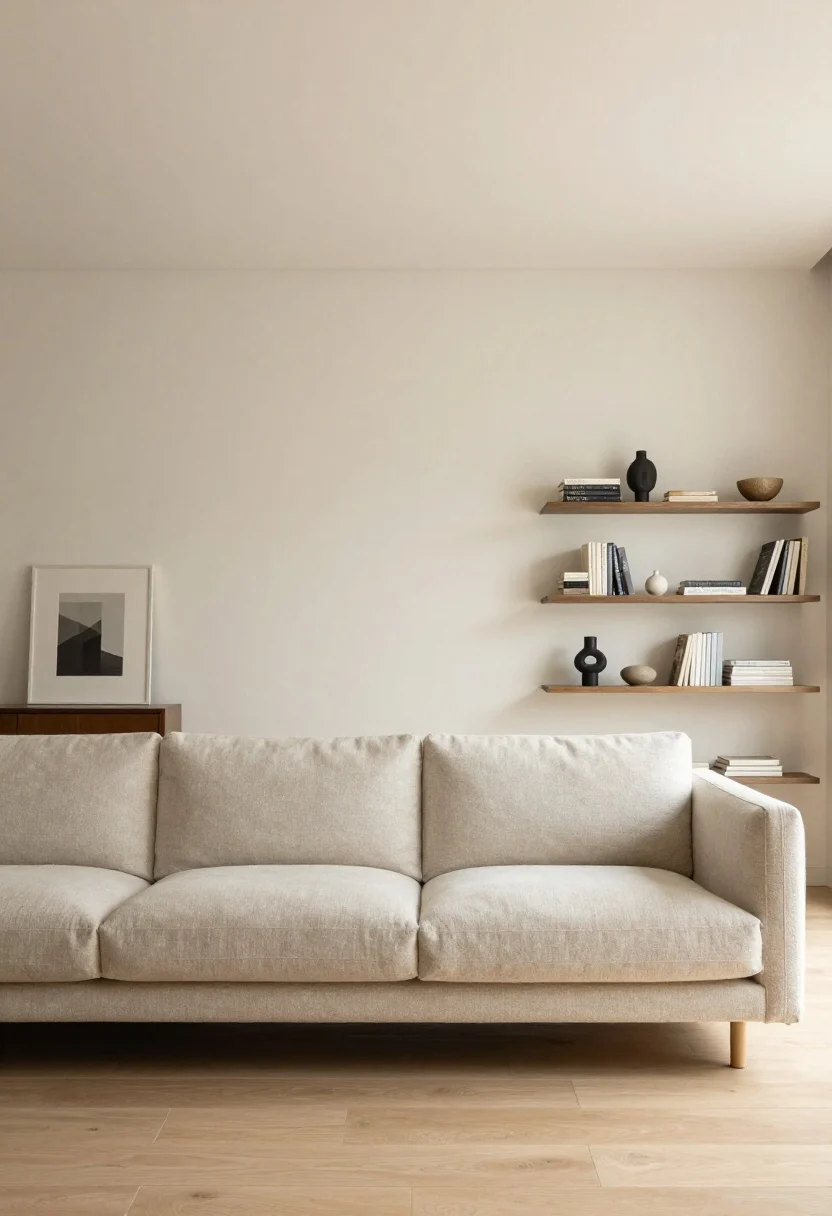
Don’t fill every corner. In Japandi design, empty space is purposeful. It highlights what matters and gives your room that airy, gallery-calm energy.
Give your furniture room to breathe. If your bookshelf looks like it’s hoarding, edit half of it. Then edit again. Promise—you won’t miss it.
- Tip: Leave 6–8 inches between a sofa and the wall if possible; it creates gentle depth.
- Trick: Style shelves with 50% books, 30% objects, 20% open space.
5. Warm Up With Wood (Light, Smooth, And Honest)
© 2025 AI Illustrator — Inspiration Only
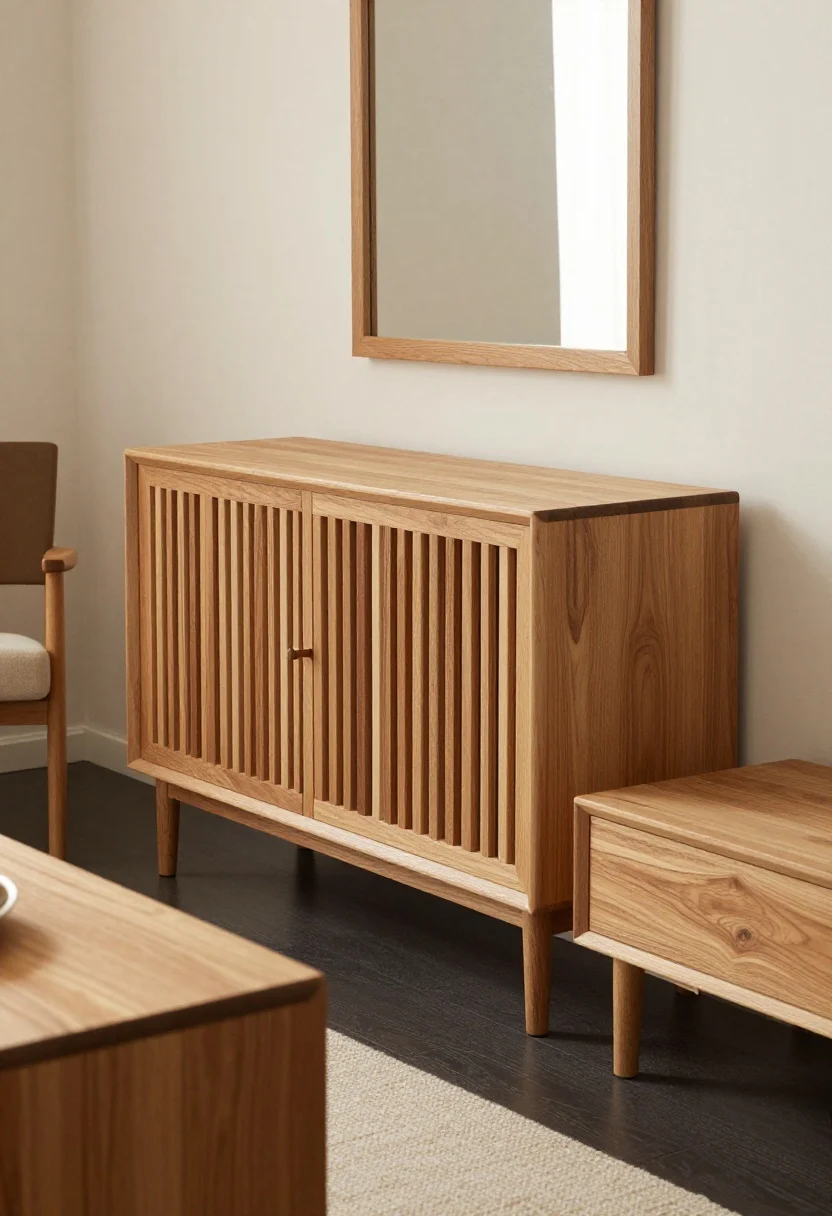
Wood is the soul of Japandi. Aim for light to mid-tone woods like oak, ash, or birch with matte or satin finishes. Avoid high gloss—it feels too flashy for this vibe.
Unify your tones. You don’t need a perfect match, but keep finishes within the same warm or cool family so it feels harmonious, not chaotic.
- Tip: If floors are dark, lighten up with pale wood furniture and a creamy rug to balance things out.
- Design note: Slatted details add subtle rhythm without visual clutter.
What to shop for: Oak side tables, slatted media consoles, wood-framed mirrors.
6. Keep Decor Sculptural, Not Fussy
© 2025 AI Illustrator — Inspiration Only
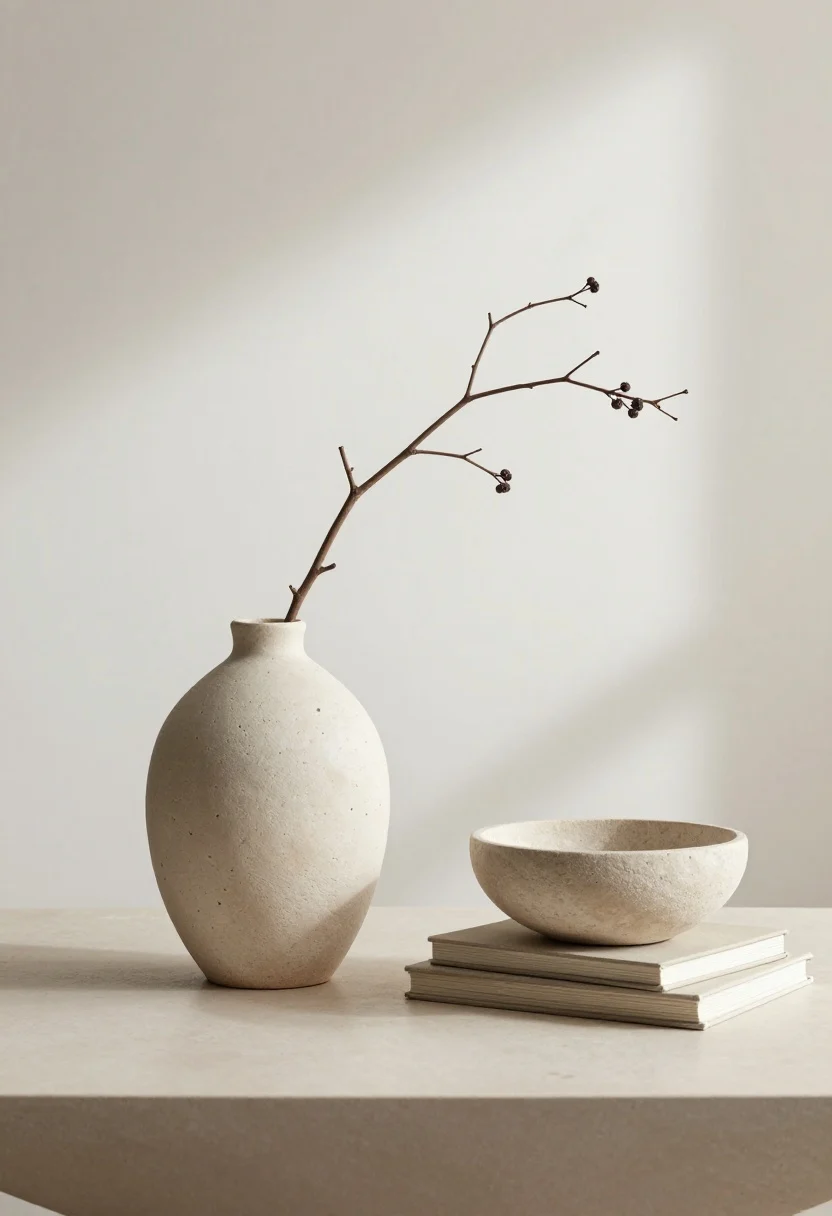
Think fewer, larger, better. A hand-thrown vase. A single, dramatic branch. A rounded stone bowl. These pieces bring wabi-sabi charm—beauty in imperfection—without feeling precious.
Display objects with intention. If it doesn’t add shape, texture, or calm, it’s probably noise.
- Tip: Style a coffee table with a three-piece triangle: one tall (branch), one medium (sculptural bowl), one low (book stack).
- IMO: Ditch tiny knickknacks. Go for pieces with presence.
What to shop for: Ceramic vases, stone trays, handcrafted bowls, oversized branches (faux or real).
7. Soften The Room With Textiles (But Keep Prints Minimal)
© 2025 AI Illustrator — Inspiration Only
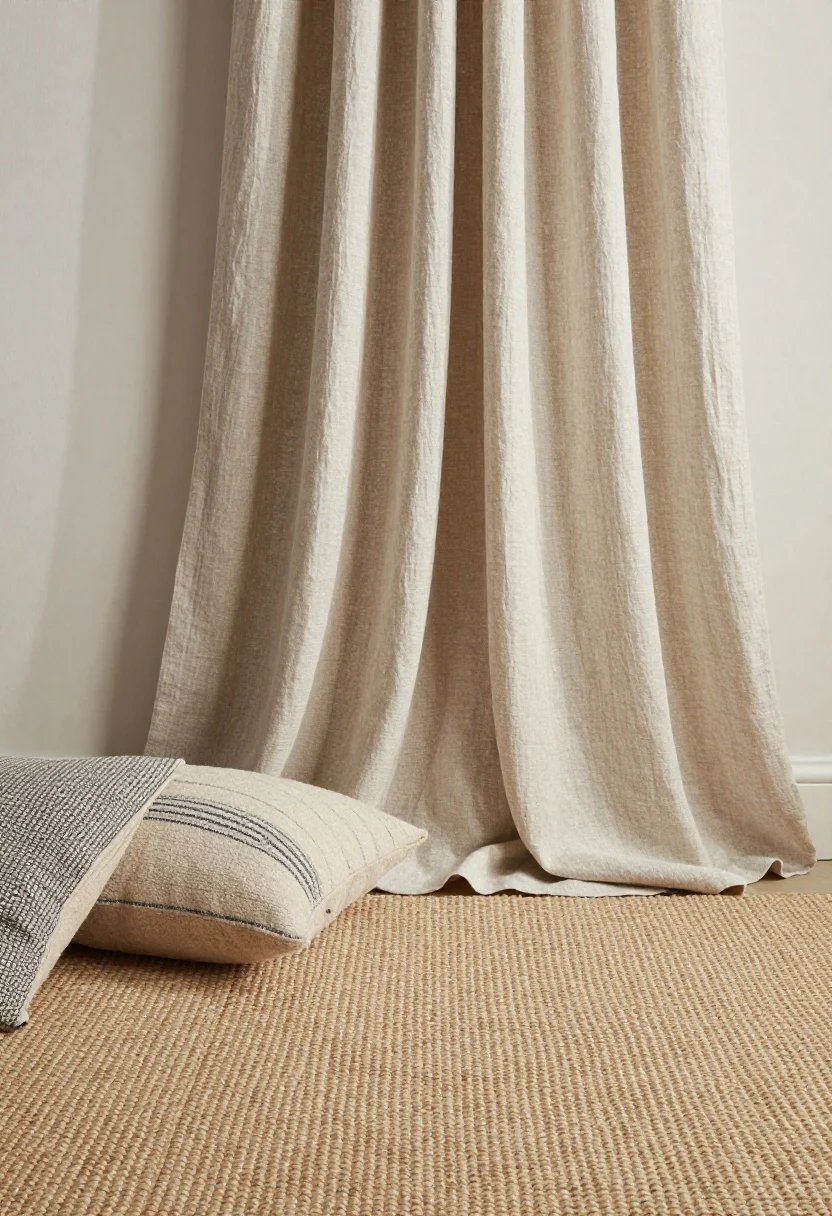
Textiles are where cozy lives. Add linen curtains, a wool or jute rug, and a couple of tactile throws. Keep patterns subtle—think fine stripes, micro-checks, or tone-on-tone weaves.
Color? Sure, just whisper it. Sage, clay, or charcoal accents keep things grounded.
- Tip: Layer two rugs if your space needs warmth—flatweave on bottom, plush on top.
- Maintenance: Choose washable slipcovers or performance fabrics if you’ve got pets or kids.
What to shop for: Linen throws, bouclé pillows, jute or wool rugs, light-filtering curtains.
8. Light It Like A Spa: Layered, Warm, And Dimmable
© 2025 AI Illustrator — Inspiration Only
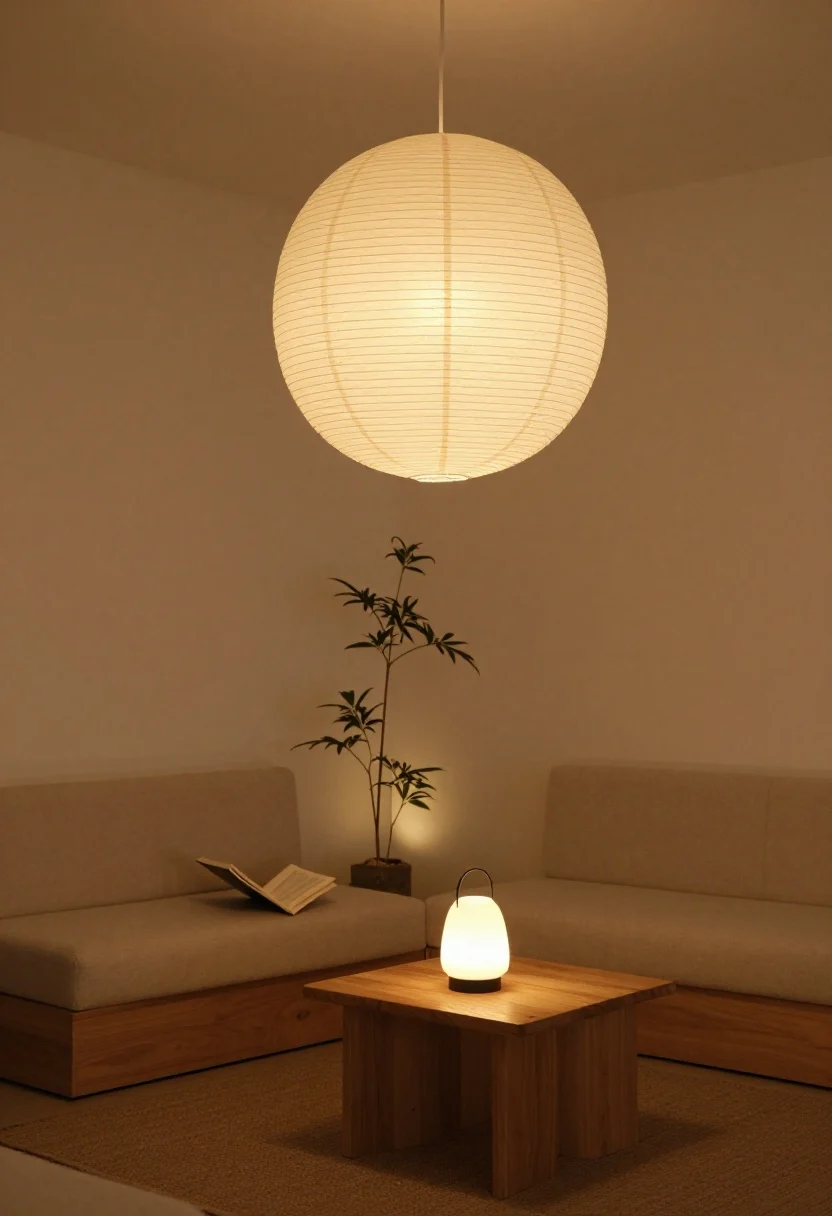
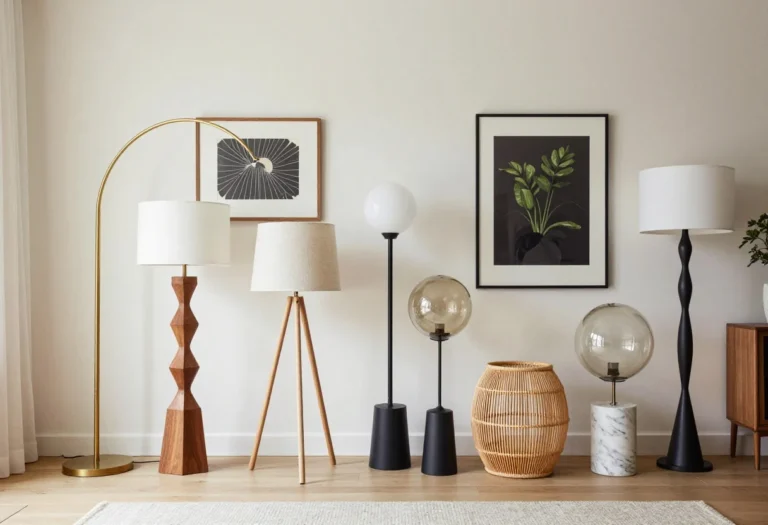
Overhead lighting is not the main character. Build layers of light—a paper lantern pendant for glow, a floor lamp for reading, and a small table lamp for ambiance.
Use warm bulbs (2700–3000K) and, if you can, install dimmers. Your room should shift from bright and productive to cozy and meditative with a simple tweak.
- Tip: Add a lantern-style paper shade to soften harsh light instantly.
- FYI: Up-lighting a corner plant with a small spot turns it into sculptural art.
What to shop for: Rice paper pendants, wooden floor lamps, dimmable LED bulbs.
9. Bring In Greenery With Intent
© 2025 AI Illustrator — Inspiration Only
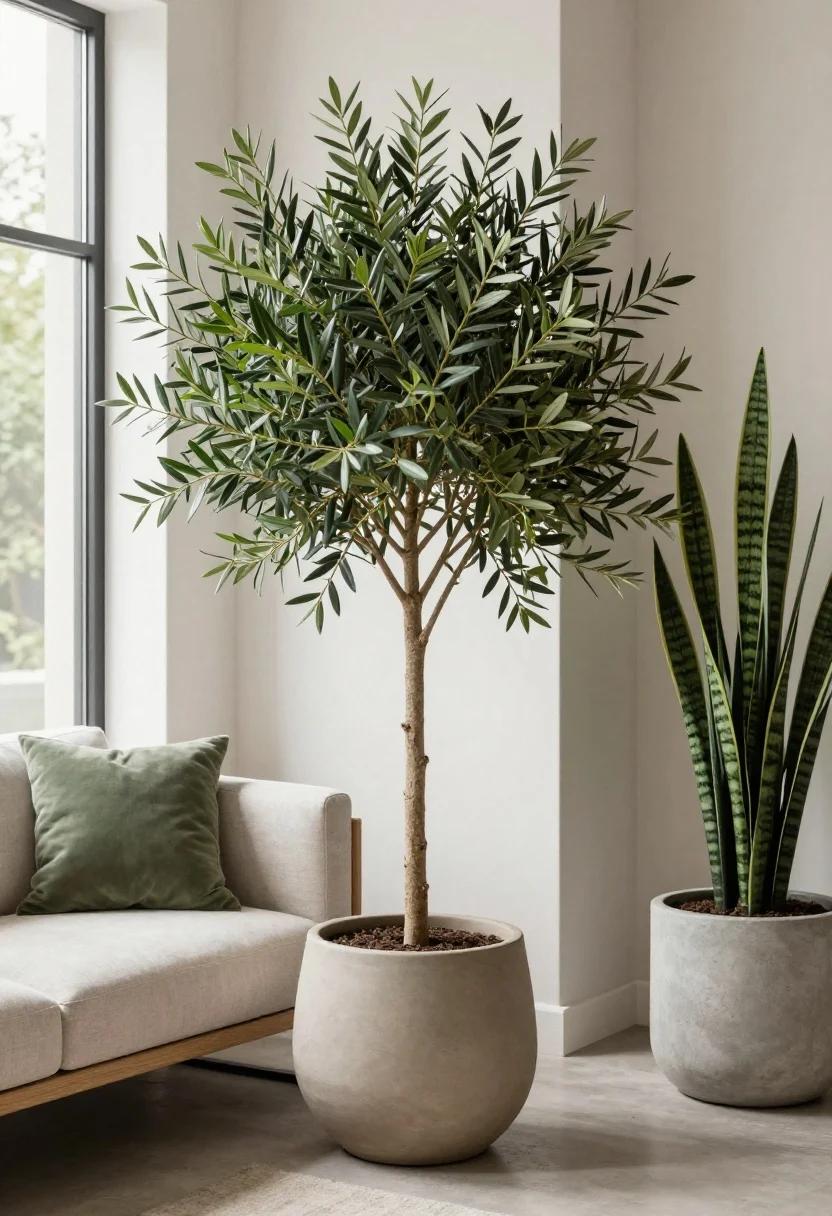
Plants = life, but we’re not building a jungle. Choose architectural greens with clean lines: olive trees, rubber plants, snake plants, or a single dramatic branch in water.
Keep the pots calm—matte ceramic, concrete, or neutral terracotta. Let the plant be the star.
- Tip: One large-scale plant often looks calmer (and more expensive) than five small ones.
- Care note: Match plant light needs to your room; olive loves sun, ZZ tolerates low light.
What to shop for: Neutral planters, ribbed ceramic pots, low saucers, pruning shears.
10. Curate Art With Negative Space And Natural Motifs
© 2025 AI Illustrator — Inspiration Only
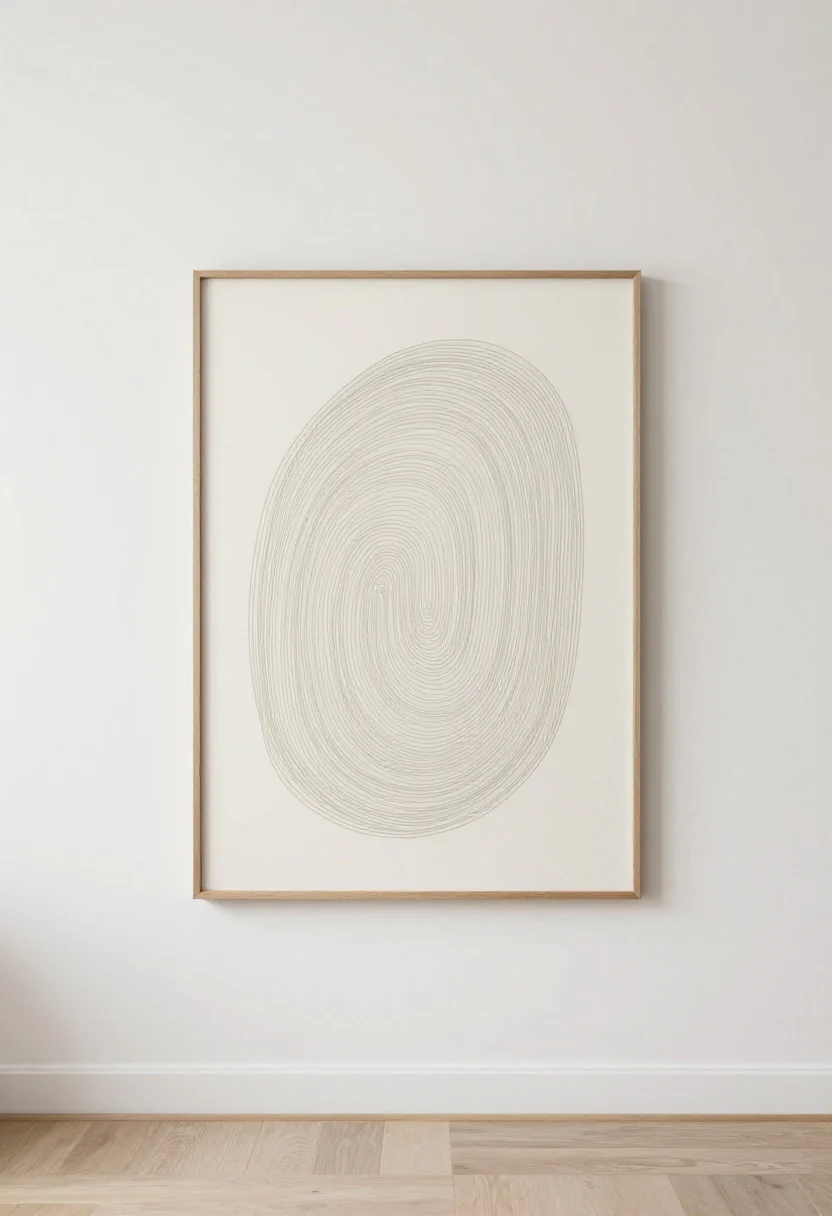
Art in a Japandi living room should feel quiet but intentional. Think minimal line drawings, soft abstracts, monochrome photography, or nature-inspired prints.
Keep framing simple—thin wood or black metal. And leave white space around the piece so it can breathe.
- Tip: Try a single oversized piece instead of a busy gallery wall.
- Placement: Hang art so the center is about 57–60 inches from the floor for a calm sightline.
What to shop for: Wood frames, canvas abstracts, linen-covered pinboards for rotating inspiration.
11. Hide The Chaos With Smart Storage
© 2025 AI Illustrator — Inspiration Only
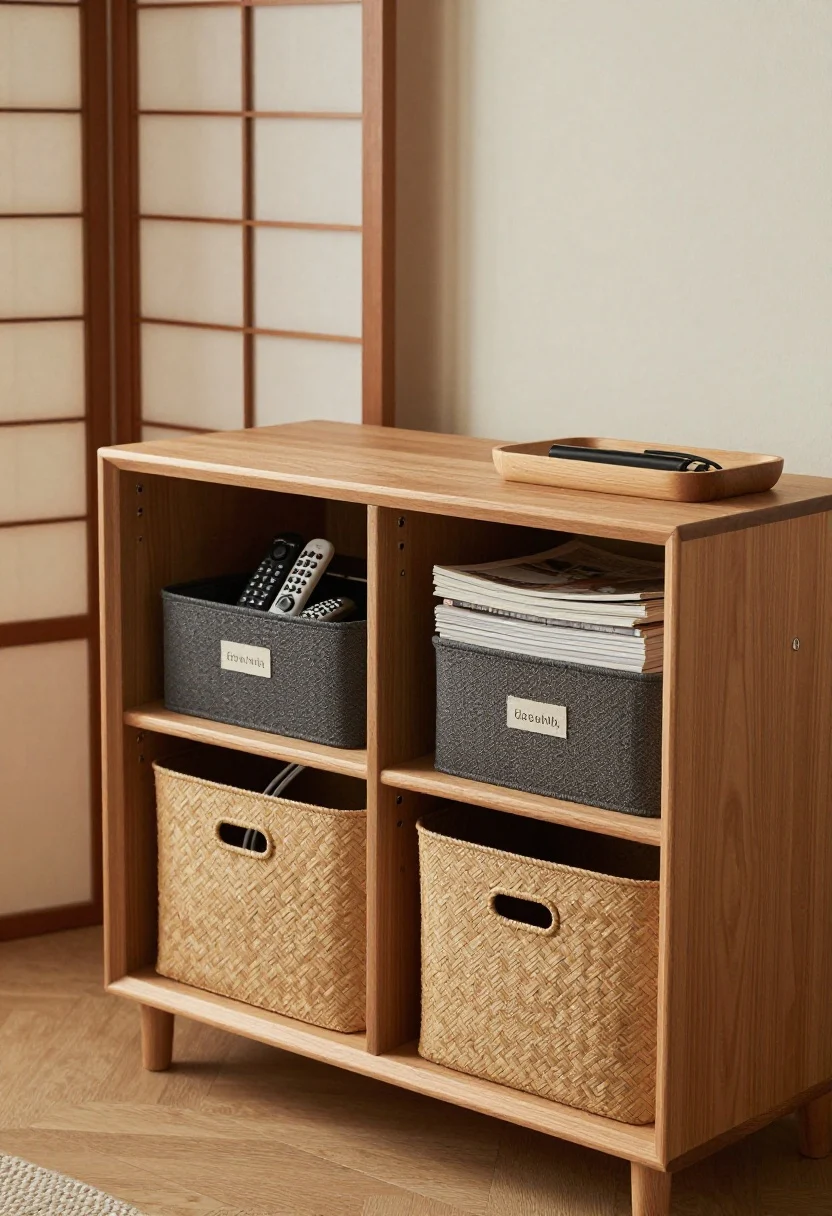
Clutter is the mortal enemy of calm. Choose closed storage for the messy stuff and open shelves for the pretty things. A low media console with doors is a lifesaver (and a cable wrangler).
Baskets? Yes, but keep them cohesive. One per category: remotes, throws, magazines. You’re building a serene system, not a woven obstacle course.
- Tip: Use lidded boxes inside consoles to divide cords, chargers, and remotes. Label discreetly.
- Trick: A folding screen or shoji-inspired panel can hide a workspace when guests come over.
What to shop for: Closed media consoles, lidded baskets, minimalist trays, cable sleeves.
12. Practice “1 In, 1 Out” And Seasonal Refreshes
© 2025 AI Illustrator — Inspiration Only
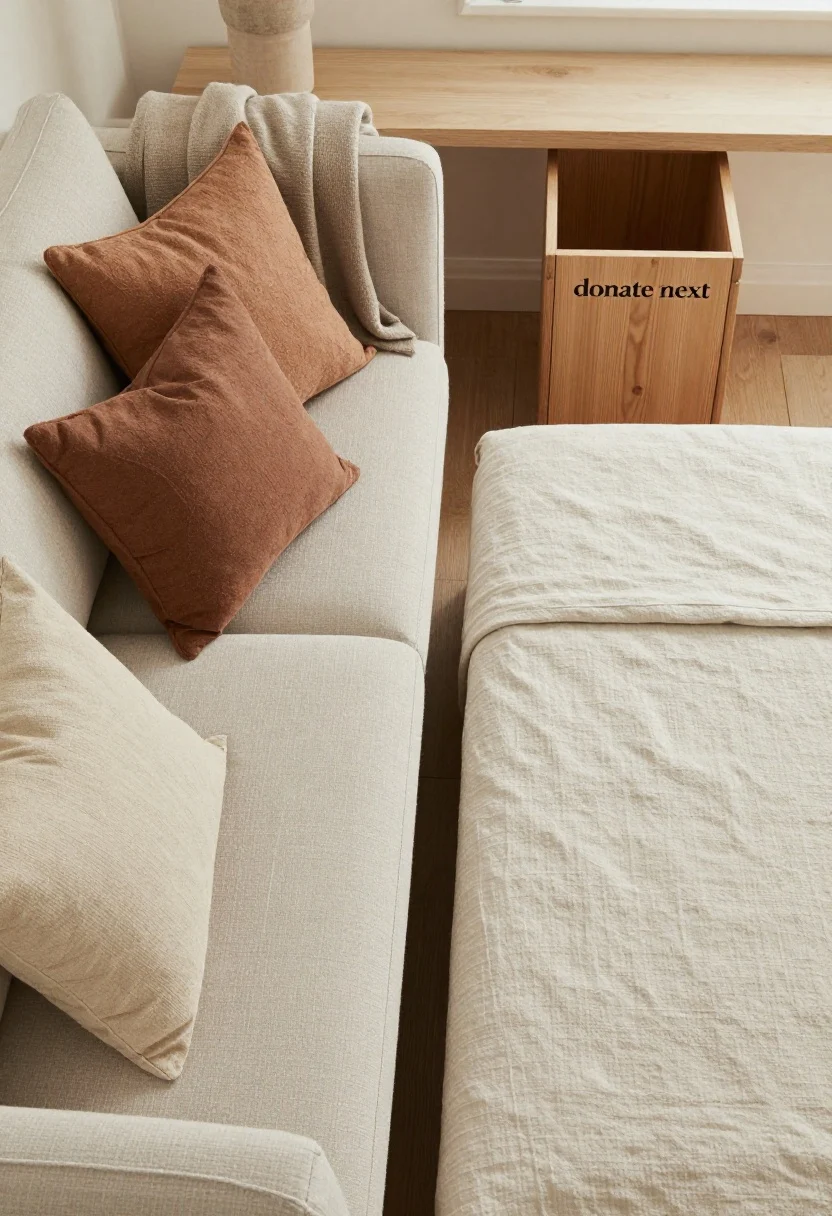
Japandi isn’t a one-and-done style—it’s a lifestyle of intentional editing. When something new comes in, let something old go. Rotate textiles seasonally for subtle shifts without buying a whole new room.
Winter = wool throw and deeper tones. Summer = linen, lighter woods, breezier textures. It keeps the space alive, not cluttered.
- Tip: Keep a small bin in a closet for “donate next” items. Out of the living room, out of mind.
- Mindset: Buy less, choose better, keep longer. Your wallet and your space will both chill out.
Putting It All Together
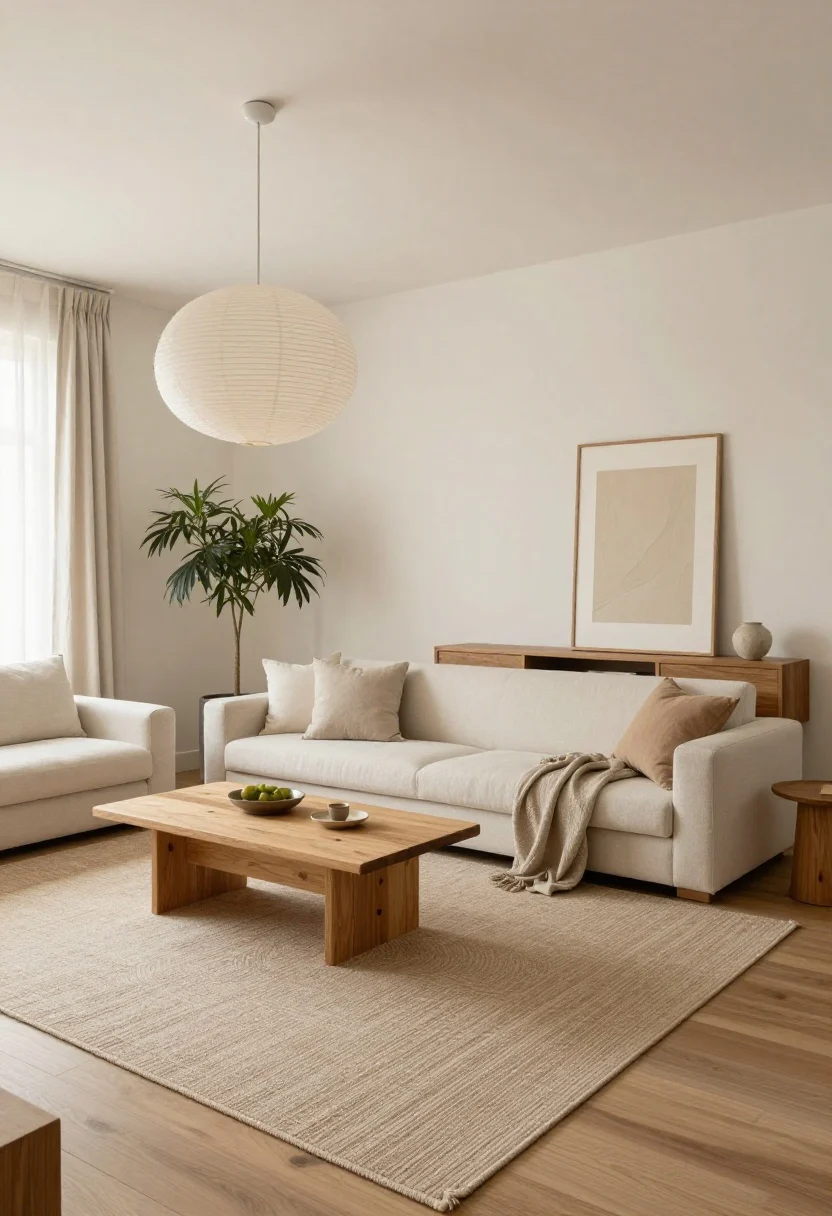
Start with the base: walls, rug, main sofa. Layer in wood and texture with a coffee table and textiles. Add lighting and a statement plant, then finish with a sculptural bowl and a single piece of art. Breathe. Enjoy.
Quick Checklist
- Neutral base (3 tones max)
- Low, clean-lined furniture
- 3–4 natural materials repeated
- Purposeful negative space
- Warm layered lighting (dimmable)
- One large plant or branch arrangement
- Closed storage for visual calm
Mini Styling Ideas
- Swap coffee table books for one linen-bound tome and a stone bowl.
- Replace a busy patterned rug with a nubby solid in wool or jute.
- Use a shoji-style room divider to define a corner reading nook.
What To Avoid
- Shiny, high-gloss finishes that reflect like a mirror.
- Over-accessorizing shelves. Edit, then edit again.
- Harsh blue-white lighting. Keep it warm and soft.
FAQ
© 2025 AI Illustrator — Inspiration Only
How do I make Japandi work in a small living room?
Go vertical with storage, choose a low sofa to create height visually, and keep the palette tight. Use mirrors strategically and pick one large-scale plant or art piece instead of many small ones.
Can Japandi include color, or does it have to be all neutral?
Color is allowed—just keep it muted and mindful. Soft greens, earthy terracotta, and charcoal accents play well. Use color in textiles or art so it’s easy to swap seasonally.
What’s the fastest way to “Japandi-fy” a space on a budget?
Declutter hard, switch to warm dimmable bulbs, add a neutral rug, and bring in one natural-texture element like a linen curtain or jute basket. A single branch in a simple vase works wonders for sculptural calm.
Final Thought
Japandi isn’t about perfection—it’s about quiet intention. Edit what you don’t need, invest in textures you love, and let negative space do its magic. Your living room will feel calmer, kinder, and way more “you.”
Shop the Look on Amazon
Disclosure: As an Amazon Associate, this site may earn from qualifying purchases.
These product categories fit this article and give readers an easy next step when they are ready to shop.
- Neutral Rugs — Creates a calm, seamless base for Japandi palettes.
- Low Sofa — Grounded silhouette supports minimal, airy layouts.
- Paper Pendant — Warm, diffused lighting adds spa-like ambiance.
- Wood Coffee Table — Light wood anchors space and layers natural texture.
- Neutral Planter — Showcases a single architectural plant with calm simplicity.