
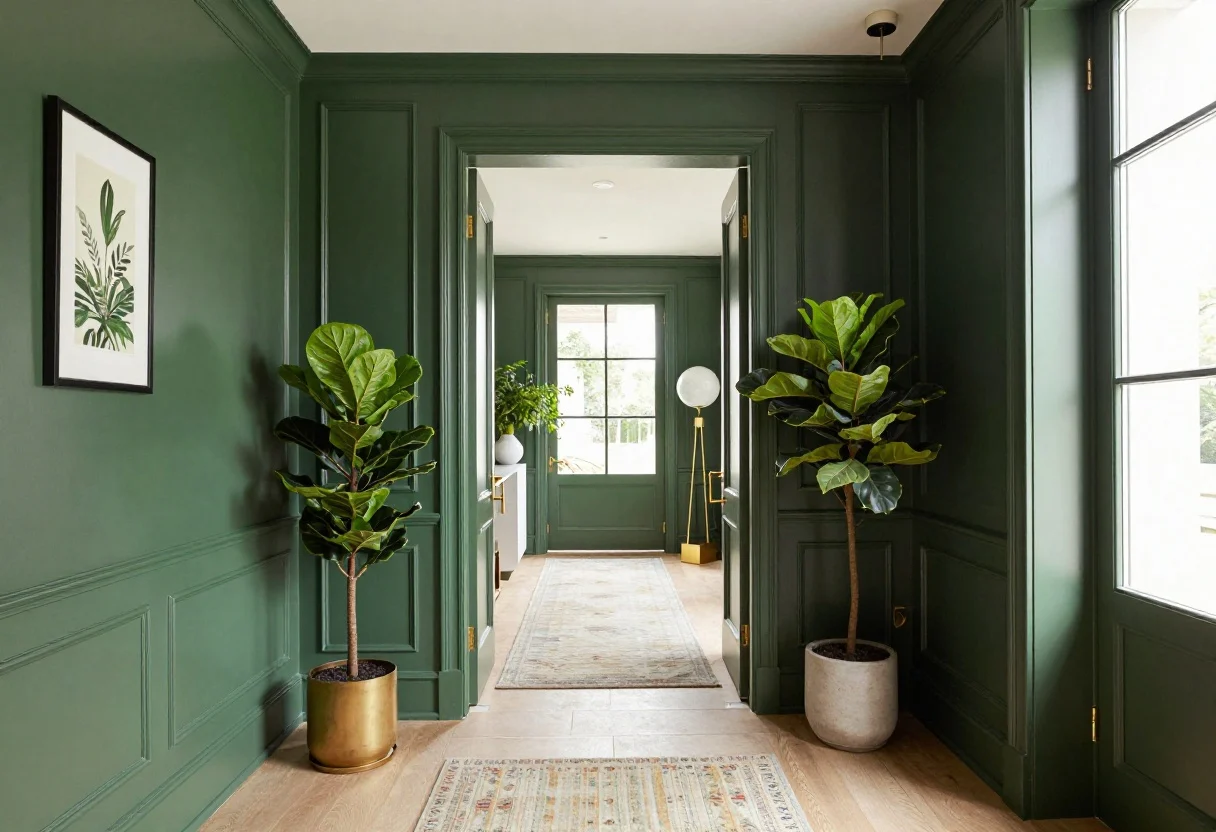
Green Hallway Ideas That Make a Statement

Your hallway is the first thing you see when you rush out the door—and the last chance to fix the mood when you come home. The common mistake? Playing it safe with beige walls and dim lighting that flatten a narrow space. You want a hallway that feels intentional: fresh, cohesive, and quietly bold. This guide will help you choose the right green palette, buy the right pieces, avoid finish mistakes, and copy seven specific looks that feel pulled-together—not Pinterest-only pretty.
Quick Answer: If you want instant impact without a full repaint, try a green runner rug with warm LEDs and a single oversized art piece for a focal point. If you can paint, go mid-tone olive or sage in eggshell, add black metal hardware for contrast, and use a 2700–3000K light temperature for warmth. For renters, use peel-and-stick wallpaper or painted picture ledges. Avoid glossy paint, zigzag gallery walls, and rugs that are too small.
© 2025 AI Illustrator — Inspiration Only
| Idea | Best For | Budget Level | Mistake To Avoid |
|---|---|---|---|
| 1. Deep Green Paint With Light Trim | Narrow halls needing drama | $$ | Using glossy paint that shows flaws |
| 2. Sage Paneling + Wallpaper Above | Homes with kids/pets | $$$ (or $$ DIY) | Wallpaper without wipeable finish |
| 3. Green Runner + Black Accents | Renters and quick refreshes | $$ | Rug too short or too narrow |
| 4. Botanical Art Grid | Hallways with decent light | $–$$ | Uneven spacing/too many frame styles |
| 5. Olive Storage With Brass | Busy entries needing hidden storage | $$–$$$ | Oversized cabinets blocking traffic flow |
| 6. Two-Tone Doors + Painted Ceiling | Older homes with many doors | $–$$ | Dark ceiling without enough light |
| 7. Plants, Pendants, and Texture | Hallways with medium to bright light | $–$$ | High-maintenance plants in low light |
1) Deep Green Walls, Light Trim, and Warm Lighting
© 2025 AI Illustrator — Inspiration Only
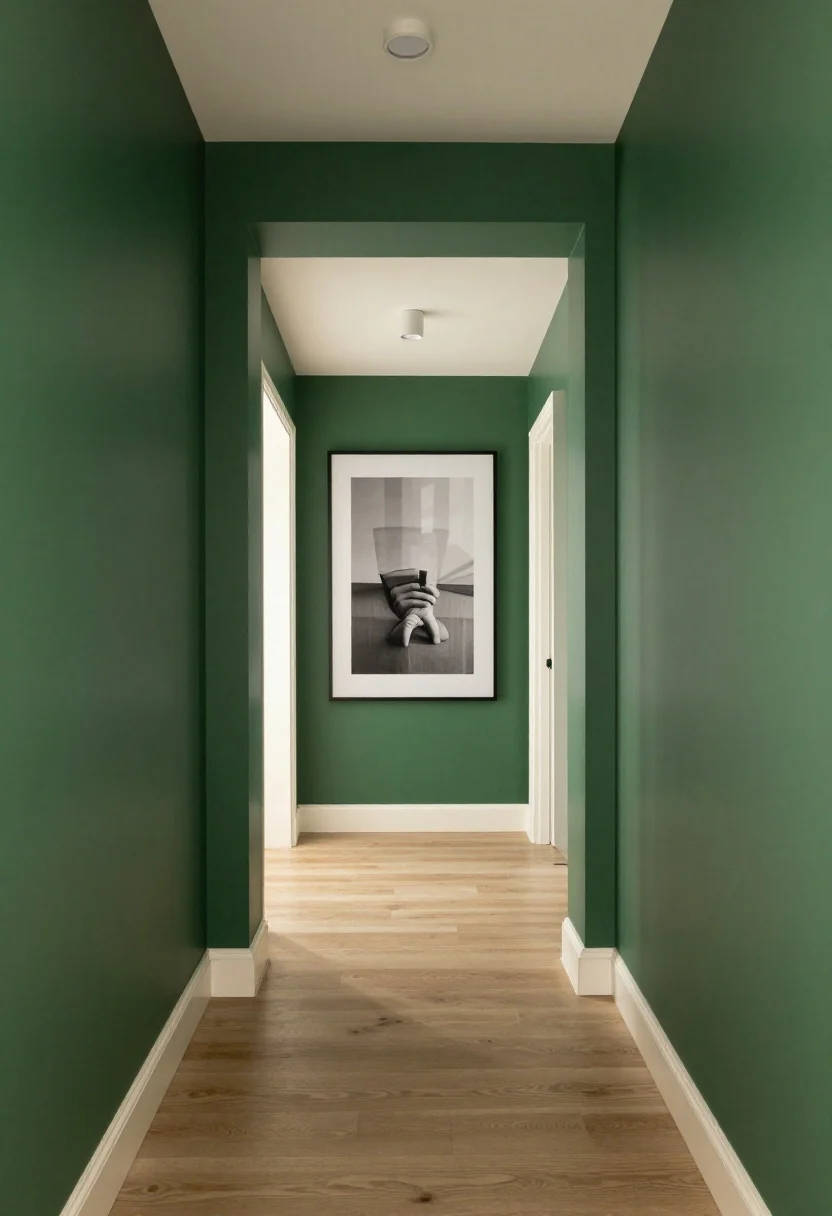
You want your small, plain hallway to feel intentional, but you’re worried dark paint will make it cave in; you picture a deep green that feels modern, not gloomy.
Why it works: A saturated green (think forest, pine, or bottle green) creates a defined envelope, while crisp white or soft ivory trim outlines the architecture and keeps edges clean. Warm light (2700–3000K) brings out the green’s depth and prevents a cold cast. The focal point becomes the corridor itself—great for spaces without art or windows.
- Test three greens on the wall: one cool, one warm, one neutral; check in daylight and at night.
- Choose eggshell or matte for walls to hide imperfections; semi-gloss for trim for subtle contrast.
- Swap bulbs to 2700–3000K, 90+ CRI if possible; add a low-profile flush mount or two mini sconces.
- Keep baseboards and door frames lighter (white or soft ivory) to frame the space.
- Add one anchor piece: a large mirror or a single oversized grayscale print to avoid visual clutter.
Mistake to avoid: High-gloss green on textured or flawed walls—it shows every dent. Also avoid cool 4000K bulbs, which can turn green sickly. If you have a very tight hallway (under 36 inches wide), keep the ceiling white to prevent “tunnel” effect. Next, if you’d rather keep the top airy and the bottom practical, try sage paneling with wallpaper above.
2) Sage Beadboard or Shaker Paneling With Subtle Wallpaper Above
© 2025 AI Illustrator — Inspiration Only
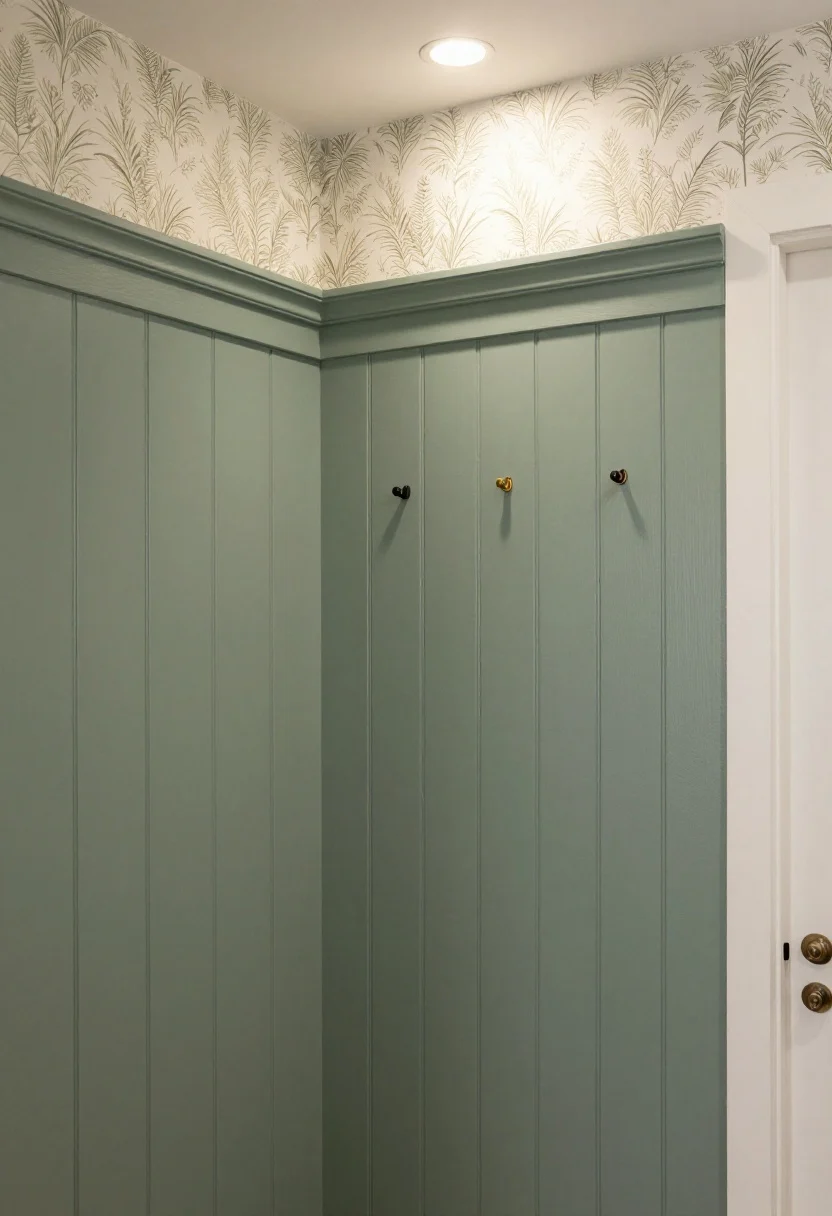
You need a corridor that stands up to backpacks, pets, and scuffs, but you want it to feel charming—not like a mudroom retrofit.
Why it works: Paneling in a mid-tone sage anchors the lower half with durable texture and wipes clean. Wallpaper above adds interest at eye level without overstuffing a narrow passage. The change in texture creates rhythm along a long stretch, and the color split balances height in spaces with high or low ceilings.
- Install 36–48 inch-high beadboard or simple shaker panels; cap with a 2–3 inch ledge as a mini shelf.
- Paint paneling sage in satin for cleanability; use a soft, complementary wallpaper above (small botanical, grasscloth-look, or geometric).
- Keep trim and doors a warm white to tie in the paper background; add simple black or aged brass hooks sparingly.
- Light with a slim picture light or small sconces to graze the wallpaper texture.
Budget note: Real wood panels cost more; MDF beadboard and color-matched caulk cut costs. If wallpapering, choose scrubbable vinyl or coated paper in high-traffic homes. Renter-friendly route: use peel-and-stick beadboard wallpaper below and real ledge molding on removable Command strips. If you like storage built in, move to the olive cabinet approach next.
3) A Green Runner Rug, Black Accents, and One Big Focal Art
© 2025 AI Illustrator — Inspiration Only
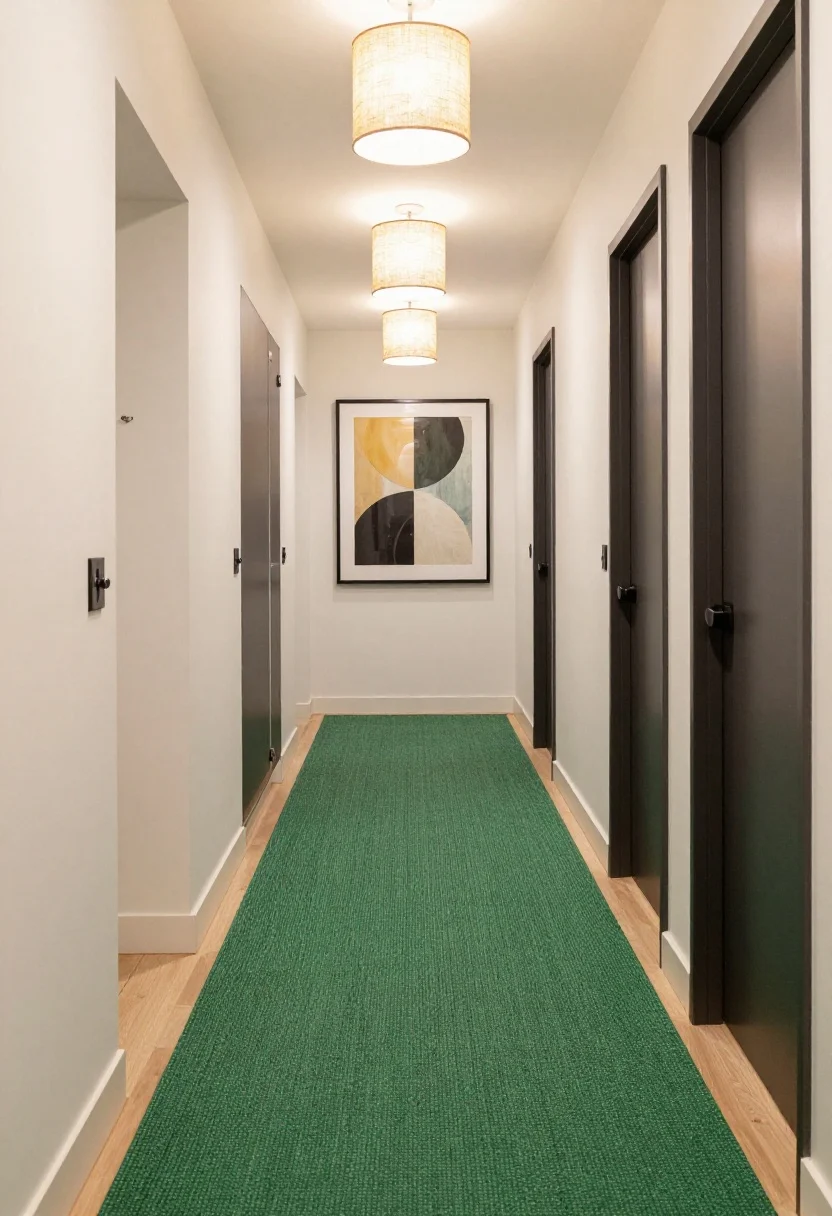
Your lease is strict, the floor is bland, and the hallway echoes; you need warmth and color that rolls up when you move.
Why it works: A green runner softens acoustics, defines a path, and adds pattern without covering the walls. Black accents (frame, hooks, doorknobs) sharpen the look and add contrast. One oversized art piece or mirror becomes a clear focal point, stopping the eye from rushing down a long corridor.
- Measure from baseboard to baseboard; choose a runner that leaves 3–5 inches of floor visible on each side for proportion.
- Pick a low-pile or flatweave with a green base and forgiving pattern; add a thin, non-slip rug pad cut 1 inch smaller.
- Swap switch plates or door hardware to matte black; add one 24×36 or larger framed print at the end of the hall.
- Upgrade bulbs to warm LEDs; if ceiling height allows, install a slim flush mount with a linen diffuser.
Mistake to avoid: A runner that’s too short. Aim to cover 75–90% of the hall’s length so it doesn’t look like a bath mat. For doors that swing over the runner, choose sub-1/4 inch pile to clear. If you need wall presence with minimal spend, a botanical art grid gives structure without paint.
4) Botanical Grid Gallery in Tones of Green
© 2025 AI Illustrator — Inspiration Only
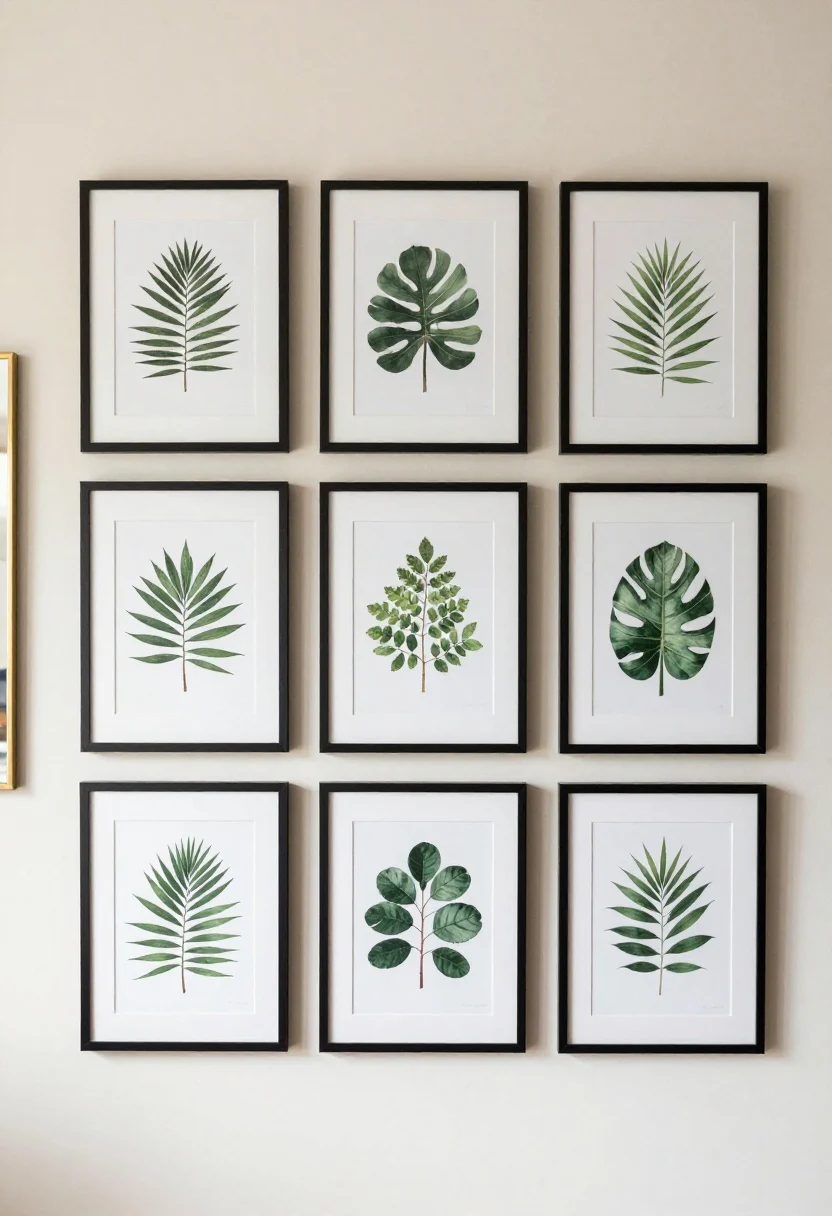
Your hallway has okay light but zero personality, and your existing family gallery looks messy; you want order, color, and calm.
Why it works: A grid of similarly sized botanicals calms visual noise and reads as one large installation. Repeating frames in black, oak, or brass creates consistent rhythm; green tones offer color without chaos. It also adds a focal point to long walls and subtly widens narrow halls with the right mat margins.
- Choose 6–12 prints in a unified palette; stick to one frame color and one mat size (e.g., 16×20 with 2–3 inch mats).
- Hang centerlines at 57–60 inches from the floor; space frames 2–3 inches apart both vertically and horizontally.
- Use a level and a paper template for drilling; opt for Command picture hanging strips in rentals.
- Keep the opposite wall mostly bare or with a mirror to avoid a crowded walkway.
Mistake to avoid: Mixing too many frame types—keep it to one, two at most. In dim halls, choose prints with clear contrast so they don’t muddy out. If your hall needs closed storage more than art, consider olive cabinetry with brass details next.
5) Olive Storage Wall With Slim Brass Hardware
© 2025 AI Illustrator — Inspiration Only
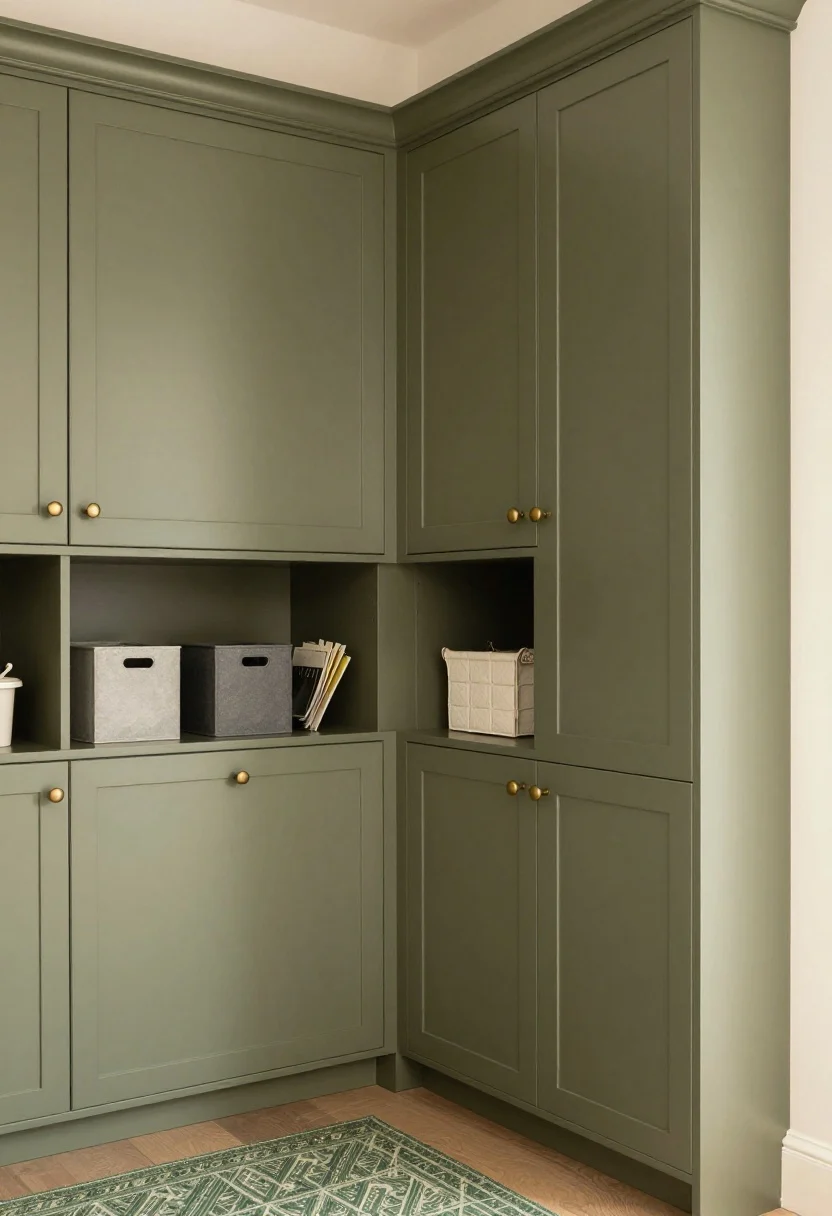
Backpacks, umbrellas, and mail pile up near the front door; you need storage that hides clutter and still feels elegant in a narrow pass-through.
Why it works: Floor-to-ceiling or waist-high storage in olive green blends with the architecture instead of shouting “utility.” Brass or antique brass hardware warms the green and adds small-scale shine. The right furniture scale maintains traffic flow and keeps sightlines clean, especially in tight spaces.
- Measure traffic width: maintain at least 36 inches clear, 42 inches if two people often pass.
- Choose shallow cabinets (11–15 inches deep) or a slim shoe dresser; paint or buy in an olive tone with a satin finish.
- Add uniform brass knobs or 4–6 inch pulls; line interiors with washable bins or baskets for categories.
- Mount a narrow ledge above for keys and mail; place a low-profile runner in a solid or micro-patterned green for continuity.
Budget note: Upgrade an inexpensive flat-pack with primer + furniture paint and quality hardware; it’s the hardware that makes it look custom. Watch out for cabinets deeper than 15 inches—they eat the hallway. If you prefer architectural paint work instead of furniture, try two-tone doors and a painted ceiling.
6) Two-Tone Doors and a Softly Painted Ceiling
© 2025 AI Illustrator — Inspiration Only
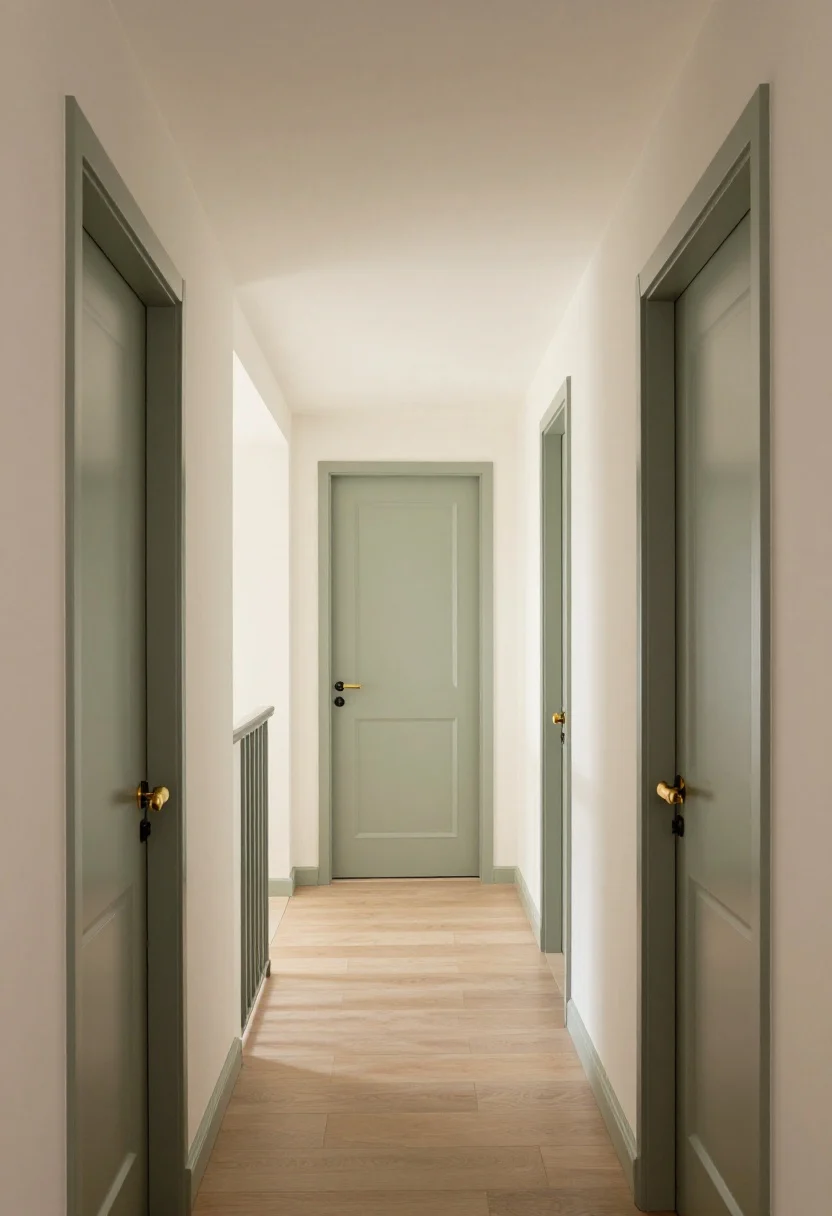
Your hallway has a row of doors that look busy and mismatched; you want cohesion that still feels layered and considered.
Why it works: Painting doors a muted green and keeping frames/trim light links scattered openings into a rhythm. A whisper-light green ceiling (two shades lighter than the doors) draws the eye up and softens harsh downlighting. This distributes color evenly without loading the walls.
- Pick a door green that’s mid-tone and slightly gray; paint in semi-gloss for durability.
- Keep trim and walls light neutral; repeat the door color on the stair rail or newel cap for a small echo.
- Paint the ceiling a faint tint of the same hue (10–15% saturation of the door color).
- Use simple black or brass levers to reinforce the palette; check swing clearances before painting edges.
Mistake to avoid: Dark ceiling in a low-light hall—it will compress the space. If you swap to a tinted ceiling, increase lumen output with an additional fixture or higher lumen LED at the same warm temperature. If you need a more organic, textured feel to offset paintwork, layer plants, pendants, and natural fibers next.
7) Plants, Pendants, and Natural Texture in a Green Palette
© 2025 AI Illustrator — Inspiration Only
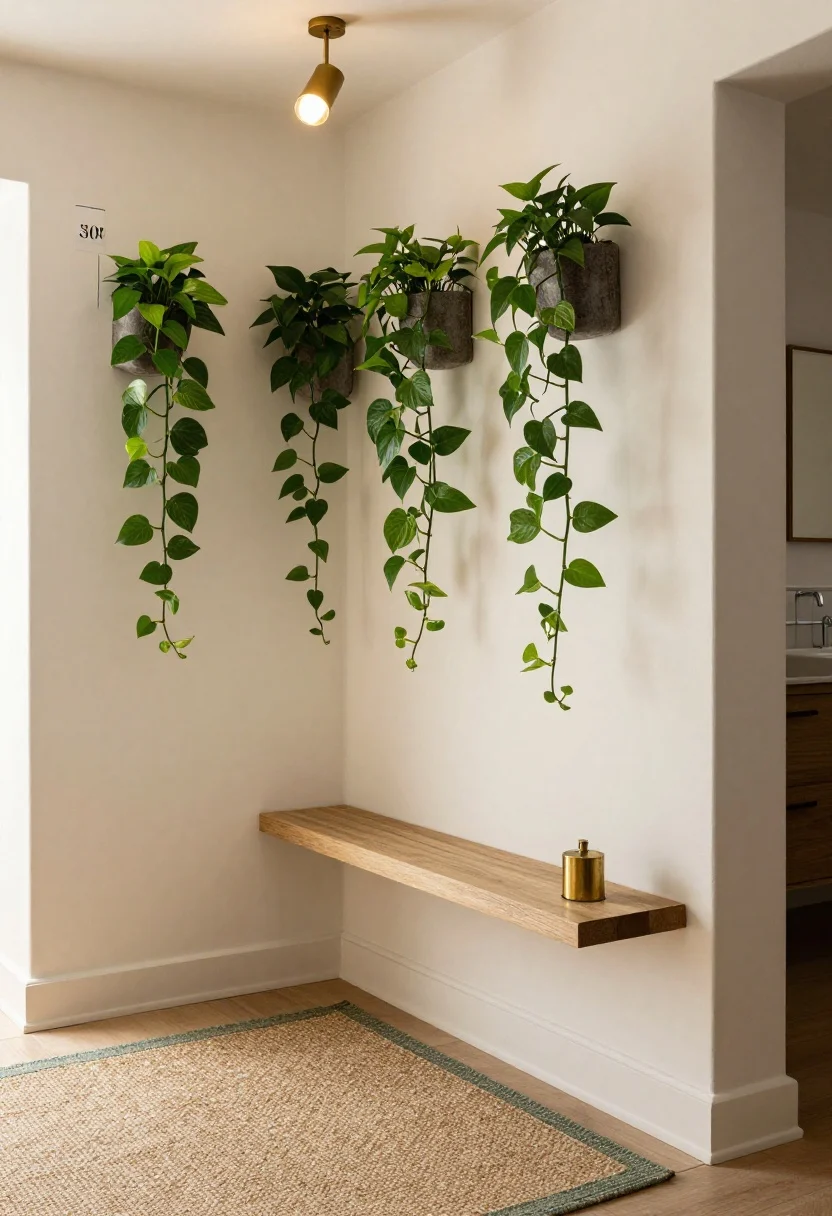
You’ve got acceptable walls but the hallway feels sterile; you want life and texture that don’t block movement.
Why it works: Living greens (or realistic faux) echo the palette in three dimensions, while woven textures and aged metals break up hard surfaces. A small-scale pendant or series of mini-pendants establishes a gentle rhythm overhead, drawing the eye along the hall and balancing proportions.
- Use wall-mounted planters or narrow console shelves with trailing plants (pothos, philodendron) where light allows; in low light, choose high-quality faux.
- Swap a single flush mount for two mini-pendants spaced evenly; keep drop heights high enough (at least 80 inches clearance) for tall guests.
- Add a jute or sisal-look runner with green border for texture; choose indoor/outdoor for durability and easy cleaning.
- Introduce a small oxidized brass sconce or framed pressed-leaf art to layer finishes and green tones.
Mistake to avoid: High-maintenance plants in low light—they’ll struggle and look sad. If your hall is dark, supplement with 3000K, high-CRI lighting and go faux for anything leafy. If you’re shopping now, use the quick buying guidance below to avoid costly missteps.
What To Buy / What To Skip
- Buy: Eggshell or matte wall paint; satin or semi-gloss trim; 2700–3000K LED bulbs; runners that leave 3–5 inches of floor on each side; frames in one finish; shallow storage (11–15 inches deep); scrubbable wallpaper; high-CRI bulbs; black or brass hardware.
- Skip: High-gloss green on imperfect walls; 4000K+ bulbs in green schemes; rugs under 70% of hall length; gallery walls with mixed frames and uneven spacing; deep cabinets that reduce clear width below 36 inches; non-washable wallcoverings in high-traffic zones; tiny hardware on tall doors.
Common Mistakes Designers Still Make
- Choosing a green that reads too blue under warm bulbs—always swatch with final lighting on.
- Forgetting traffic flow—anything that reduces clear width below 36 inches becomes a daily annoyance.
- Ignoring sheen—too shiny looks cheap and highlights wall flaws; too flat scuffs immediately.
- Over-decorating both walls of a narrow hall—leave one side quiet to rest the eye.
- Using glossy floor tile plus glossy paint—double glare makes spaces feel harsher and smaller.
Budget-Friendly Alternatives
If you’re working under a tighter budget or in a rental, you still have great options:
- Paint just the doors and baseboards in olive or sage instead of full walls; a quart can be enough for a short hall.
- Use peel-and-stick wallpaper on the upper half only; add a painted batten ledge below for structure.
- Opt for an indoor/outdoor polypropylene runner with a green motif—durable, stain-resistant, and usually half the price of wool.
- Print public-domain botanical plates and frame in IKEA frames with custom-cut mats for a crisp gallery on a budget.
- Swap plastic switch plates for painted metal ones matched to the wall—small spend, surprisingly elevated look.
Green Hallway Quick Comparisons
If you’re torn between paint shades and finishes:
- Sage vs. Olive: Sage has more gray, reads calmer and fresher; olive skews warmer and pairs well with brass and wood.
- Matte vs. Eggshell: Matte hides flaws best but scuffs; eggshell is easier to wipe for high-traffic halls.
- Brass vs. Black Hardware: Brass warms and feels classic; black sharpens and modernizes. Either works with green—choose based on floor color (warm wood loves brass; cool stone often prefers black).
Lighting Notes That Save Money
- Choose fixtures that sit close to the ceiling if the clearance is under 8 feet; pick opal glass or linen diffusers to avoid harsh shadows on textured walls.
- Stick to 2700–3000K LEDs with a CRI of 90+ to keep greens true and skin tones flattering in a pass-through that doubles as a mirror-check zone.
- Dimmers help if your hall connects to bedrooms—lower light after bedtime reduces glare without changing bulbs.
How to Build a Cohesive Green Palette
- Pick one dominant green (walls, doors, or runner) and repeat it in two small accents (a vase, a print mat, or a lampshade).
- Balance with two neutrals: one light (soft white, warm stone) and one dark (black, espresso) for depth.
- Add a natural texture (wood, cane, jute) to keep the scheme from feeling flat.
Placement and Sizing Cheats
- Runner width: 3–5 inches of floor showing on each side looks tailored.
- Art height: center at 57–60 inches for average households; adjust up if ceilings are over 10 feet.
- Sconce spacing: about every 6–8 feet in long halls, mounted at roughly 60–64 inches to avoid glare.
Maintenance Tips
- Scuff-resistant paint and a magic eraser are your friends; touch up quarterly in busy homes.
- Use rug pads to prevent runner creep and reduce wear patterns; vacuum runners weekly to keep fibers upright.
- If you chose wallpaper, keep a small offcut; future patching is far easier than replacement.
FAQ
© 2025 AI Illustrator — Inspiration Only
What shade of green is safest for a dark hallway?
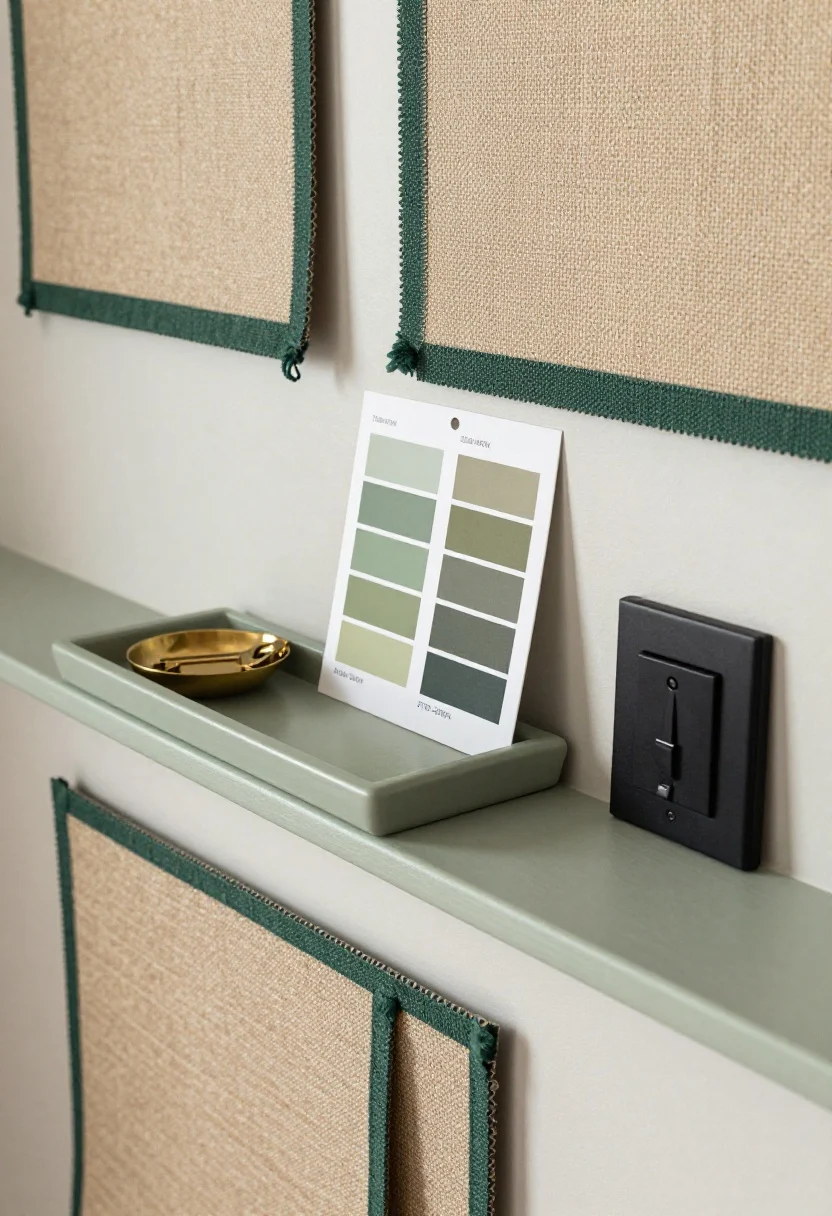
Mid-tone greens with gray in them—like sage or lichen—are most forgiving. They won’t black out the hall like very dark greens, and they won’t turn neon under warm lights like bright emeralds. Pair with warm 2700–3000K bulbs and light trim to prevent gloom.
How long should a hallway runner be?
Cover 75–90% of the hall’s length, leaving a few inches of floor visible at both ends. For width, leave 3–5 inches of floor showing on each side. If doors swing over the rug, choose a low-pile runner under 1/4 inch thick.
What paint finish should I use for high-traffic hallways?
Eggshell on walls for wipeability; satin on paneling; semi-gloss on trim and doors for durability. Avoid high-gloss on imperfect walls, as it highlights dings and tape lines.
How do I choose hardware color with green?
Use black for a modern, graphic look and brass for warmth and classic appeal. If your floors are warm wood or you have brass light fixtures, brass hardware feels cohesive. Cool stone or concrete floors pair nicely with black.
Is removable wallpaper a good idea in hallways?
Yes—choose a thicker, scrubbable option and avoid high-texture walls for better adhesion. It’s ideal above chair rail height or beadboard, where it’s less likely to get bumped by bags and shoes.
Conclusion: Start with the idea that solves your biggest hallway pain. If it’s bland walls, try deep green with light trim and warm lighting. If clutter rules, olive storage with brass hardware changes daily life. For renters or quick wins, a green runner and one clear focal art piece make a statement fast. Pick one approach, swatch or measure before you buy, and build from there—your green hallway can be confident, practical, and personal without guesswork.
Before You Start: Quick Decorating Checklist
- Measure the room before buying furniture or storage pieces.
- Choose one main focal point so the space does not feel busy.
- Repeat at least one finish, texture, or color to make the room feel intentional.
- Check lighting temperature, traffic flow, and cleaning needs before copying the look.
Helpful Product Ideas To Compare
Affiliate disclosure: Some links may be affiliate links. Compare size, material, reviews, and return policy before buying.
- Shop Green Hallway Make Statement Decor — useful for checking price ranges, finishes, and real customer photos.
- Shop Green Hallway Make Statement Storage — useful for checking price ranges, finishes, and real customer photos.
- Shop Green Hallway Make Statement Lighting — useful for checking price ranges, finishes, and real customer photos.
One Comment
Comments are closed.