Garden Water Feature Ideas for a Peaceful and Relaxing Backyard

When the hum of traffic fades and the evening light softens, a backyard can become the perfect place to unwind. Adding a water feature not only introduces soothing sounds but also creates visual interest that draws the eye toward gentle movement. Below are seven distinct ideas that can be adapted to a range of budgets, garden sizes, and personal styles. Each concept includes a description of the look, the reasons it works, practical steps for installation, and a note on maintenance or potential drawbacks, so you can choose the option that feels right for your space.
1. Simple Stone Basin Fountain
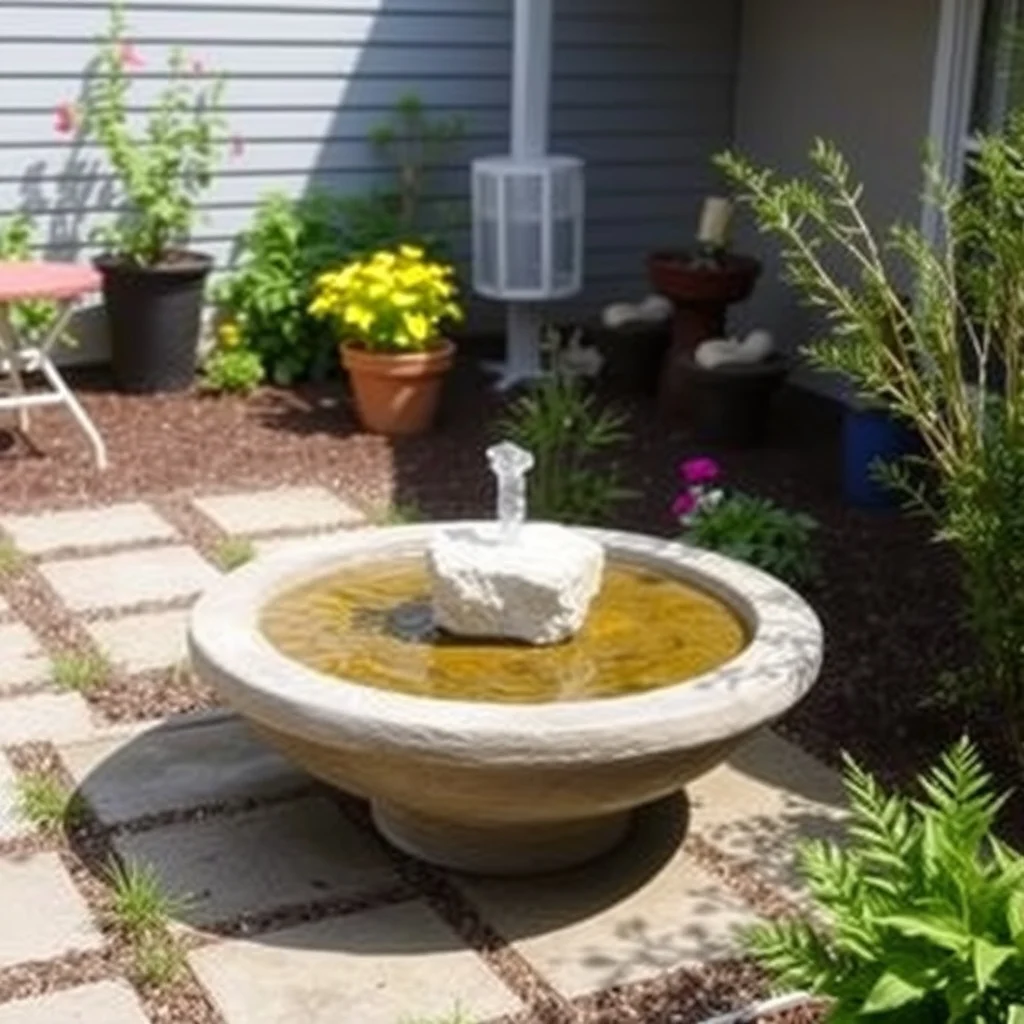
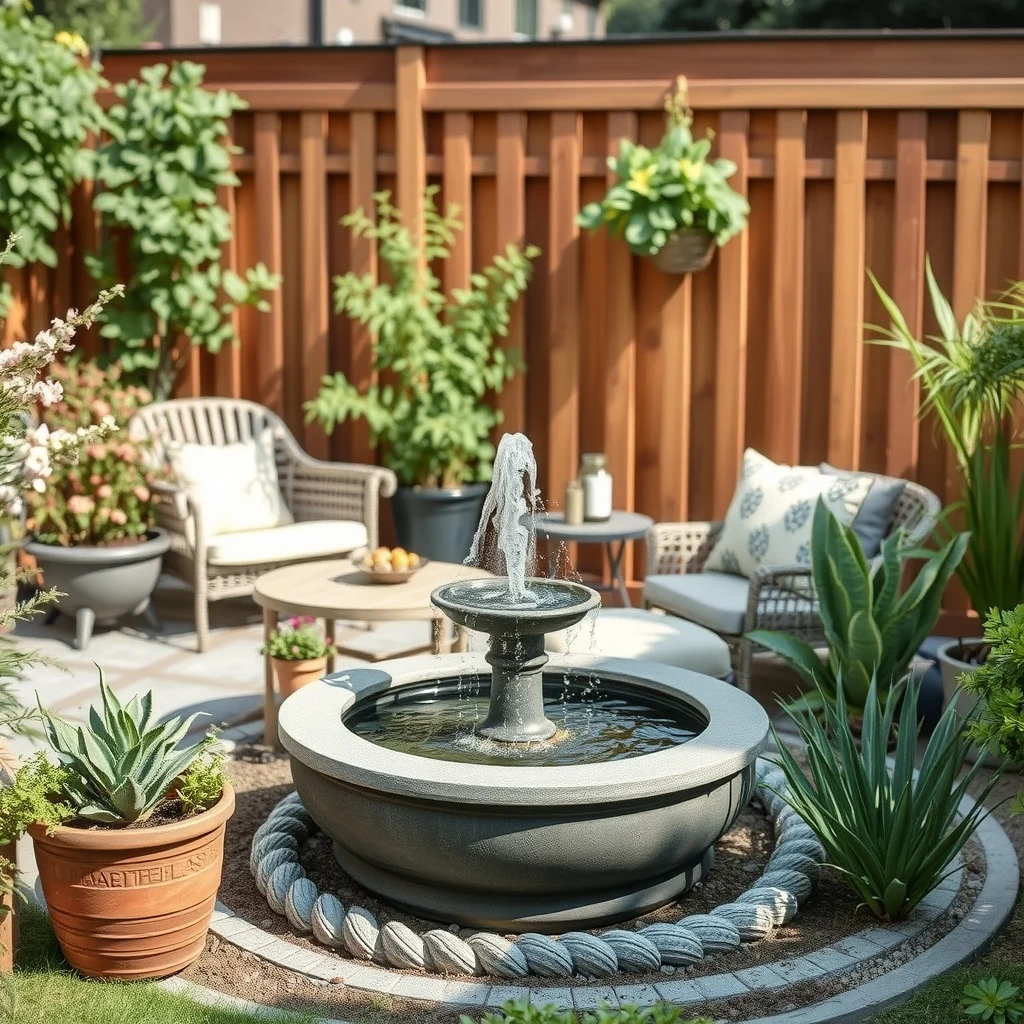
A shallow stone basin set on a low concrete pad offers a classic, understated focal point. The basin, often made of smooth river rock or a single slab of limestone, holds a modest pump that pushes water through a discreet nozzle, creating a quiet, bubbling sound. This simplicity works because the stone’s natural texture reflects the surrounding greenery, while the gentle noise masks distant urban sounds without overwhelming conversation.
To install, dig a shallow depression slightly larger than the basin, line it with a waterproof membrane, and place the stone on top. The pump can be hidden beneath a layer of decorative gravel, which also helps keep the water clean. Running a low-voltage line to a nearby outlet keeps the system safe, but it’s wise to use a ground‑fault circuit interrupter and consult an electrician if you’re unsure about the wiring. Maintenance mainly involves removing debris from the pump inlet and occasional top‑ups of water during hot, dry periods.
The main limitation is the modest size of the water display; a larger garden may need something more dramatic. However, the stone basin’s compact footprint makes it ideal for patios, entryways, or a quiet corner where space is at a premium.
2. Cascading Wall Waterfall
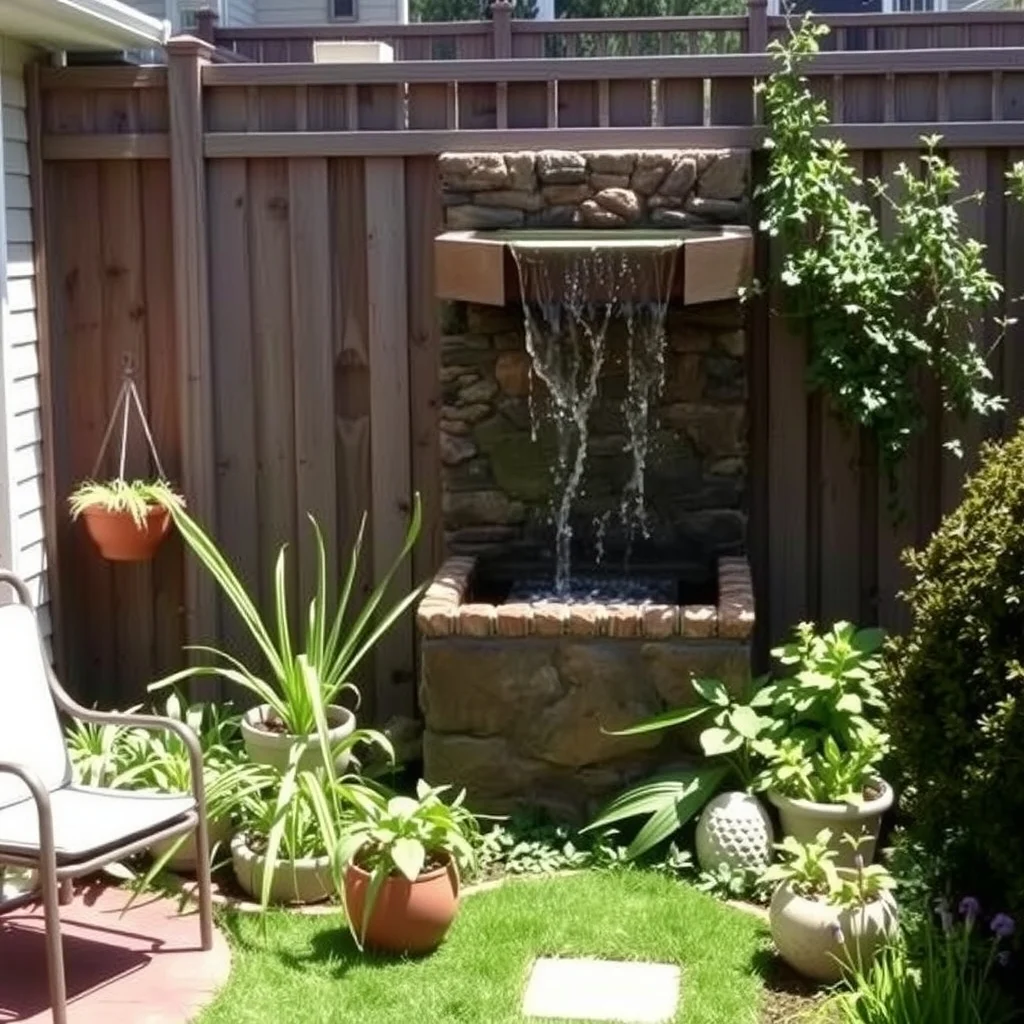
A vertical waterfall mounted on a garden wall adds a sense of height and movement that can transform a plain fence or retaining structure into a living artwork. Water is pumped to the top of a sloped stone or concrete panel, then allowed to cascade down a series of ledges, creating a gentle, rhythmic flow. The visual impact of water sliding over textured surfaces pairs well with surrounding plants, especially ferns that thrive in the misty micro‑climate created by the falling droplets.
Installation begins with selecting a wall that can support the weight of the stone and the water load. A sturdy mounting system, often stainless steel brackets, holds the panel securely. The pump is placed in a concealed reservoir at the base, and tubing runs up the wall inside a narrow channel to keep it out of sight. Lighting can be incorporated with waterproof LED strips along the ledges, highlighting the water’s path after dusk.
One practical concern is the need for regular cleaning of the ledges to prevent mineral buildup, especially in hard water areas. Additionally, the wall must be waterproofed behind the panel to avoid moisture seeping into the structure. When those details are managed, the cascading wall waterfall becomes a striking centerpiece that invites lingering and quiet contemplation.
3. Bamboo-Integrated Stream
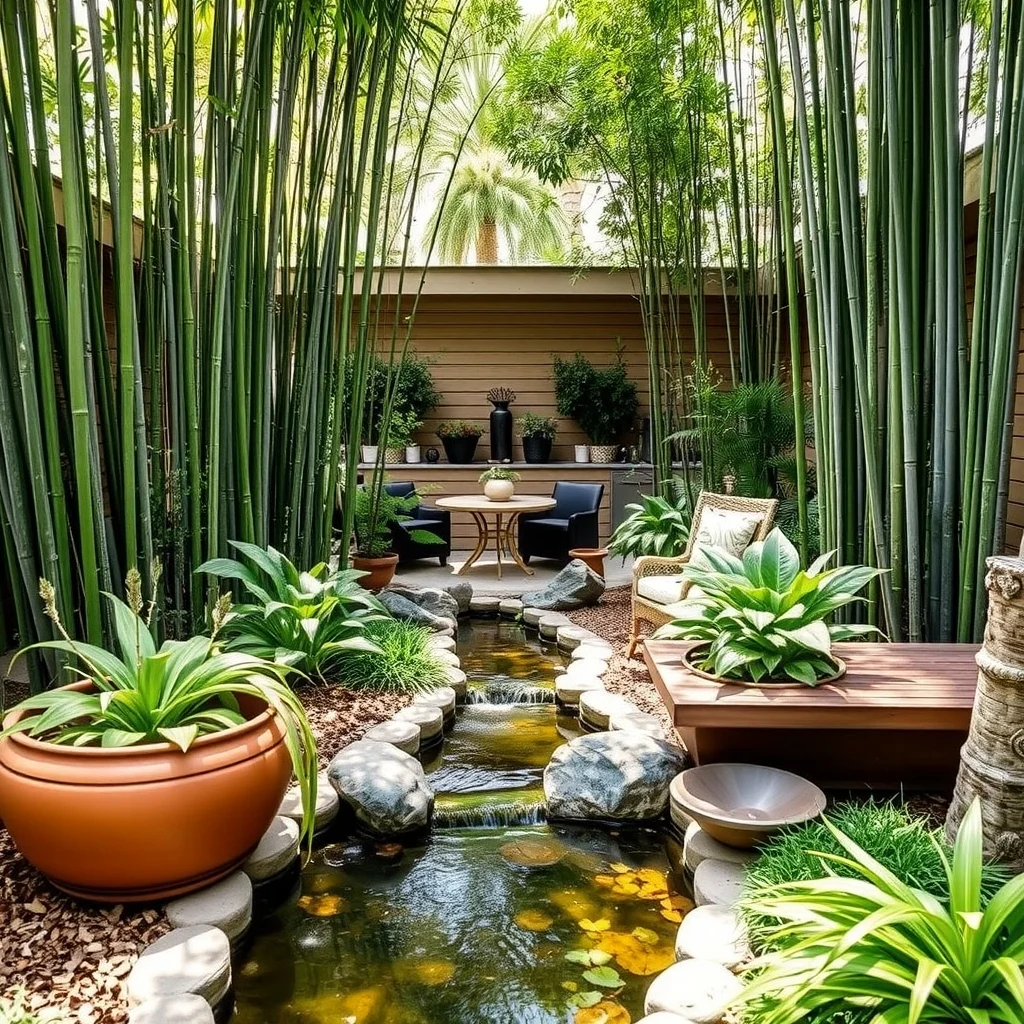
Running a narrow, meandering stream through a bamboo grove creates a naturalistic scene that feels both secluded and inviting. The waterway can be lined with a flexible pond liner, then covered with a thin layer of river stones to mimic a creek bed. Tall bamboo stalks placed on either side of the channel provide privacy and a soft rustling sound that complements the water’s murmur.
To build the stream, first map a gentle curve that follows the garden’s topography, ensuring a slight downhill slope of about 1% for gravity‑assisted flow. Excavate the channel, lay the liner, and secure it with stones at the edges. A small submersible pump placed at the lowest point circulates water back to the highest point, where a discreet inlet hidden among the bamboo maintains a continuous loop.
Because bamboo can grow rapidly, it’s wise to install root barriers to keep the plants from overtaking the liner. The stream also requires periodic removal of leaves and debris that can clog the pump. When maintained, this design offers a tranquil retreat that feels like a hidden forest glade, perfect for meditation or a quiet reading nook.
4. Recycled Barrel Pond
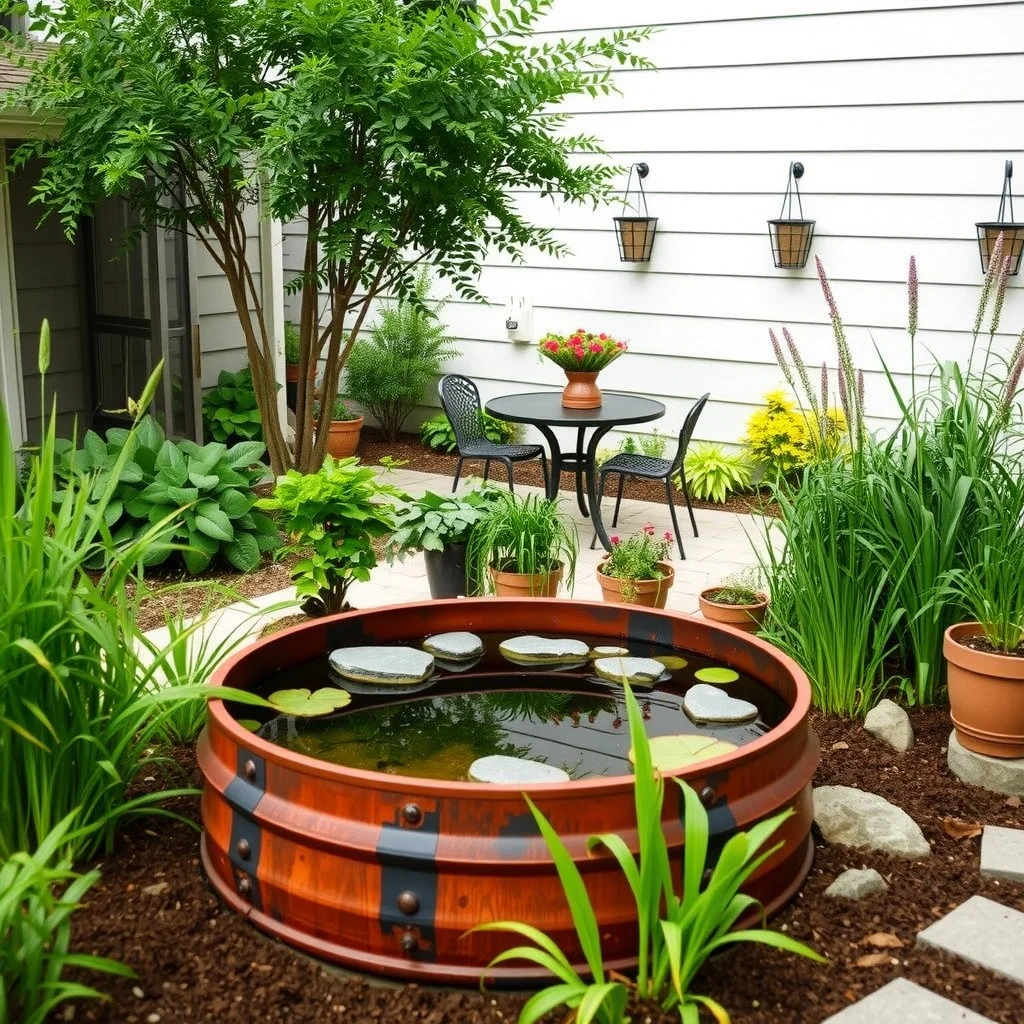
Turning an old rain barrel into a modest pond brings a sustainable twist to garden design while providing a reflective surface that doubles as a visual anchor. The barrel, when cut in half and inverted, creates a shallow basin that can hold a small pump and a few hardy water plants such as water lettuce or dwarf iris. The metal’s weathered patina adds an industrial charm that contrasts nicely with surrounding stone pavers or wooden decking.
The conversion starts by cleaning the barrel thoroughly and removing any rust spots with a wire brush. After cutting the barrel, a waterproof sealant is applied to the interior to prevent leaks. A pump is set at the deepest point, and a simple overflow pipe ensures the water level stays constant. Adding a layer of sand and gravel at the bottom gives the plants a stable medium and helps filter the water.
Because metal can heat up in direct sun, placing the pond in partial shade or surrounding it with a light pergola can reduce evaporation and temperature fluctuations. The main trade‑off is the limited depth, which restricts the variety of aquatic life that can thrive. Nonetheless, the recycled barrel pond offers a low‑cost, eco‑friendly option that brings the soothing presence of water to a modest space.
5. Solar‑Powered Pebble Ripple
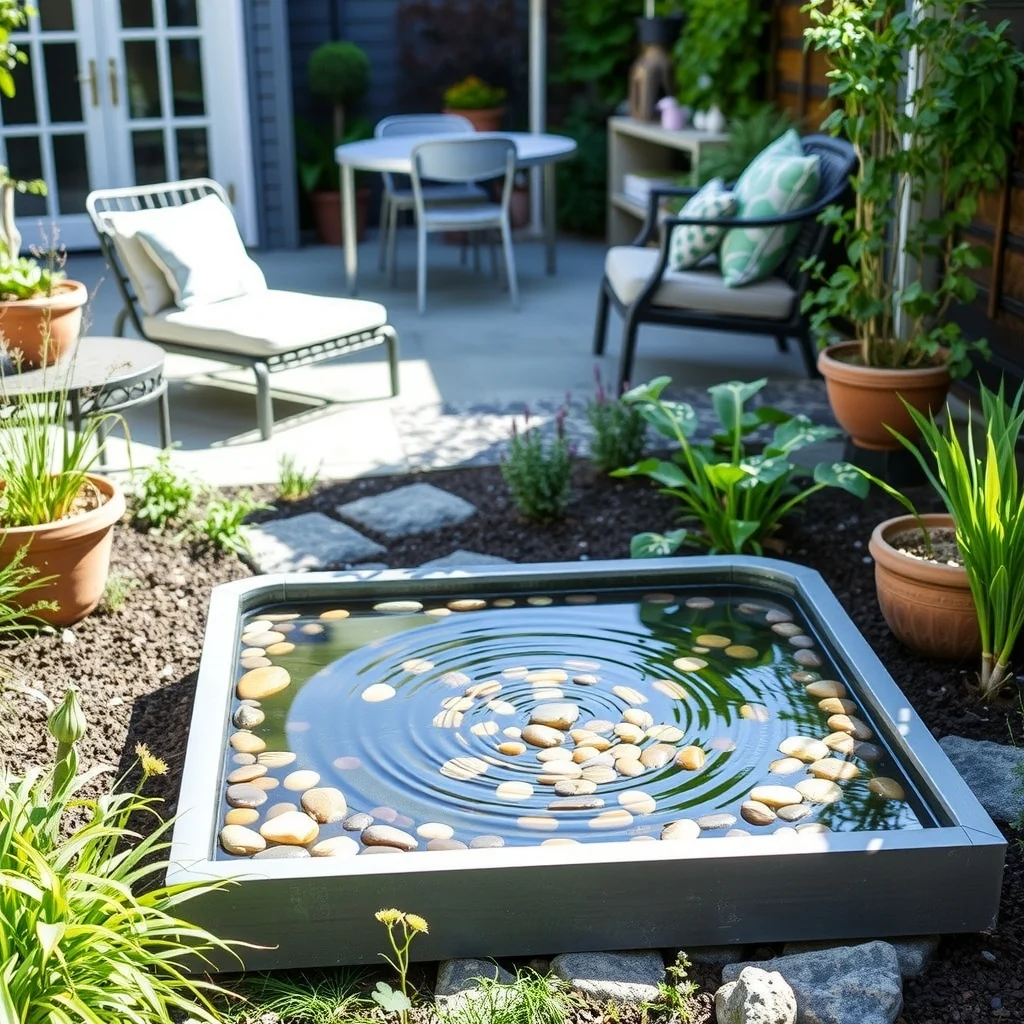
A shallow tray filled with smooth river pebbles and a low‑profile solar pump creates a subtle ripple effect that feels almost meditative. The water circulates just beneath the surface, causing the pebbles to catch light and cast soft reflections. This design is especially suited to sunny gardens where wiring would be inconvenient, as the solar panel can be mounted on a nearby fence or garden shed.
Construction involves placing a waterproof liner inside a shallow concrete or wooden basin, then spreading a layer of washed pebbles about two inches deep. The solar pump sits at the bottom, drawing water from a hidden reservoir that can be concealed beneath the basin’s edge. A small solar panel, angled toward the sun, powers the pump during daylight hours; many models include a battery that allows operation into the early evening.
The primary limitation is reliance on sufficient sunlight; cloudy days will reduce the ripple’s intensity. Additionally, the pump’s flow rate is modest, so the water surface remains relatively calm. For gardeners who value a low‑maintenance, energy‑saving feature, the pebble ripple provides an elegant, understated soundscape without the need for complex wiring.
6. Terracotta Pot Water Garden
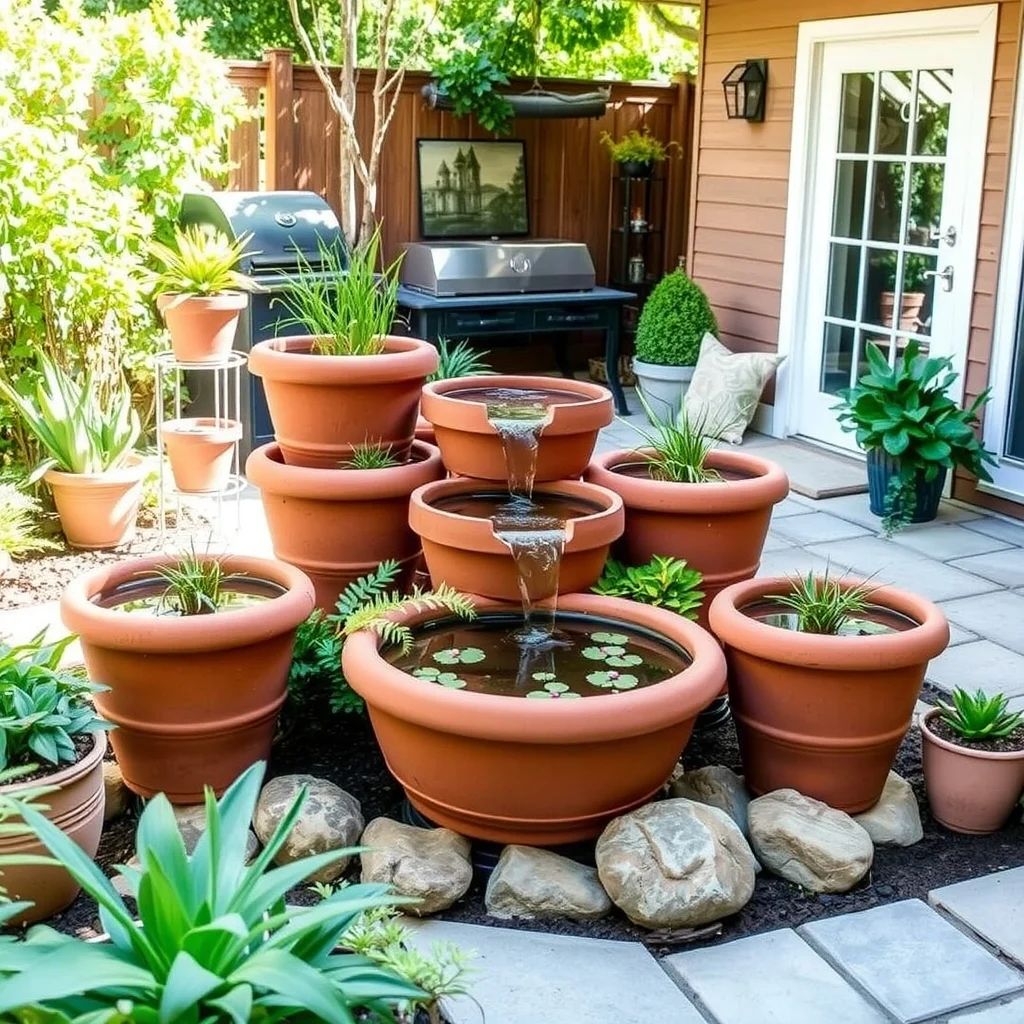
Arranging a cluster of terracotta pots at varying heights, each filled with a small amount of water and a few aquatic plants, creates a tiered water garden that feels both handcrafted and inviting. The earthy red of the pots contrasts with the green of herbs like mint or basil, which thrive in moist conditions, while the shallow water level produces a gentle splashing sound when a wind catches the surface.
Begin by selecting pots with drainage holes that have been sealed with silicone to retain water. Place the pots on a sturdy wooden pallet or stone slab, arranging them from largest at the back to smallest at the front for visual balance. Inside each pot, add a layer of gravel, then a small amount of water, and finally plant herbs or water‑loving succulents. A miniature submersible pump hidden in the largest pot can circulate water among the containers, creating a subtle movement that keeps the water fresh.
One consideration is the need to monitor water levels regularly, as terracotta can absorb moisture over time, leading to cracking in extreme heat. The design also limits the size of the water feature, making it best suited for patios or balcony settings where space is limited. When cared for, the terracotta water garden adds a tactile, handcrafted element that invites close interaction.
7. Hidden Mirror Pool
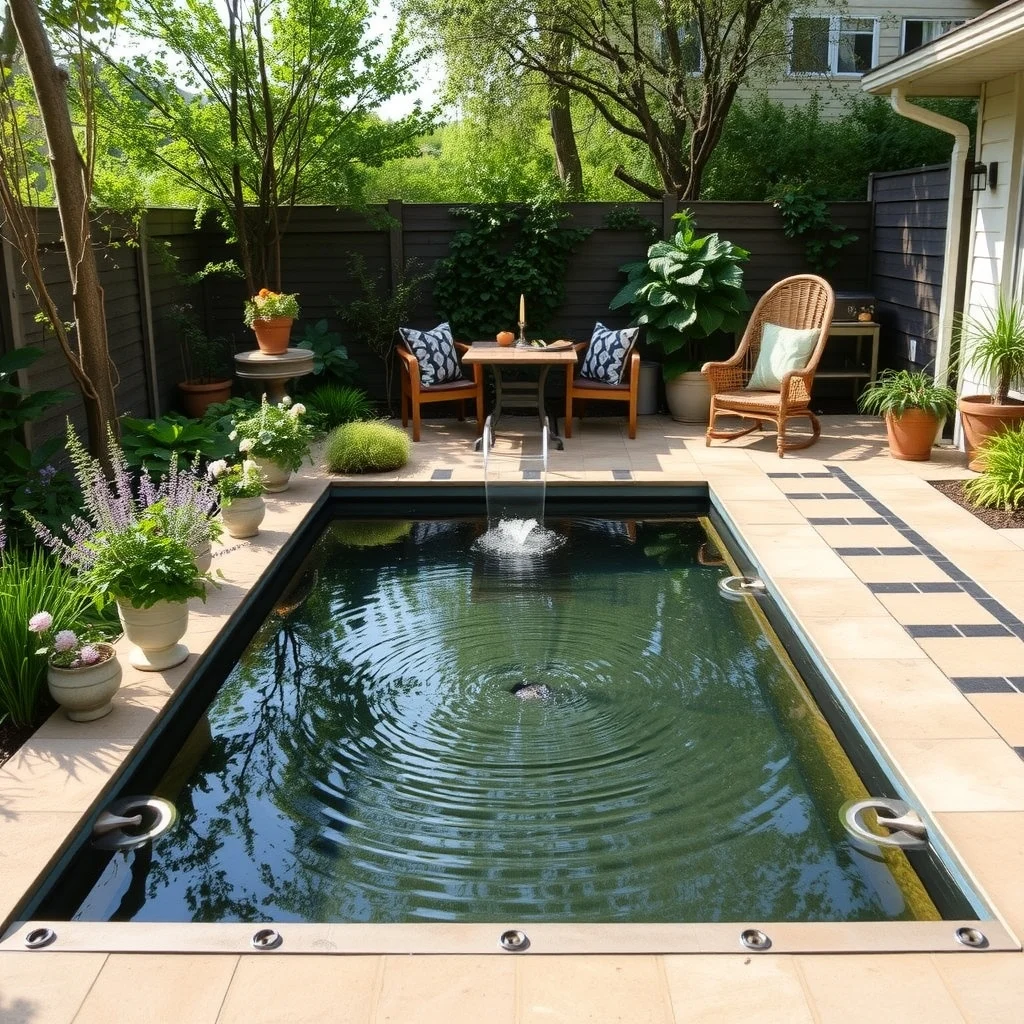
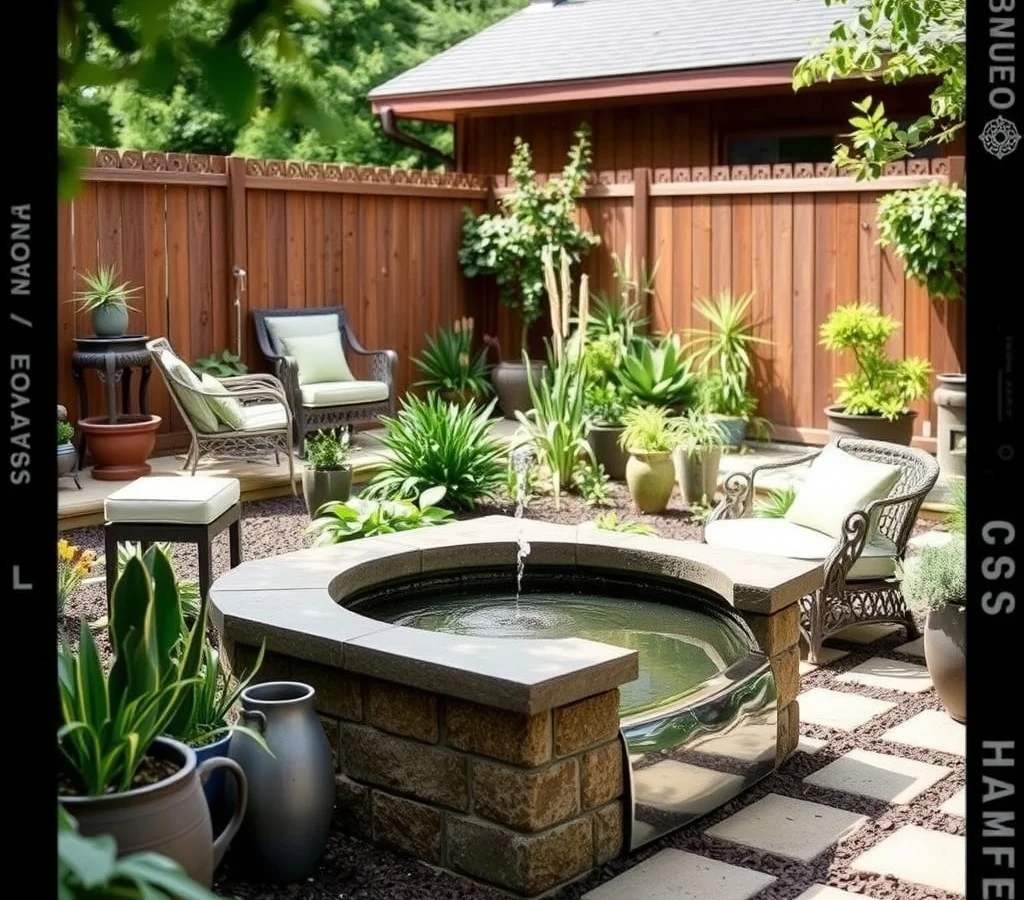
A shallow, rectangular pool lined with a reflective acrylic sheet or polished stone can act as a mirror that doubles the sky and surrounding foliage. When water is gently circulated, the surface ripples just enough to catch light without breaking the illusion of a still lake. This effect expands the perceived size of a small garden, making it feel more open and serene.
Construction starts with excavating a level depression that matches the desired dimensions, then installing a waterproof liner topped with the reflective material. A low‑profile pump placed at one end circulates water through a concealed inlet, creating a barely perceptible flow. Adding subtle uplighting around the pool’s perimeter highlights the reflected images after dark, while surrounding the pool with low‑height planting maintains a sense of enclosure without obstructing the view.
The main trade‑off is the need for meticulous cleaning; any debris on the surface disrupts the mirror effect. Additionally, the reflective surface can become slippery when wet, so installing non‑slip edging or a thin mat of textured stones near the edges improves safety. When these details are addressed, the hidden mirror pool offers a sophisticated, calming centerpiece that encourages quiet reflection.
FAQ
How often should I change the water in a backyard fountain?
You should top off the water weekly to compensate for evaporation, and perform a full change every three to four weeks if the fountain is exposed to a lot of debris or algae.
Can I install a water feature myself, or do I need a professional?
Simple installations like a stone basin or recycled barrel pond can be tackled by a confident DIYer, but features that involve electrical components, wall mounting, or structural alterations should involve a qualified electrician or contractor to ensure safety and code compliance.
What is the best way to prevent algae growth in a small pond?
Maintaining proper water circulation, using a UV clarifier, and adding a modest amount of aquatic plants that compete with algae for nutrients are effective strategies for keeping the water clear.
Is it safe to have a water feature near a pool?
Yes, as long as the water feature’s pump and electrical connections are rated for outdoor use and are installed at a safe distance from the pool’s filtration system to avoid cross‑contamination.
How can I keep the sound of a water feature from becoming too loud?
Select a pump with adjustable flow settings and position the nozzle or spillway to produce a gentle cascade rather than a forceful jet; adding surrounding stones or plants can also absorb excess sound.
Final Thoughts
Choosing the right water feature depends on the size of your garden, the amount of maintenance you’re willing to perform, and the atmosphere you wish to create. Whether you prefer the solid calm of a stone basin, the vertical drama of a wall waterfall, or the reflective serenity of a hidden mirror pool, each idea offers a pathway to a more peaceful backyard. By considering the practical details—materials, placement, pump capacity, and safety—you can integrate water in a way that feels both natural and intentional, turning ordinary outdoor space into a quiet retreat you’ll return to again and again.