Dark Green Living Room Ideas for a Cozy and Sophisticated Look

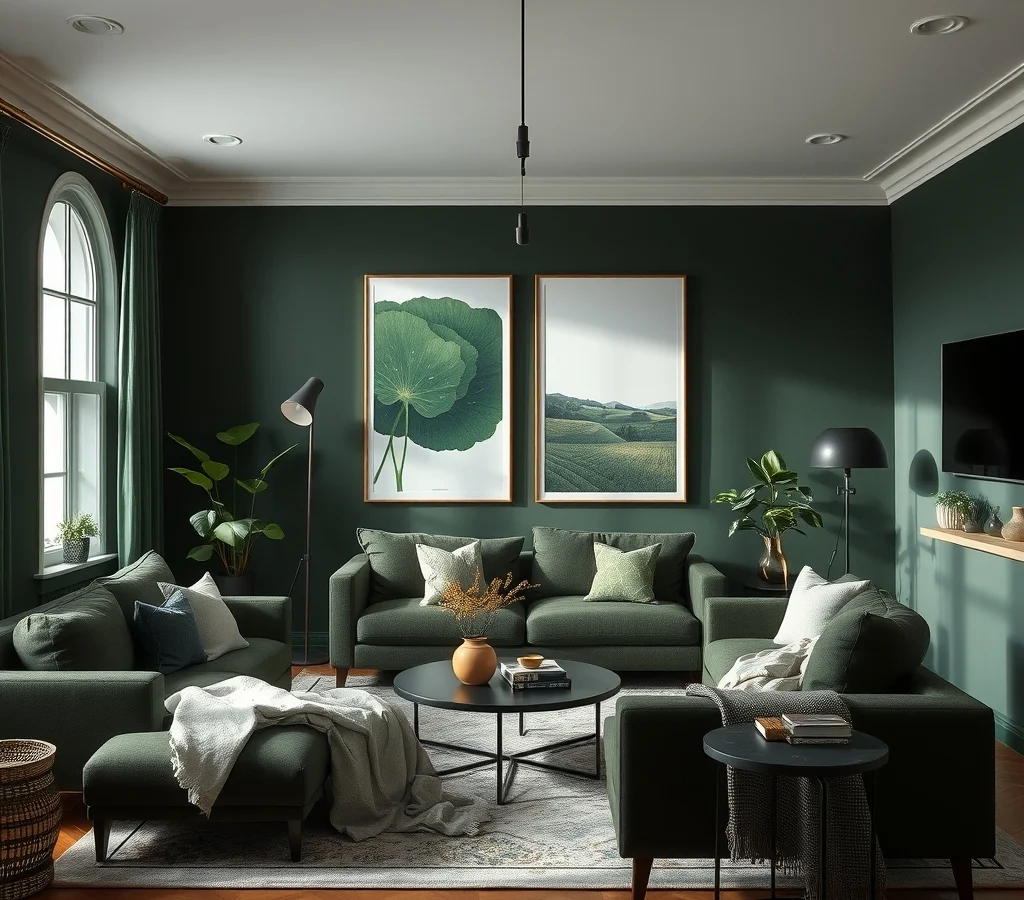
Living rooms that lean into dark green often feel both inviting and refined, but finding the right balance can be tricky. A shade that is too heavy may close the space, while a hue that is too light can lose the depth you’re after. This article walks you through seven distinct ways to incorporate dark green without sacrificing comfort or style. From wall treatments to textiles and lighting choices, each idea explains the visual impact, practical considerations, and how you can adapt it to your own home.
1. Paint a Single Accent Wall in Deep Forest
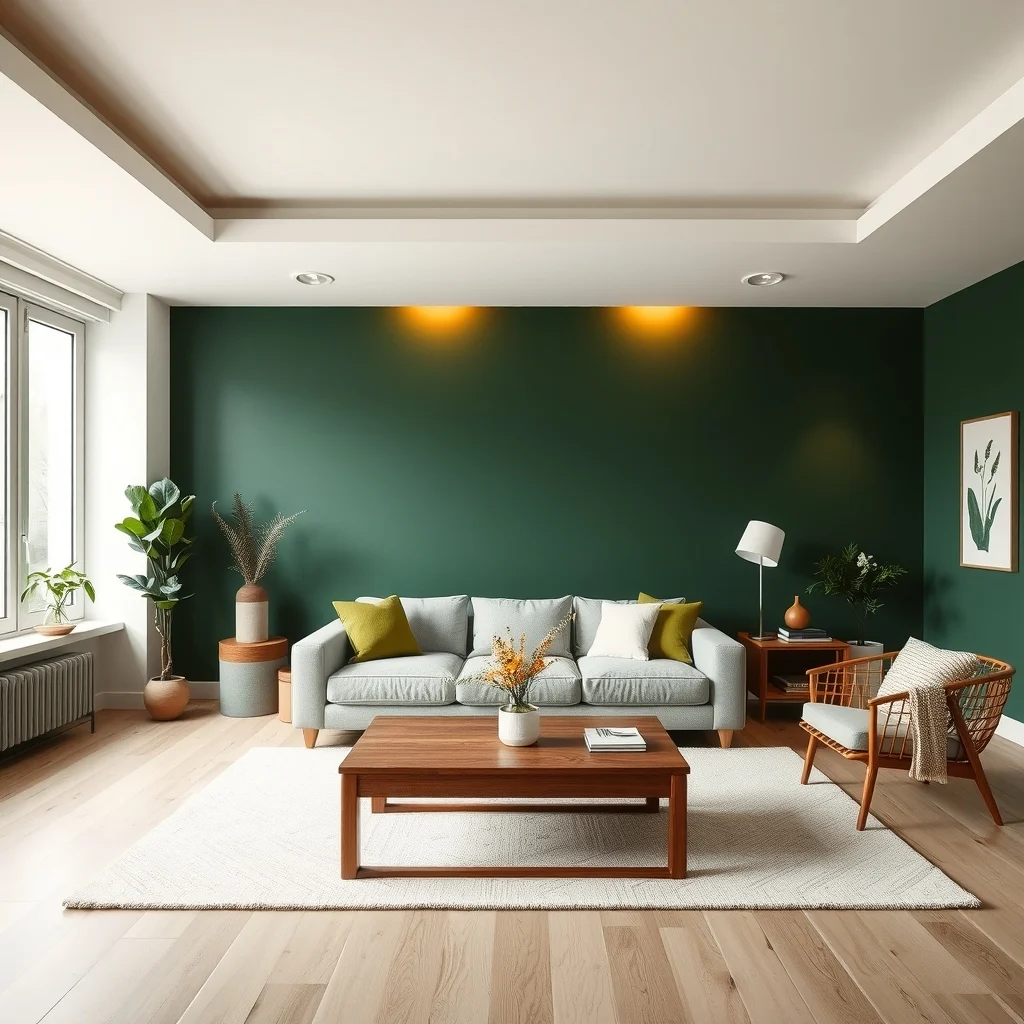
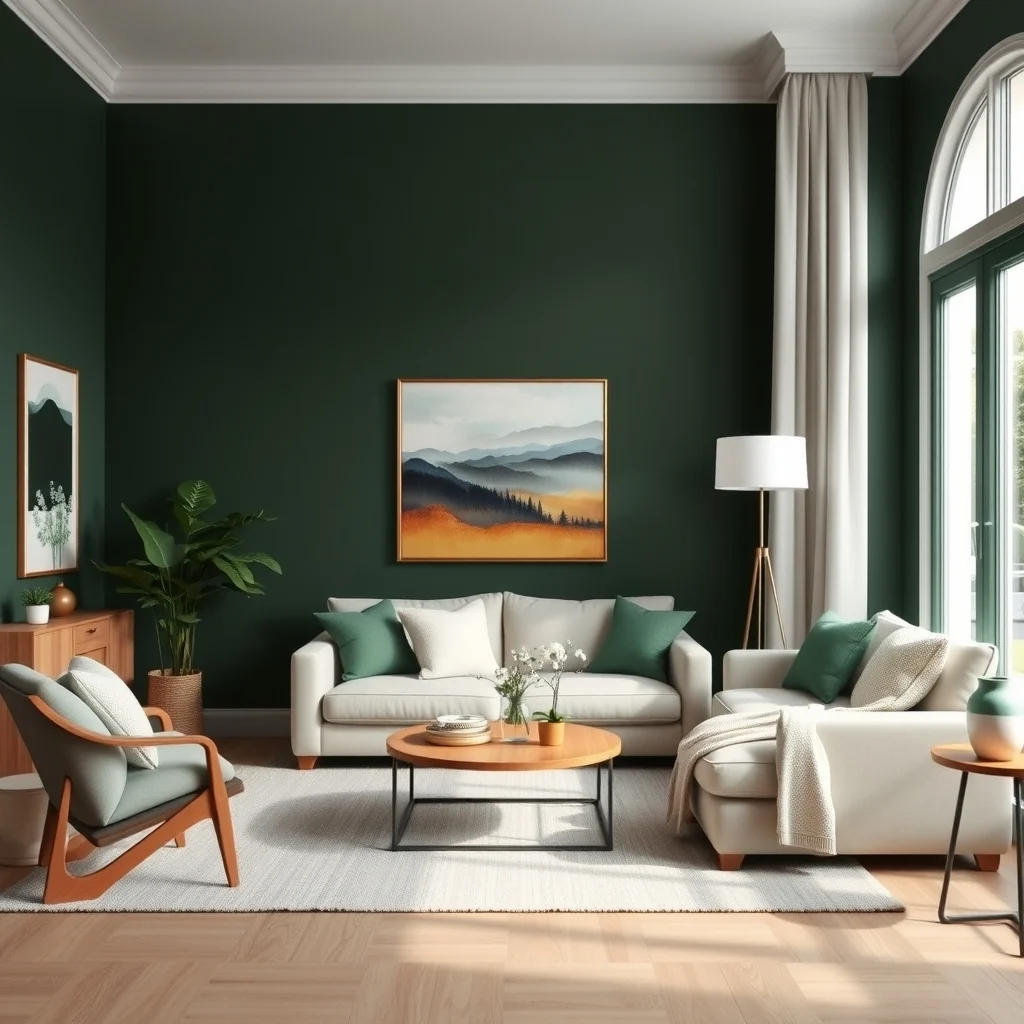
Choosing one wall as a backdrop for a deep forest shade instantly creates a focal point without overwhelming the room. The darker surface draws the eye, especially when positioned behind the main seating arrangement, allowing the surrounding walls to stay neutral and bright. Pair the accent with a light‑colored sofa—think warm ivory or soft greige—to keep the space feeling airy. A subtle sheen on the paint can reflect natural light, preventing the wall from looking flat on overcast days. If you have a fireplace, painting the mantel wall this color adds drama while the mantle itself can stay in a lighter wood tone for contrast. Keep in mind that darker paint may show dust more readily, so a semi‑gloss finish is easier to wipe down. When the room receives limited daylight, consider a lighter green or a muted teal for the accent to avoid a too‑dim atmosphere.
2. Layer Textiles in Complementary Hues
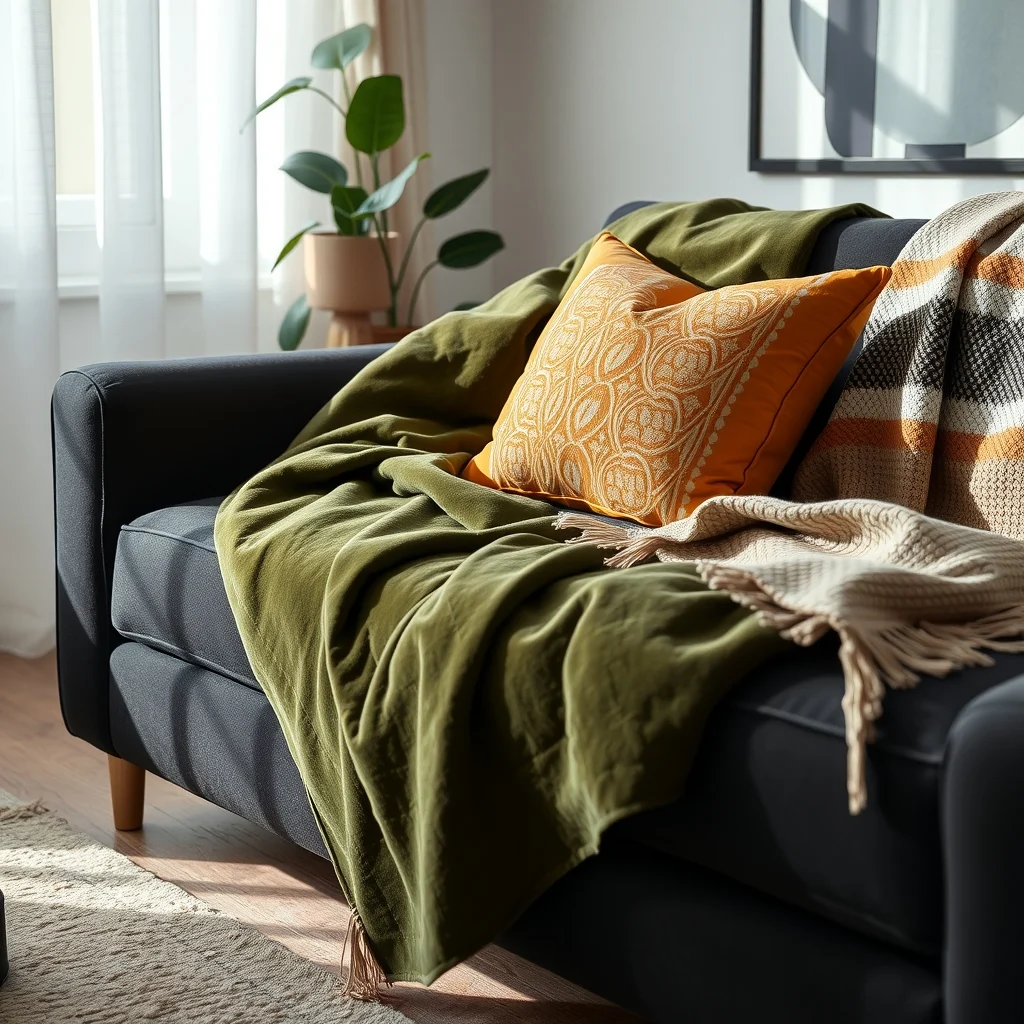
Textiles are the easiest way to bring dark green into a living room without committing to large surfaces. A plush velvet throw in a muted olive draped over a sofa adds tactile richness, while patterned cushions that mix deep green with soft gold or cream introduce visual interest. Choose a rug that incorporates both the green of your walls and the neutrals of your furniture; a hand‑woven natural fiber rug with a subtle green border can anchor the seating area. The key is to vary textures—linen curtains, a boucle pouf, and a woven basket for magazines—to prevent the room from feeling heavy. Dark fabrics can absorb sound, making the space quieter, which is a pleasant side effect for reading corners. However, be aware that velvet can attract lint, so a low‑pile option might suit households with pets.
3. Introduce Brass and Wood Accents for Warmth
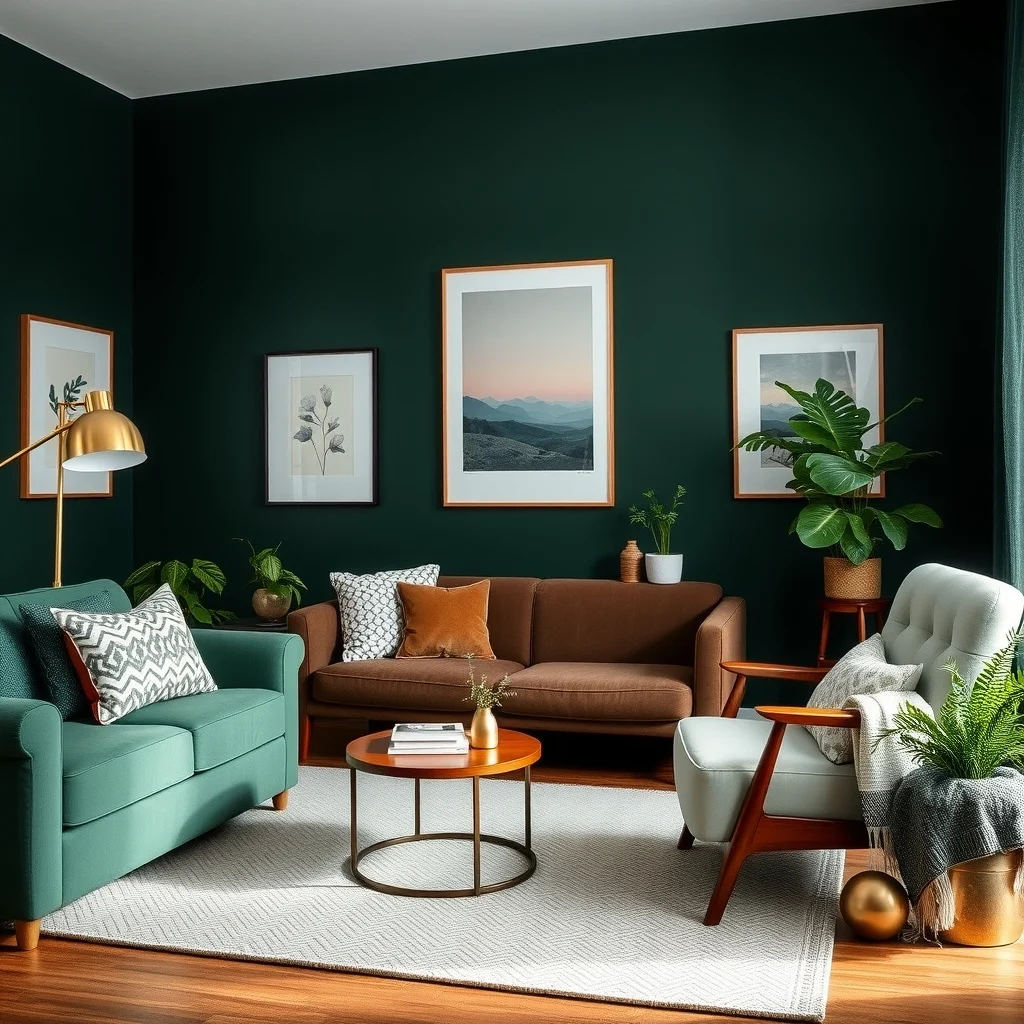
Metallic brass fixtures and warm wood pieces counterbalance the cool depth of dark green, creating a sophisticated palette. A brass floor lamp beside an armchair provides a soft glow that highlights the green without harsh glare. Side tables in reclaimed oak or walnut bring natural grain patterns that soften the overall look. When selecting wood, opt for finishes that show the grain rather than high gloss, as the texture adds depth to the room’s visual hierarchy. Brass hardware on cabinets or a decorative mirror frame can act as subtle gleams that catch the eye. The trade‑off is that brass can oxidize over time; a clear lacquer helps preserve its shine. If you prefer a more subdued metallic, brushed copper works similarly but with a slightly earthier tone.
4. Use Strategic Lighting to Enhance the Hue
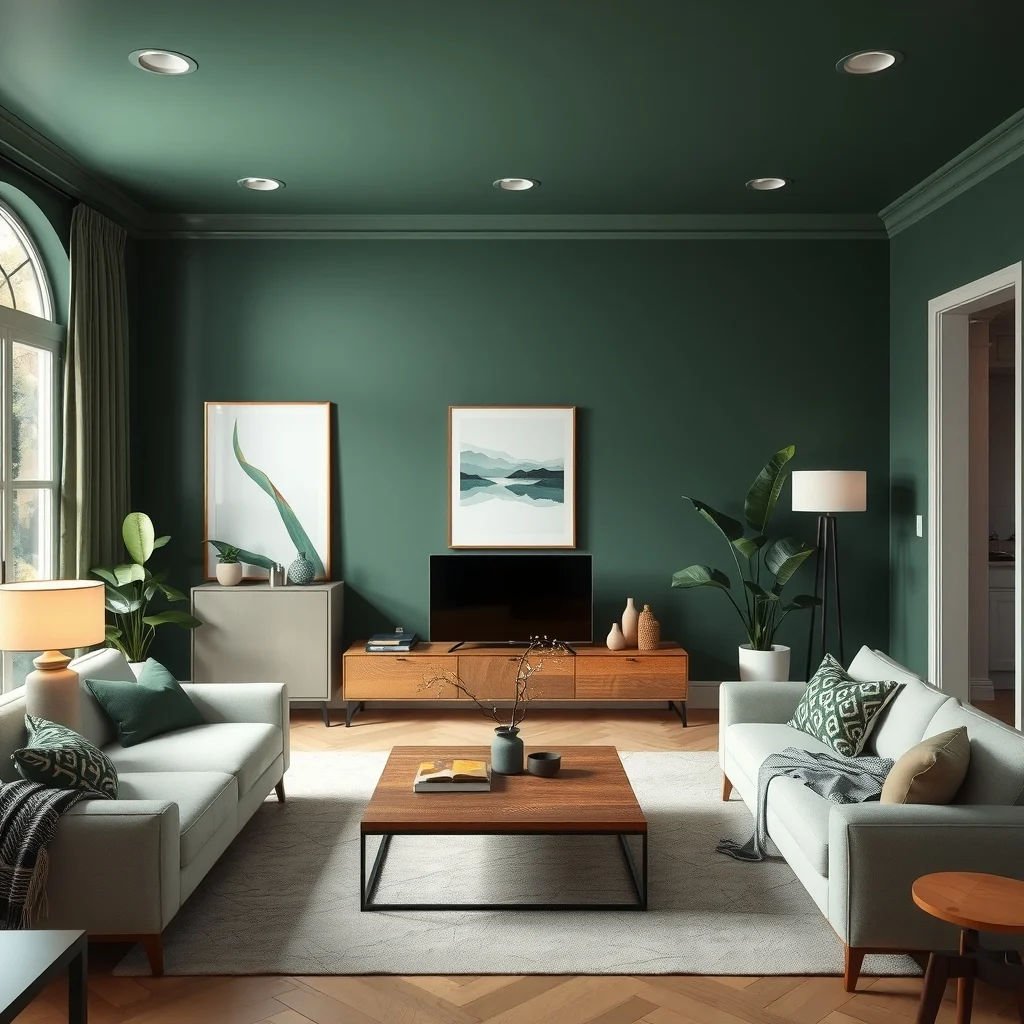
Lighting plays a decisive role in how dark green appears after sunset. A combination of recessed ceiling lights and table lamps with warm‑white bulbs keeps the color from looking too cool. Position a dimmable pendant above a coffee table to create a gentle pool of light that accentuates the green walls. Floor lamps with fabric shades diffuse illumination, reducing shadows that can make the room feel cramped. For a touch of elegance, consider a wall sconce with an amber glass shade on the accent wall; the amber reflects off the green, enriching the overall ambience. Remember that LED bulbs with a color temperature around 2700‑3000 K best complement deep greens. Overly bright lighting can flatten the richness of the hue, while too dim lighting may make the space feel closed.
5. Incorporate Green‑Toned Artwork and Decorative Objects
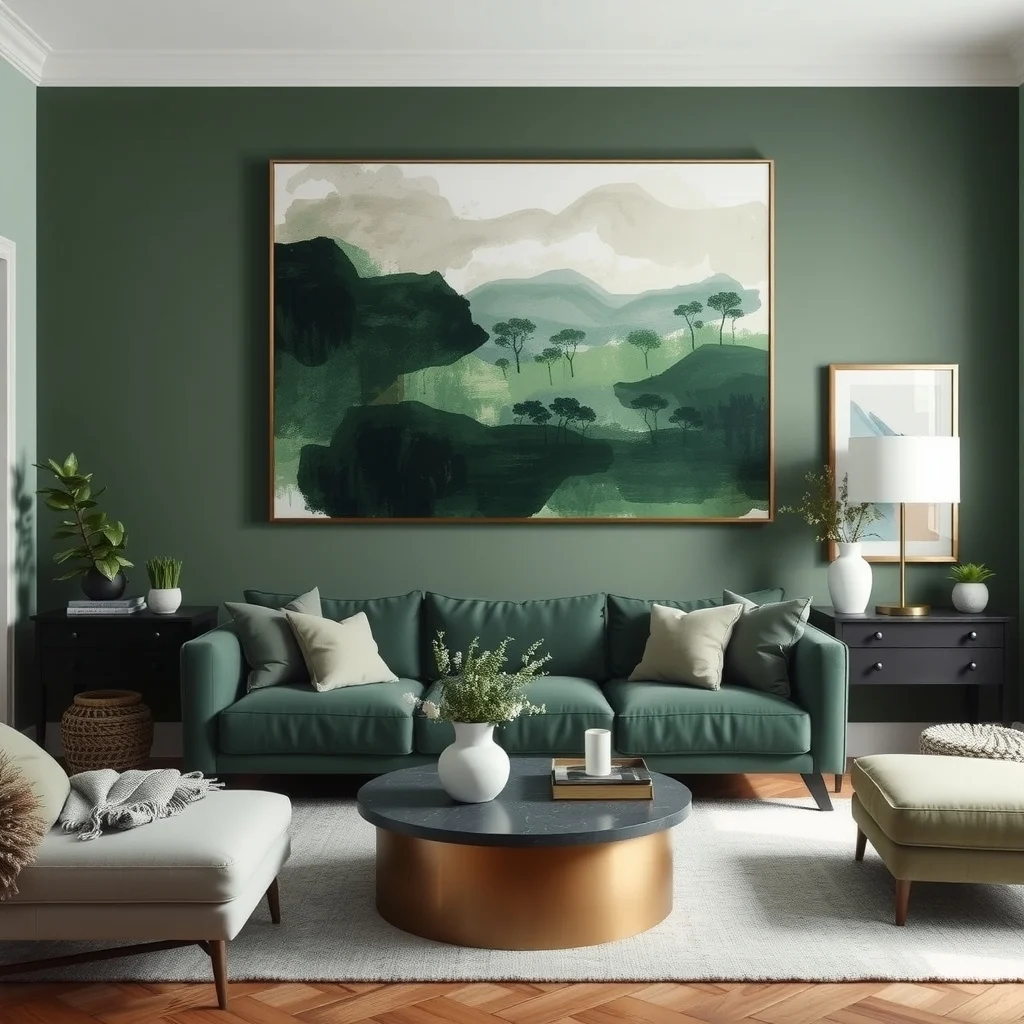
Artwork that mirrors the room’s palette ties the design together without adding more paint. A large canvas featuring abstract brushstrokes in varying shades of green, interlaced with muted earth tones, can become the centerpiece above the sofa. Smaller decorative objects—ceramic vases, stone bowls, or a set of glass terrariums filled with succulents—add layers of interest while reinforcing the color scheme. Choose pieces with different finishes; matte ceramics contrast nicely with glossy glass. When selecting art, keep the scale in mind: a piece that stretches the width of the wall prevents the green from feeling cramped, whereas a cluster of tiny frames can look scattered. If you have limited wall space, a single sculptural floor lamp in a muted green finish can serve a similar purpose.
6. Balance Storage with Open Shelving in Light Finishes
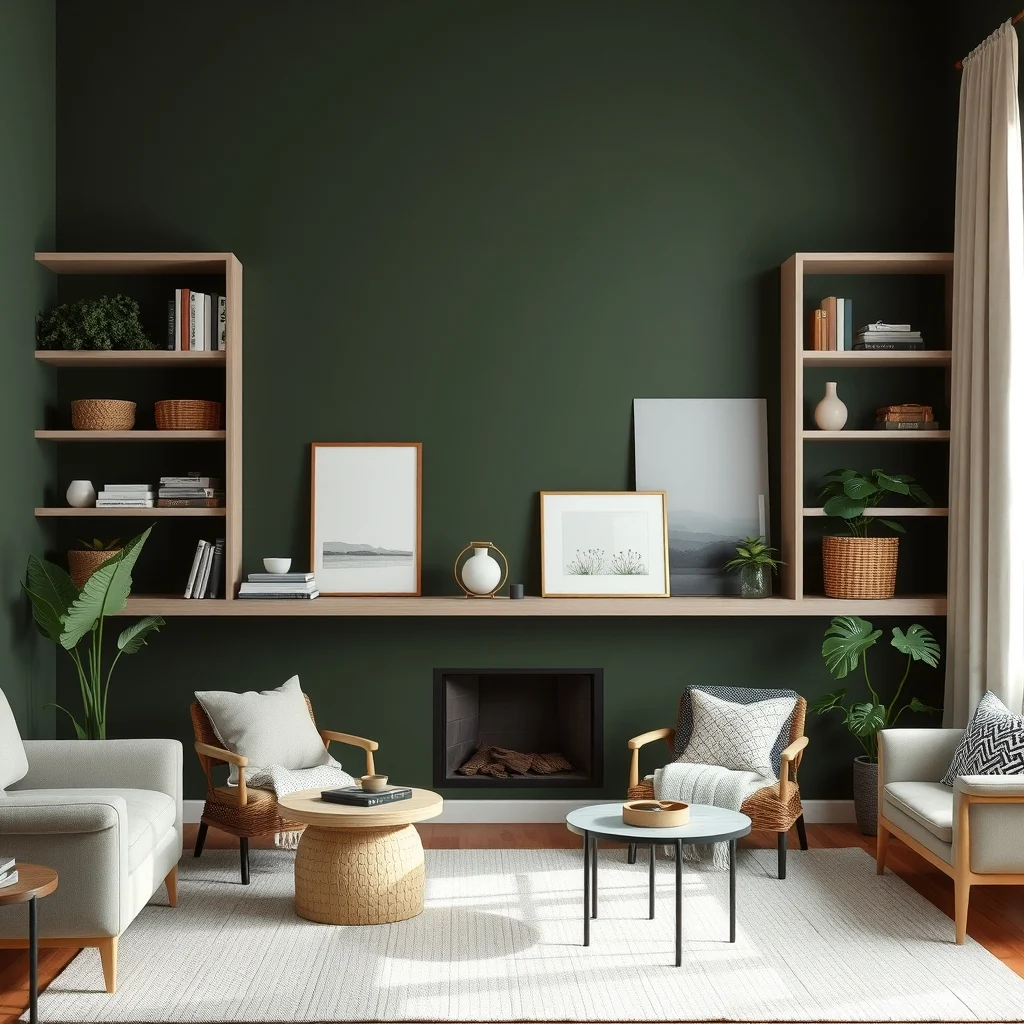
Open shelving painted in a light, natural finish offers functional storage while breaking up the darkness of green walls. A floating shelf in a pale pine or whitewashed oak can hold books, woven baskets, and a few decorative objects, providing visual relief. The openness prevents the room from feeling boxed in, and the contrast between the dark backdrop and the bright shelves adds depth. Incorporate closed cabinets with brushed metal handles for items you prefer to hide, ensuring the overall look stays cohesive. When arranging items, vary the heights of books and decorative pieces to create a rhythm that guides the eye across the wall. A potential downside is that open shelves can collect dust quickly; using glass-fronted doors on lower cabinets can mitigate this while preserving the airy feel.
7. Add a Touch of Nature with Indoor Plants
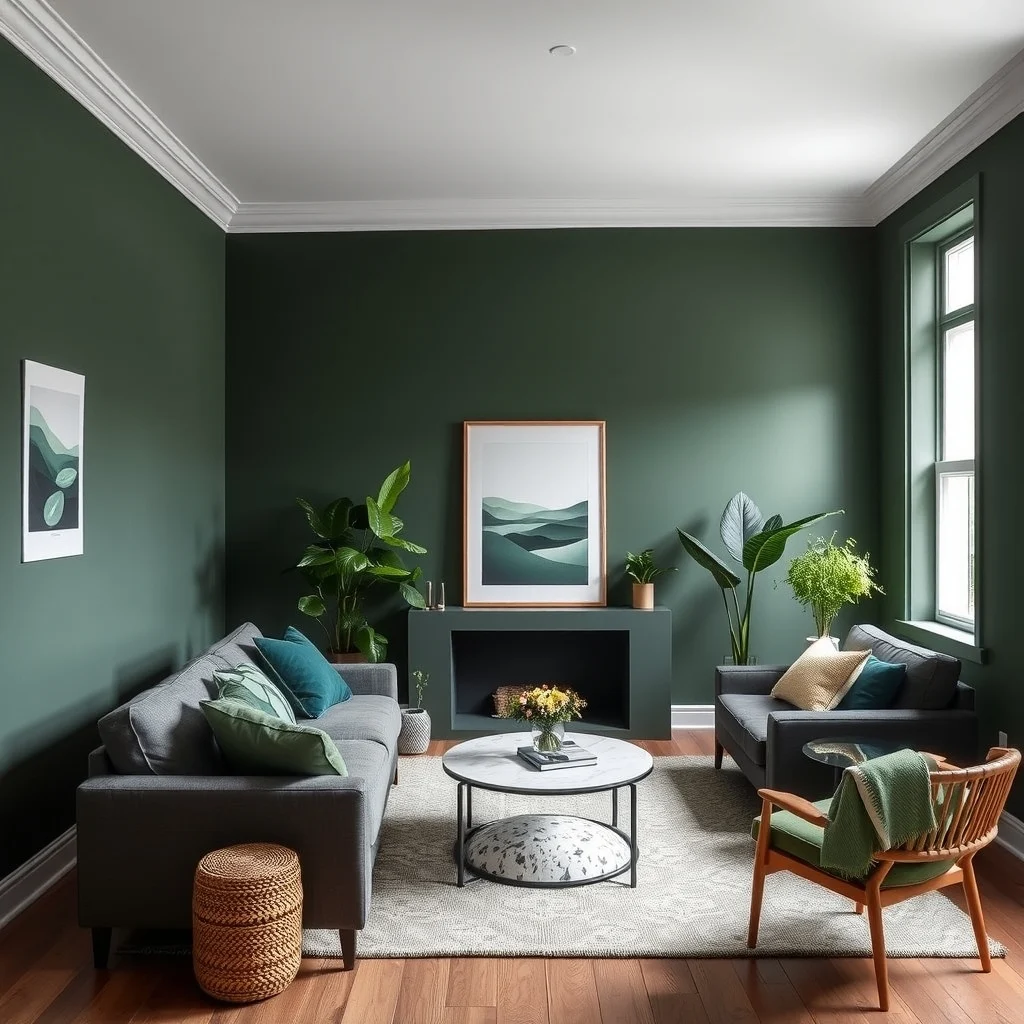
Plants naturally complement dark green interiors, reinforcing the calming effect of the color. A tall fiddle‑leaf fig placed in a woven basket near a window adds height and a splash of fresh green that differs from the wall hue. Smaller potted herbs on a side table bring a functional element and a subtle scent that makes the room feel lived‑in. Choose planters in neutral tones—terracotta, matte black, or light ceramic—to keep the focus on the foliage rather than the container. For homes with limited natural light, low‑maintenance options like snake plant or ZZ plant thrive under artificial lighting. The only caution is that overwatering can damage wood floors, so place a tray beneath pots and use saucers to catch excess water.
FAQ
How do I prevent a dark green wall from making the room feel smaller?
Use ample lighting and keep surrounding furniture in lighter tones. Mirrors placed opposite windows reflect light, expanding the perceived space.
Can I use dark green in a room with low ceilings?
Yes, but limit the green to an accent wall or ceiling trim rather than covering all walls. This adds height without overwhelming the vertical space.
What type of paint finish works best for a dark green living room?
A satin or low‑sheen finish balances durability and subtle reflection. It hides minor imperfections while still allowing the color to appear rich.
Is dark green suitable for households with pets?
It can be, especially if you choose fabrics that resist stains, such as microfiber or tightly woven linen. Regular vacuuming helps maintain a fresh look.
How often should I clean a dark green upholstered sofa?
Spot‑clean spills promptly and vacuum the surface weekly. A professional upholstery cleaning once or twice a year keeps the fabric looking its best.
Final Thoughts
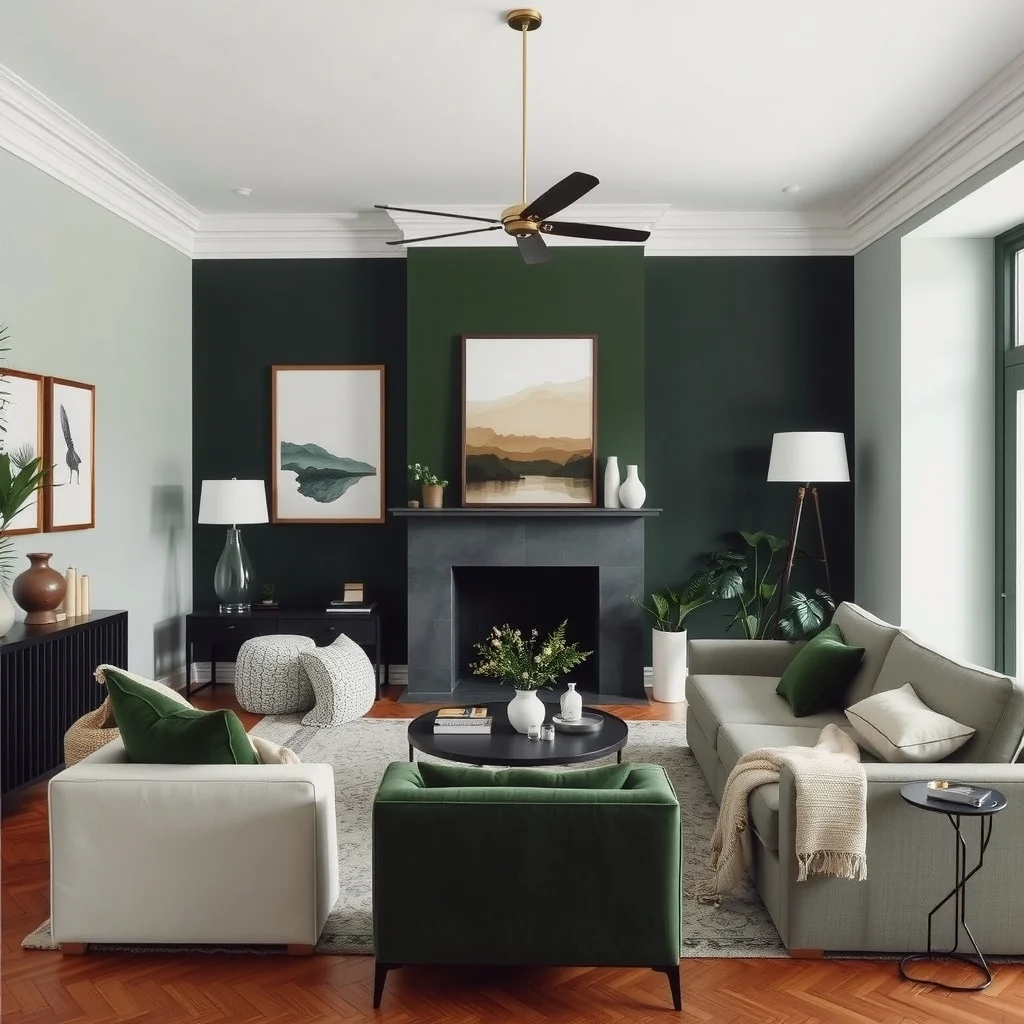
Dark green offers a timeless elegance that can make a living room feel both cozy and upscale when paired with thoughtful elements. By balancing color with texture, light, and natural accents, you can create a space that invites lingering and conversation. Remember that the most successful rooms are those that reflect your lifestyle, so feel free to mix and match these ideas to suit your needs. With careful planning, dark green becomes more than a shade—it becomes the foundation of a welcoming, sophisticated living area.