
30 Small Kitchen Hacks for Homes Without a Pantry

28.Turn One Cabinet Shelf Into a Mini Pantry
© 2025 AI Illustrator — Inspiration Only
The Problem
Without a dedicated pantry, dry goods and staples end up scattered across multiple cabinets with no logic. You don’t know what you have, you buy duplicates, and things expire without being used.
Why It Works
A mini pantry shelf works because it mimics what a real pantry does: it creates a single, consistent place where all dry staples live. Once you know exactly where to look for pasta, rice, canned goods, and snacks, you stop buying things you already have and you stop losing things in the back of random shelves.
How to Do It
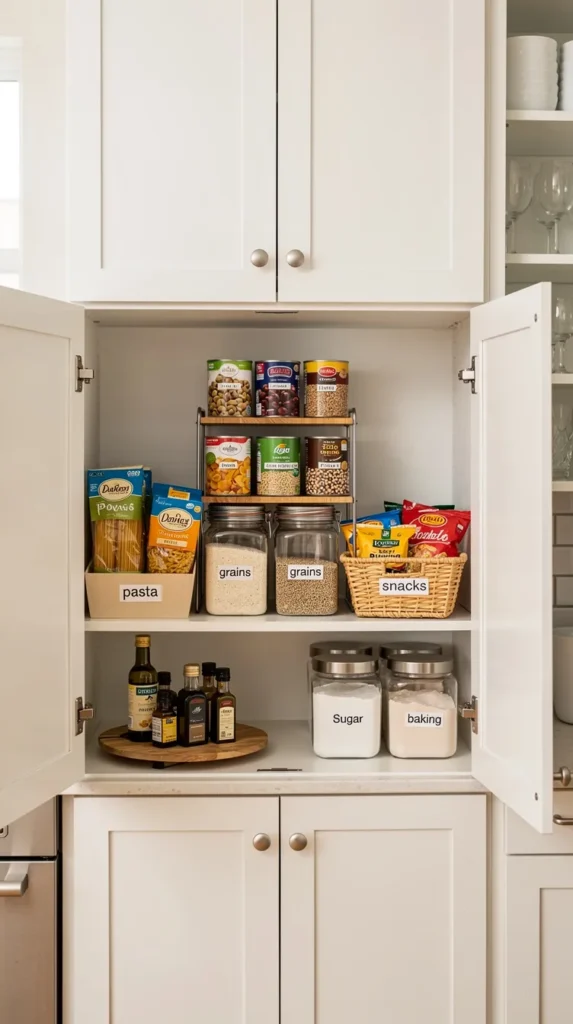
Pick your most spacious cabinet — ideally one near the stove or prep area. Clear the bottom or a middle shelf entirely. This becomes your mini pantry shelf. Group items by type: grains and pasta together, canned goods together, snacks together, baking supplies together. Use small bins, baskets, or containers to keep groups contained — you want to be able to pull out a “pasta bin” and see everything at once rather than reaching behind cans.
If your shelf is deep, use a turntable (lazy Susan) or a tiered shelf riser to prevent things from disappearing into the back. More on shelf risers in the next section. And if you’re just starting to think through this kind of setup, check out these no pantry kitchen ideas that actually work for more layout inspiration.
Extra Tips
Label the front edge of the shelf or each bin with what belongs there. This sounds small, but it means other household members know where things go — and you don’t have to reorganize it every week.
What to Avoid
Don’t overfill the mini pantry shelf. If things are stacked precariously or squeezed in, you’ll stop using the system within a week. A half-full shelf that’s easy to use beats a packed shelf you dread opening.
Page 1 Quick Checklist
- Identify your 8–12 most-used daily items and group them in one place
- Set aside 20 minutes to remove duplicates from your most cluttered drawer or cabinet
- Choose one shelf in one cabinet and designate it your “mini pantry”
- Resist buying organizers until after the declutter is done
Up Next: Use Vertical Wall Space
Your walls are free real estate. On the next page, we’ll show you how floating shelves, wall rails, and magnetic storage can dramatically expand your kitchen storage without touching a single cabinet. ← PreviousNext: Vertical Wall Space →
27.Use Vertical Wall Space
© 2025 AI Illustrator — Inspiration Only
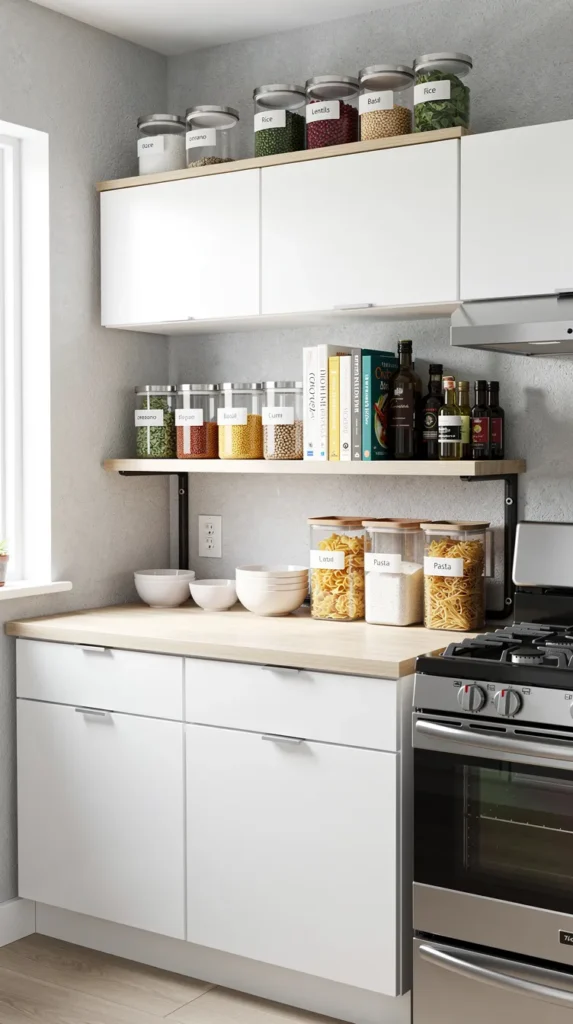
Most small kitchens use horizontal floor space well but ignore the walls entirely. Yet wall space is free storage that doesn’t compete with counter space or cabinet capacity. These three ideas help you go vertical — even if you’re renting and can’t make permanent changes.
26.Add Floating Shelves Above Empty Wall Space
© 2025 AI Illustrator — Inspiration Only
The Problem
Kitchen walls — especially the space between the counter and the upper cabinets, or above the cabinets entirely — are often completely unused. That blank wall above your stove or beside the window represents potential storage you’re currently throwing away.
Why It Works
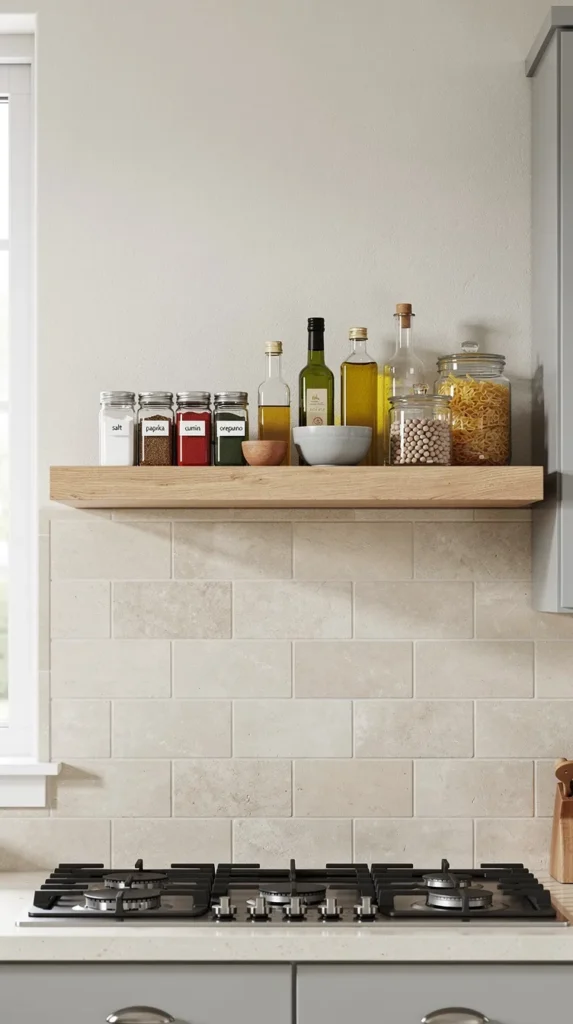
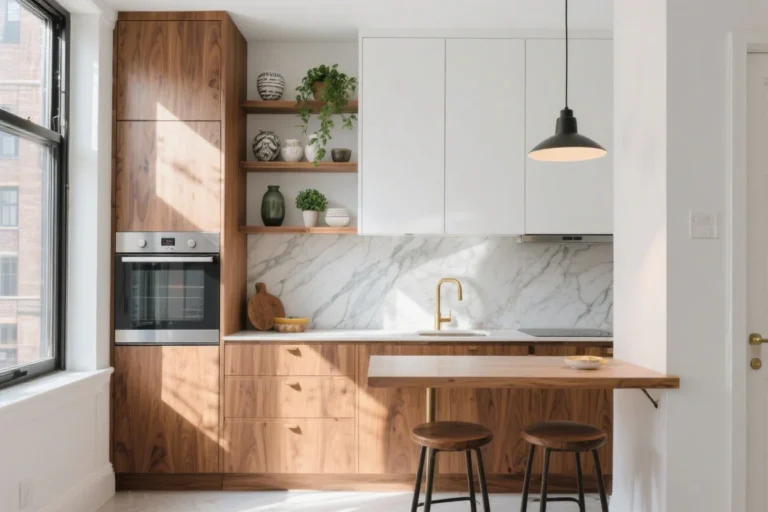
A floating shelf adds a full layer of storage without touching any existing cabinet space. You can use it for items you want visible and accessible — spices, oils, frequently used dry goods, small bowls, or decorative jars with dry foods. Unlike cabinets, open shelves don’t require doors to be swung open, which makes them faster to access in the flow of cooking.
How to Do It
Measure the space carefully before buying anything. For most kitchens, shelves between 24 and 36 inches wide work well without looking crowded. Install the shelf into wall studs using proper wall anchors — a falling shelf loaded with spice jars is a real hazard. If you’re renting and can’t drill, look into tension rod shelf systems, over-cabinet shelf extensions, or freestanding units that sit on the counter and extend upward.
Keep the shelf limited to one deep row of items. Shelves that are too deep or overstuffed just create a new version of the cabinet problem — things get buried and forgotten.
Extra Tips
Use the floating shelf for items that are visually uniform — matching spice jars, consistent container sizes, or a row of recipe books. Visual consistency makes even a loaded shelf look tidy rather than chaotic.
What to Avoid
Don’t treat a floating shelf as a dumping ground. Because it’s open and visible, clutter on a floating shelf actually looks worse than clutter inside a cabinet. Be selective about what earns a place here.
25.Use Wall Rails With Hooks
Coming Next
Make Your Kitchen Cabinets Work Twice as Hard
Page 3 shows smart cabinet storage hacks using shelf risers, pull-out baskets, and cabinet door organizers for small kitchens with no pantry.
Continue to page 3 for the next 3 no-pantry kitchen ideas
One Comment
Comments are closed.